TRENDING

Wednesday, 7 October 2026
----------------------
26 Rabi' Al-Thani 1448 AH
Flooding in western India has exacerbated critical gas shortages, a direct consequence of the ongoing 'US and Israeli war on Iran' which has severely disrupted global energy supplies. This event underscores India's acute vulnerability to geopolitical instability and highlights the cascading effects of international conflicts on domestic welfare.
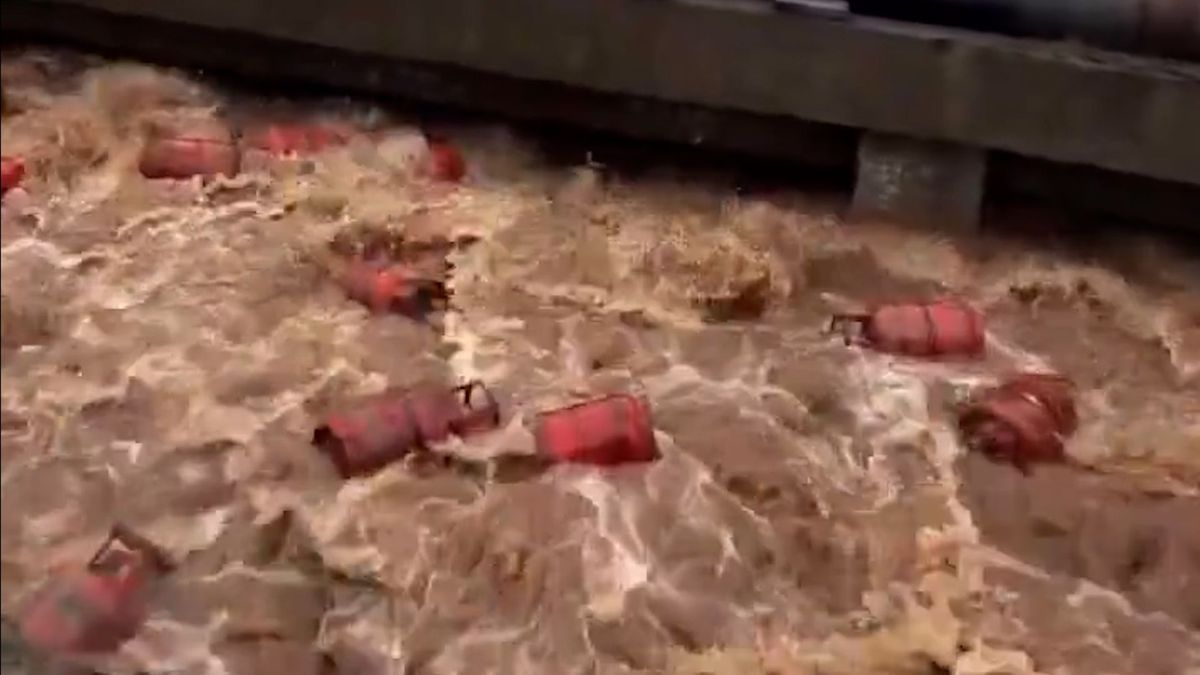
Recent severe flooding in western India has led to the dramatic sight of thousands of gas cylinders being swept away by torrents, further compounding an already critical energy shortage across the region. This domestic crisis, while immediately triggered by natural disaster, is deeply intertwined with a significant geopolitical development: the ongoing 'US and Israeli war on Iran.' The conflict in the Middle East has evidently disrupted global energy supply chains, leading to widespread gas shortages in India and highlighting the profound interconnectedness of international affairs and domestic stability.
The events, reported on July 9, 2026, illustrate a complex interplay of global conflict, energy security, and environmental vulnerability. Residents in affected areas of western India were observed attempting to recover the essential gas cylinders from the floodwaters, a testament to the severe impact of the shortages on daily life. For a nation like India, which is a major importer of energy, disruptions in key supply regions like the Middle East have immediate and far-reaching consequences for its economy and its vast population.
The primary driver behind India's gas shortages, as explicitly stated, is the 'US and Israeli war on Iran.' While the specific details of this conflict are not elaborated in the provided report, its designation as a 'war' implies a significant escalation of hostilities in the Persian Gulf region. Such a conflict would inevitably lead to severe disruptions in oil and gas production, transit routes, and global market stability. Iran is a major energy producer, and any large-scale conflict involving it, especially with global powers like the United States and regional players like Israel, would have immediate and drastic effects on global energy prices and availability.
The strategic implications of a 'US and Israeli war on Iran' are immense. It would likely involve:
* Disruption of Shipping Lanes: The Strait of Hormuz, a critical chokepoint for global oil transit, would be at severe risk, impacting a significant portion of the world's crude oil supply.
* Regional Instability: The conflict would undoubtedly destabilize the entire Middle East, potentially drawing in other regional actors and exacerbating existing tensions. Related reports of missile interceptions over Jordan and US-Iran strikes in the Gulf states underscore the widespread nature of this instability.
* Global Economic Repercussions: Beyond energy, such a conflict would trigger global economic uncertainty, impacting trade, investment, and inflation worldwide.
For India, a nation heavily reliant on imported hydrocarbons, the conflict translates directly into energy insecurity. Gas shortages affect everything from industrial production to household cooking and heating, imposing significant economic burdens and social distress on its citizens. The desperation of residents recovering gas cylinders from floodwaters vividly illustrates the direct human cost of distant geopolitical conflicts.
India's vulnerability to Middle Eastern instability is a long-standing strategic concern. As the world's third-largest energy consumer, its economic growth and social stability are intrinsically linked to secure and affordable energy supplies. The current crisis underscores the urgency of India's efforts to diversify its energy sources and strengthen its energy security architecture.
While not directly linked in the immediate context of the floods, the broader strategic landscape sees India actively pursuing various avenues for energy diversification. This includes expanding its domestic renewable energy capacity, exploring new hydrocarbon partnerships outside the Middle East, and investing in alternative energy sources like nuclear power. The mention of Australia beginning to sell uranium to India for peaceful purposes, as highlighted in related news, could be seen as one such long-term strategic move to bolster its energy independence and reduce reliance on volatile regions.
The situation in western India also serves as a stark reminder of how geopolitical crises can intersect with and exacerbate the impacts of climate-related disasters. While the floods are a natural phenomenon, their destructive power is amplified by the pre-existing energy scarcity. The loss of essential infrastructure and supplies due to flooding, combined with a geopolitical-induced shortage, creates a compounding crisis that severely tests national resilience and emergency response capabilities.
This confluence of events highlights a critical challenge for global governance and national security: how to manage the simultaneous pressures of escalating geopolitical conflicts and the increasing frequency and intensity of extreme weather events. For India, this means not only navigating complex international relations to secure energy but also investing robustly in climate adaptation and disaster preparedness to protect its infrastructure and citizens from environmental shocks.
In conclusion, the image of gas cylinders floating through floodwaters in western India is more than just a local disaster; it is a powerful symbol of how global geopolitical conflicts, particularly those impacting critical energy regions, can have immediate and devastating consequences thousands of miles away, further complicated by the growing threats of climate change. It underscores the imperative for nations like India to pursue robust energy security strategies and for the international community to work towards de-escalation in volatile regions to prevent such cascading crises.
Editor's Note: The analysis relies on the explicit statement 'US and Israeli war on Iran' as the cause of gas shortages, interpreting its implications for global energy and regional stability. Specific details of this conflict are not provided in the raw article.
Source referenced: ALJAZEERA
This brief was synthesized by our Editorial Engine and reviewed by The Ground Narrative team.


