TRENDING

Tuesday, 27 October 2026
----------------------
16 Jumada Al-Awwal 1448 AH
Despite an electoral defeat, Viktor Orban's re-election as Fidesz party leader signals his intent to remain a formidable political force, even as Hungary's new government pivots towards closer EU alignment and democratic reforms. This shift has significant geopolitical implications for European unity, particularly concerning Ukraine and the EU's rule of law framework.
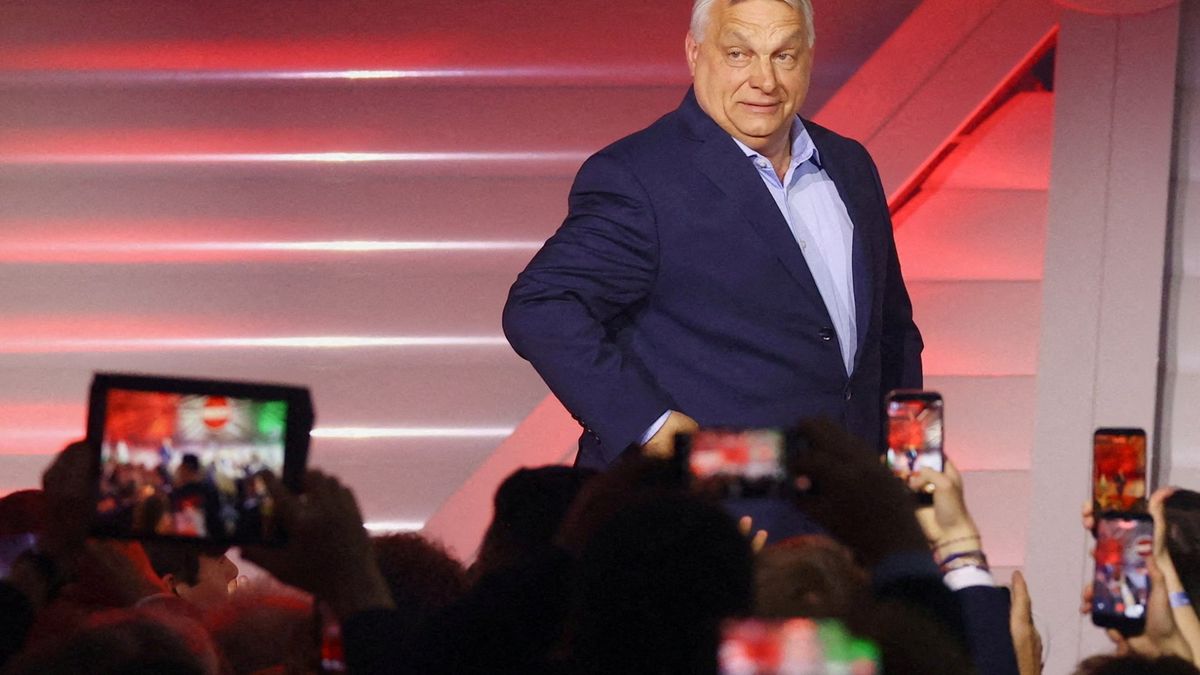
In a development underscoring the complex dynamics of Hungarian politics, Viktor Orban, Hungary's former Prime Minister and long-standing leader of the Fidesz party, was re-elected as the party's chairman for another year. This occurred despite Fidesz's significant defeat in the April 12 general election, where it lost its parliamentary majority to the newly ascendant, centre-right, and pro-Western Tisza party led by Peter Magyar. Orban's re-election, secured with overwhelming support from 729 out of 737 delegates at the Fidesz party congress, highlights his enduring control over the party apparatus, even as his political influence on the national stage faces its most substantial challenge in over a decade.
Orban, 62, who had governed Hungary for 16 years, acknowledged the electoral loss, stating that Fidesz, while a "fantastic governing party," now needed to transform into a "functional opposition party" ready to govern again. His defiant declaration, "I do not give up, I never, never, never, never, never give up," signals a clear intention to remain a central figure in Hungarian politics, potentially positioning himself for a future return to power. This internal consolidation of power within Fidesz contrasts sharply with the external political environment, where the new government is rapidly dismantling key aspects of Orban's legacy.
Orban's tenure was characterized by his promotion of an "illiberal" model of democracy, which involved consolidating power, eroding judicial independence, controlling state media, and influencing universities. During this period, Hungary fostered close ties with leaders like former U.S. President Donald Trump and Russian President Vladimir Putin, often placing it at odds with the European Union's democratic norms and foreign policy objectives. The April election, however, marked a decisive turning point. Peter Magyar's Tisza party secured a two-thirds parliamentary majority, a mandate strong enough to reverse many of the constitutional changes introduced under Orban that had been criticized for undermining democratic institutions.
Since taking office in May, Prime Minister Magyar has moved swiftly to implement his reform agenda. His government has pledged to amend the constitution, potentially leading to the removal of officials appointed by Orban, including President Tamas Sulyok. These actions signify a concerted effort to restore checks and balances and realign Hungary's governance with broader European democratic standards. The speed and scope of these proposed changes underscore the depth of the political shift and the new government's commitment to a different path for Hungary.
Perhaps the most significant geopolitical implication of this political transition is Hungary's re-engagement with the European Union. Under Orban, Hungary frequently used its veto power to obstruct EU initiatives, most notably delaying critical decisions regarding financial aid and accession talks for Ukraine. A pivotal policy shift by the new government was its agreement to drop Orban's veto against Ukraine pursuing EU membership, allowing the accession process to resume with talks scheduled in Luxembourg. This move is a substantial victory for EU unity and its common foreign policy, particularly in the context of the ongoing conflict in Ukraine and the bloc's efforts to support Kyiv.
In a direct response to this policy reversal and the new government's commitment to democratic reforms, the EU announced it would unlock 16.4 billion euros ($19 billion) out of the 18 billion euros ($21 billion) in funds previously frozen due to concerns over democratic backsliding, corruption, and human rights issues under Orban's administration. This unfreezing of funds demonstrates the EU's significant financial leverage and its commitment to upholding the rule of law and democratic principles among its member states. It also signals a potential thawing of relations between Brussels and Budapest, which had been strained for years.
The shift in Hungary's political orientation carries profound geopolitical ramifications. A more pro-Western and EU-aligned Hungary removes a key internal obstacle to consensus within the bloc, particularly on issues related to Russia and Ukraine. Orban's pro-Russian stance had often been a source of frustration for other EU and NATO members, complicating efforts to present a united front against Moscow. The new government's policies are likely to strengthen the EU's collective security posture and its ability to act decisively on the international stage.
Furthermore, the decline of Orban's "illiberal" model in Hungary could have a ripple effect across Central and Eastern Europe, potentially emboldening pro-democracy movements and challenging similar populist or nationalist narratives in other EU member states. This development reinforces the idea that despite internal challenges, the core values of liberal democracy and rule of law remain central to the European project.
Despite his re-election as party leader, Orban and Fidesz face a challenging future. Opinion polls conducted in May by the Publicus Institute show a significant decline in Fidesz's public support, falling to 17 percent from 39 percent in the election, while Tisza's support rose to 55 percent. This indicates that Orban's internal party strength does not necessarily translate to broader public appeal in the current political climate. His task of transforming Fidesz into an effective opposition party, capable of regaining public trust and preparing for a return to governance, will be formidable.
Orban's continued leadership of Fidesz suggests a long-term strategy to rebuild the party and potentially capitalize on future political shifts or public discontent. However, the immediate challenge for Fidesz will be to adapt to an opposition role after years of uninterrupted power, while simultaneously contending with a popular new government committed to reversing its foundational policies. The political landscape in Hungary has irrevocably changed, and Orban's future influence will depend on his ability to navigate this new reality.
The re-election of Viktor Orban as Fidesz leader, juxtaposed with his party's electoral defeat and the new government's rapid pro-Western reforms, marks a pivotal moment for Hungary and the broader European Union. It signifies a potential end to Hungary's period of democratic backsliding and obstructionism within the EU, paving the way for renewed cooperation and alignment with European values. The unfreezing of EU funds and the removal of the veto on Ukraine's accession talks are tangible outcomes of this shift, reinforcing the EU's leverage and its commitment to its foundational principles. While Orban remains a force within his party, the national political trajectory of Hungary has demonstrably pivoted, with significant implications for regional stability, EU cohesion, and the future of democratic governance in Central Europe.
Source referenced: ALJAZEERA
This brief was synthesized by our Editorial Engine and reviewed by The Ground Narrative team.