TRENDING

Saturday, 24 October 2026
----------------------
13 Jumada Al-Awwal 1448 AH
Hezbollah MP Ibrahim Moussawi defends the group's role in Lebanon, citing the state's failure to protect citizens and Israel's continued violations of sovereignty.
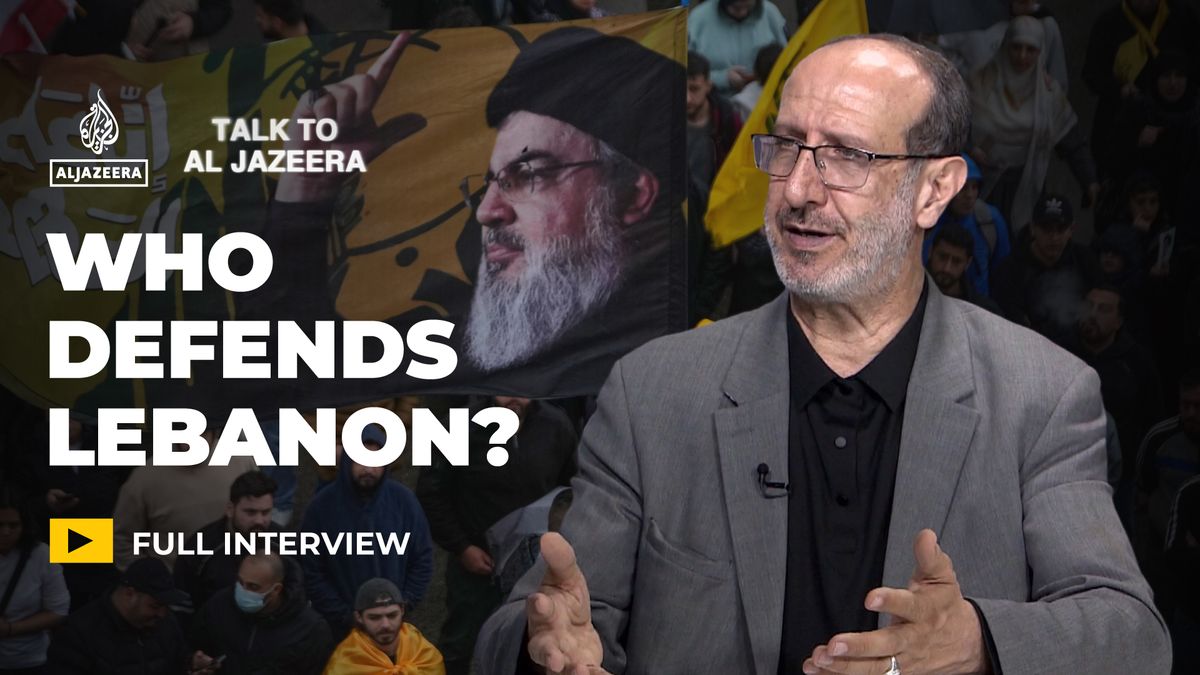
Hezbollah's recent interview with Al Jazeera's Talk to Al Jazeera program has sparked renewed debate about the group's role in Lebanon. In the interview, Hezbollah MP Ibrahim Moussawi rejects accusations that the group undermines the state, instead arguing that diplomacy has failed and that resistance remains necessary when governments cannot protect their citizens.
To understand Hezbollah's position, it is essential to consider the historical context of Lebanon's fragile ceasefire and the group's emergence as a key player in regional politics. The 2006 Lebanon War, which saw Israel's invasion of Lebanon, marked a turning point in the country's relations with its southern neighbor. The war resulted in significant human suffering and economic losses, further eroding trust between the two nations.
Moussawi's assertion that Israel continues to violate Lebanese sovereignty is supported by recent events. Israel's repeated incursions into Lebanese airspace, as well as its ongoing occupation of the Shebaa Farms, have created an environment of tension and instability. These actions have led to increased military build-up along the border, heightening the risk of conflict.
Hezbollah's involvement in regional politics is driven by a complex set of strategic motivations. The group's close ties with Iran have provided it with significant financial and military support, enabling it to maintain a robust military presence in Lebanon. This presence has allowed Hezbollah to play a key role in regional politics, particularly in the context of the Syrian Civil War.
Hezbollah's continued resistance against Israel has significant implications for regional stability. The group's actions have contributed to a cycle of violence and retaliation, which has led to increased tensions between Lebanon and its neighbors. This cycle has also drawn in other regional actors, including Iran and the United States, further complicating the situation.
Hezbollah's role in Lebanon is a complex and multifaceted issue, driven by a range of strategic motivations and historical context. While the group's actions have contributed to regional instability, they also reflect the failure of diplomacy and the need for resistance in the face of Israeli aggression. As the situation in Lebanon continues to evolve, it is essential to consider the long-term implications of Hezbollah's actions and the potential consequences for regional stability.
Source referenced: ALJAZEERA
This brief was synthesized by our Editorial Engine and reviewed by The Ground Narrative team.