TRENDING

Monday, 26 October 2026
----------------------
15 Jumada Al-Awwal 1448 AH
Hezbollah's assertion that any US-Iran agreement must include Lebanon underscores Tehran's strategic use of its proxy to project regional influence and secure its interests in broader diplomatic engagements. This development highlights the intricate link between the ongoing conflict in the Levant and the wider geopolitical dynamics between Washington and Tehran.
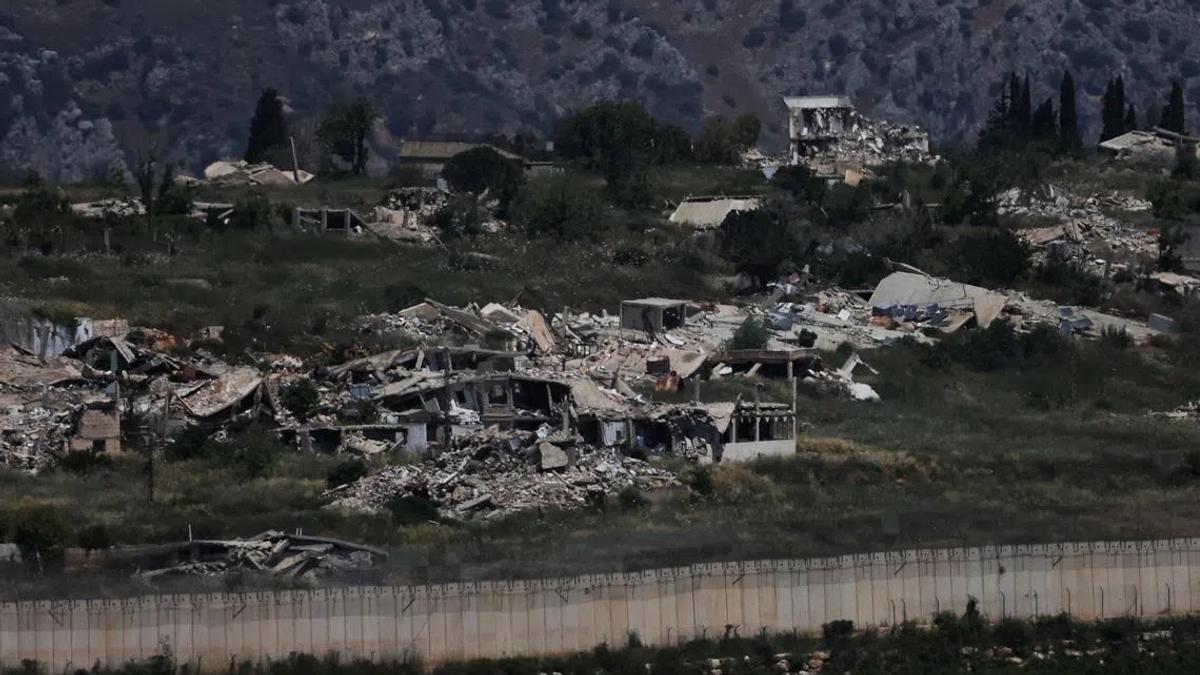
On June 12, 2026, a leading Hezbollah politician, Hassan Fadlallah, publicly expressed the group's complete confidence that Iran would insist on Lebanon's inclusion in any potential deal with the United States. This statement emerges amidst growing expectations for an agreement between Tehran and Washington, which a Western source indicated could involve a memorandum to halt a broader conflict in the Gulf, potentially signed as early as Sunday. The ongoing conflict in Southern Lebanon, marked by Israeli occupation of swathes of territory and continued airstrikes, provides a volatile backdrop to these high-stakes diplomatic maneuvers. Hezbollah, founded by Iran's Revolutionary Guards in 1982, entered the regional conflict on March 2, initiating hostilities against Israel and prompting a significant Israeli offensive that has resulted in thousands of casualties in Lebanon. This declaration from Hezbollah, echoed by Iranian officials, underscores the profound interconnectedness of regional conflicts and the complex web of actors influencing the Middle East's geopolitical landscape.
Iran's unwavering insistence on Lebanon's inclusion in any deal with the United States is not merely an act of solidarity with an ally but a strategic imperative rooted in its regional power projection. Lebanon, through Hezbollah, serves as a critical component of Iran's 'Axis of Resistance,' providing strategic depth against Israel and a vital forward operating base in the Levant. Hezbollah's deep ideological and operational ties to Tehran, cultivated since its inception, make it an indispensable proxy for advancing Iranian interests. Mohsen Rezaei, an adviser to Iran's supreme leader, explicitly stated that Hezbollah had "made great sacrifices" and that Lebanon "will be an inseparable part of any agreement and any ceasefire." This highlights how Iran leverages its non-state allies to exert influence, create leverage in international negotiations, and secure its regional security architecture. For Tehran, protecting Hezbollah's operational capacity and political standing in Lebanon is paramount to maintaining its strategic posture in the Middle East.
The ongoing diplomatic efforts and the statements from Hezbollah and Iran cast a stark light on Lebanon's precarious position. The country's internal political landscape is heavily influenced by Hezbollah, which operates as a powerful military and political force, often independent of the Lebanese state's official foreign policy. While the United States has been mediating talks between the Lebanese and Israeli governments, Hezbollah is not a party to these discussions and has explicitly rejected a U.S.-backed plan that would require its withdrawal from southern Lebanon. This situation underscores a fundamental challenge to Lebanese sovereignty: its future is being significantly shaped by external powers and a powerful non-state actor, rather than solely by its elected government. The continued Israeli military actions in southern Lebanon, including airstrikes, further destabilize an already fragile state grappling with severe economic crises and internal divisions, making any path to national recovery increasingly complex.
The potential memorandum between the United States and Iran to halt a broader conflict in the Gulf suggests a significant de-escalation effort. However, Iran's firm stance that any such deal must also encompass an end to fighting in Lebanon reveals the comprehensive nature of its regional strategy. For Washington, a deal might primarily aim to stabilize the Gulf and address nuclear proliferation concerns, but it must contend with Iran's conditions that extend to the Levant. This interconnectedness means that compartmentalizing regional conflicts is increasingly difficult. The U.S. faces the complex task of balancing its desire for de-escalation with the security concerns of its allies, particularly Israel, while navigating the intricate web of Iranian proxy networks. The success of these negotiations will depend on the ability of both sides to find common ground across multiple theaters of conflict and influence.
Hezbollah's military actions against Israel, which initiated the current phase of conflict in March, pose a direct and persistent threat to Israeli security. The Israeli offensive in Lebanon, resulting in thousands of casualties, reflects Jerusalem's determination to counter this threat. From Israel's perspective, any agreement that does not adequately address Hezbollah's military presence, its arsenal, and its operational capabilities along the northern border would be viewed with deep skepticism. The ongoing conflict, marked by Israeli occupation and airstrikes in southern Lebanon, underscores the volatile security environment. Israel's primary concern will be to ensure that any diplomatic resolution does not inadvertently legitimize or strengthen Hezbollah's position, thereby entrenching a long-term security challenge. The outcome of the US-Iran negotiations, particularly regarding Lebanon, will have profound implications for regional stability and Israel's strategic calculus.
The confidence expressed by Hezbollah, coupled with Iran's insistence on Lebanon's inclusion in any deal with the United States, highlights the intricate and often precarious path to regional stability in the Middle East. This situation underscores the deep strategic ties between Iran and its proxies, the challenges to state sovereignty in conflict zones, and the complex, multi-layered nature of international diplomacy. While a potential US-Iran agreement could offer a glimmer of hope for de-escalation in the Gulf, it simultaneously risks entrenching Iran's influence in Lebanon, potentially solidifying the status quo rather than fundamentally altering it. The long-term stability of Lebanon and the broader Levant hinges on how these intricate negotiations unfold and whether they can genuinely address the root causes of conflict, rather than merely managing their symptoms.
Source referenced: STRAITSTIMES
This brief was synthesized by our Editorial Engine and reviewed by The Ground Narrative team.