TRENDING

Monday, 19 October 2026
----------------------
8 Jumada Al-Awwal 1448 AH
UN Secretary-General Antonio Guterres is set to visit Cyprus from July 27 to 29, marking the first visit by a UN chief in 16 years. The visit aims to revive the stalled peace process and explore a possible new framework for resolving the Cyprus issue.
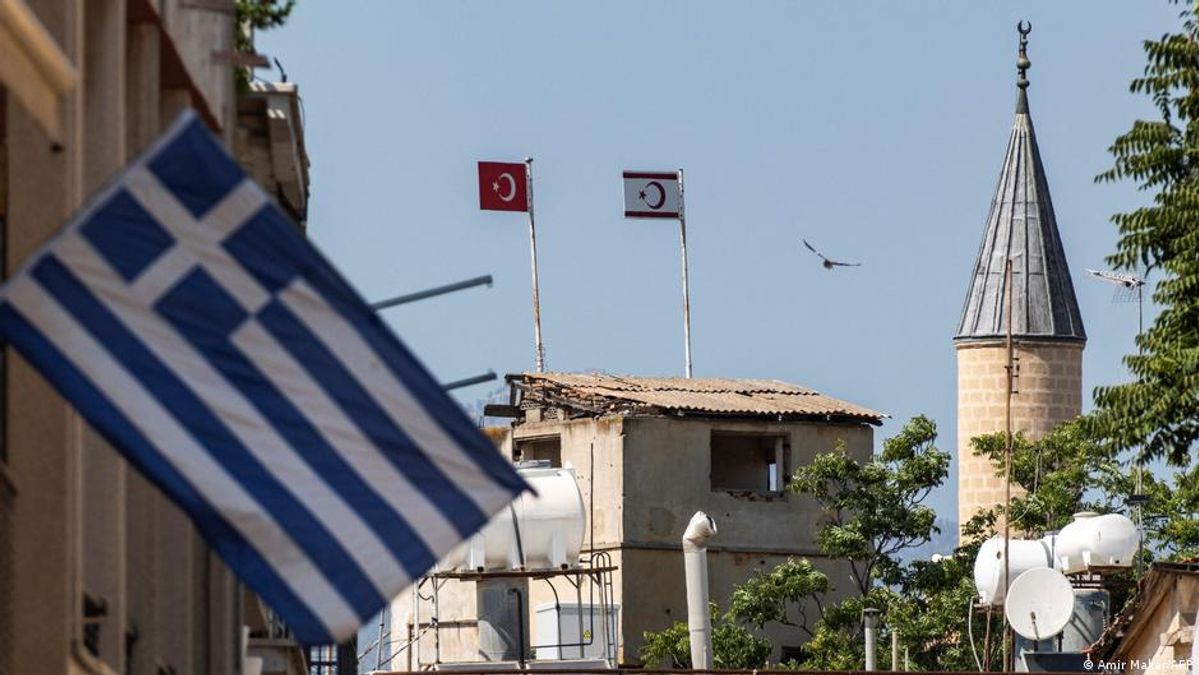
The island of Cyprus has been divided since Turkey's 1974 invasion, marking the 52nd anniversary of this pivotal event. The Cyprus issue remains one of the world's longest-running unresolved disputes. The United Nations has been actively engaged in brokering a comprehensive settlement, with various initiatives and proposals put forth over the years.
UN Secretary-General Antonio Guterres is set to visit Cyprus from July 27 to 29, marking the first visit by a UN chief in 16 years. This visit is part of a renewed UN initiative, launched after an informal enlarged meeting on Cyprus held in Geneva in March. The UN secretary-general's personal envoy, Maria Angela Holguin, has held consultations in Cyprus, Greece, Turkey, the United Kingdom, and Brussels to assess the feasibility of resuming negotiations.
Reports suggest that the UN is exploring a possible new framework for resolving the Cyprus issue. This framework would retain the agreed model of a bizonal, bicommunal federation, as set out in relevant UN Security Council resolutions, while granting greater autonomy to the two constituent states and limiting the powers of the federal government. In exchange for this broader autonomy, the Turkish Cypriot side would be expected to accept territorial adjustments, including the return of the fenced-off city of Varosha and the town of Morphou.
The European Union's increased involvement in the Cyprus issue is a significant development. The EU's stronger engagement and the appointment of Executive Vice-President Raffaele Fitto as the EU's envoy on Cyprus are creating new momentum. The EU's goal is to facilitate progress on the Cyprus issue, which could, in turn, facilitate movement on several key areas of cooperation with Turkey.
Guterres' visit and the renewed UN initiative have significant strategic implications. The visit marks a new chapter in the island's long-running peace process, and the proposed new framework for resolution could potentially bridge the gap between the Greek Cypriot commitment to a federal settlement and Turkey's long-standing support for a two-state solution. The EU's increased involvement also underscores the importance of the Cyprus issue in the broader context of EU-Turkey relations.
The outcome of Guterres' visit and the renewed UN initiative will have far-reaching consequences for the island of Cyprus and the wider region. A successful resolution of the Cyprus issue could have a positive impact on regional stability, while a failure to reach a settlement could exacerbate tensions and undermine the prospects for peace.
Guterres' visit to Cyprus marks a significant development in the island's long-running peace process. The proposed new framework for resolution and the EU's increased involvement offer new opportunities for progress. However, the path to a comprehensive settlement remains fraught with challenges, and the outcome of Guterres' visit will be closely watched by diplomats and analysts around the world.
Editor's Note: While the proposed new framework for resolution offers new opportunities for progress, the path to a comprehensive settlement remains uncertain and challenging.
Source referenced: DW
This brief was synthesized by our Editorial Engine and reviewed by The Ground Narrative team.