TRENDING

Sunday, 25 October 2026
----------------------
14 Jumada Al-Awwal 1448 AH
The tragic death of Lyhanna has brought to light profound systemic failures within France's judicial and child protection systems, revealing a critical gap between policy and implementation. This crisis challenges public trust and raises questions about governance effectiveness in a major European democracy.
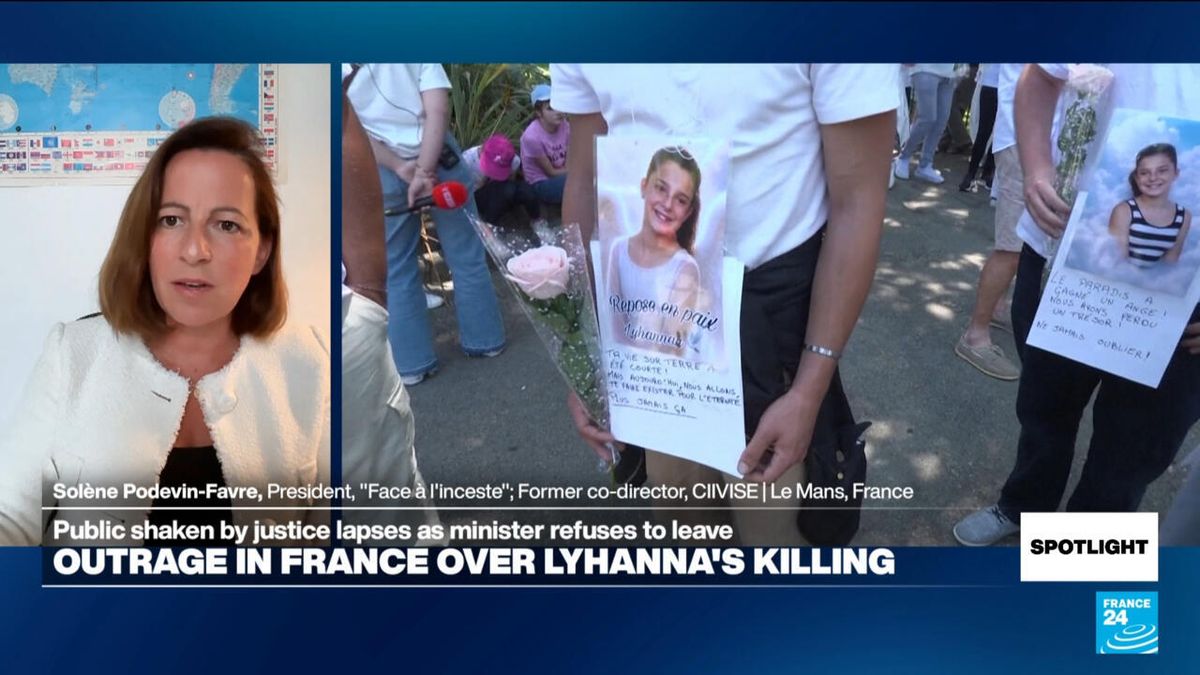
The tragic death of Lyhanna in France has ignited a national debate, exposing what experts describe as profound and long-standing systemic failures within the nation's judicial and child protection frameworks. This incident, while a domestic tragedy, carries significant implications for France's governance, its commitment to human rights, and its international standing as a leading European democracy.
The immediate catalyst for this outcry is the death of Lyhanna, which occurred under circumstances that have brought to light a critical lapse in state protection. According to Solène Podevin-Favre, President of the 'Face à l'inceste' advocacy group and former Co-Director of Ciivise, Lyhanna's death is not an isolated incident but rather a stark manifestation of a "systemic failure" that has been repeatedly identified and documented for years. The core of the problem lies not in a lack of awareness, evidence, or even proposed solutions, but in a persistent and dangerous gap between knowledge and decisive action.
The murder suspect in Lyhanna's case had reportedly been the subject of multiple complaints and investigations concerning allegations of sexual abuse of minors, supported by medical evidence, dating back to at least 2017. Despite these alarming warning signs and documented concerns, the French justice system failed to intervene effectively. This inaction allowed a pattern of alleged abuse to continue unchecked, ultimately culminating in a tragic outcome that many argue was preventable.
The analysis points to a complex interplay of factors contributing to this systemic breakdown. Investigations into child abuse are frequently under-resourced, hindering their thoroughness and timeliness. Professionals within the system, from social workers to judicial personnel, are often insufficiently trained to handle the complexities and sensitivities of child protection cases. Furthermore, judicial responses are frequently constrained by institutional overload, leading to backlogs and delayed processing of critical cases.
This confluence of deficiencies means that while child protection has been the subject of numerous reports, legislative proposals, and public commitments, the actual implementation of these measures remains fragmented and inadequate. Warning signs accumulate, opportunities for intervention are missed, and the protective mechanisms designed to safeguard vulnerable children cease to function effectively. Podevin-Favre highlights how failures across prevention, training, care, and justice reinforce one another, creating a perilous environment where children are not interviewed according to established protocols, complaints remain unexamined for years, and prosecutorial decisions are made under severe resource constraints.
For a nation like France, a prominent member of the G7 and a vocal advocate for human rights on the global stage, such profound systemic failures carry significant geopolitical weight. Domestically, the crisis erodes public trust in state institutions, particularly the judiciary, which is a cornerstone of democratic governance and the rule of law. When the state demonstrably fails to protect its most vulnerable citizens, it can foster a sense of disillusionment and potentially lead to increased social unrest or demands for radical political change. The growing public mobilization around Lyhanna's case reflects a broader demand for accountability and for a child protection framework that acts proactively rather than reactively.
Internationally, this incident challenges France's image and soft power. A nation's credibility in advocating for human rights abroad is intrinsically linked to its performance at home. Failures in upholding fundamental rights, such as the protection of children, can undermine its moral authority and diplomatic influence. Other nations, particularly those with less developed judicial systems, might look to France's struggles as a cautionary tale or, in some cases, as a point of criticism against Western democratic models. The effectiveness of governance in a major European power is a matter of international interest, as it speaks to the stability and reliability of the broader European framework.
The central question, as posed by experts, is not whether solutions exist, but why political systems repeatedly acknowledge these failures without undertaking the necessary structural reforms to prevent them. This suggests a deeper political inertia or a lack of sustained commitment to fundamental change. Addressing this crisis requires more than incremental adjustments; it demands a comprehensive overhaul of the child protection and judicial systems, encompassing increased resource allocation, enhanced professional training, streamlined investigative protocols, and a robust accountability framework.
The long-term consequences of inaction are dire, extending beyond individual tragedies to the very fabric of French society and its international standing. Restoring public trust, upholding the rule of law, and ensuring the fundamental human right to protection for all children are paramount. The death of Lyhanna serves as a critical inflection point, demanding that France confront these systemic deficiencies with the urgency and political will required to implement lasting and effective reforms.
Source referenced: FRANCE24
This brief was synthesized by our Editorial Engine and reviewed by The Ground Narrative team.