TRENDING

Sunday, 25 October 2026
----------------------
14 Jumada Al-Awwal 1448 AH
The collapse of the Future Combat Air System (FCAS) project highlights Europe's struggle to achieve strategic autonomy from the US, but analysts say it's not a setback for the continent's defense integration.
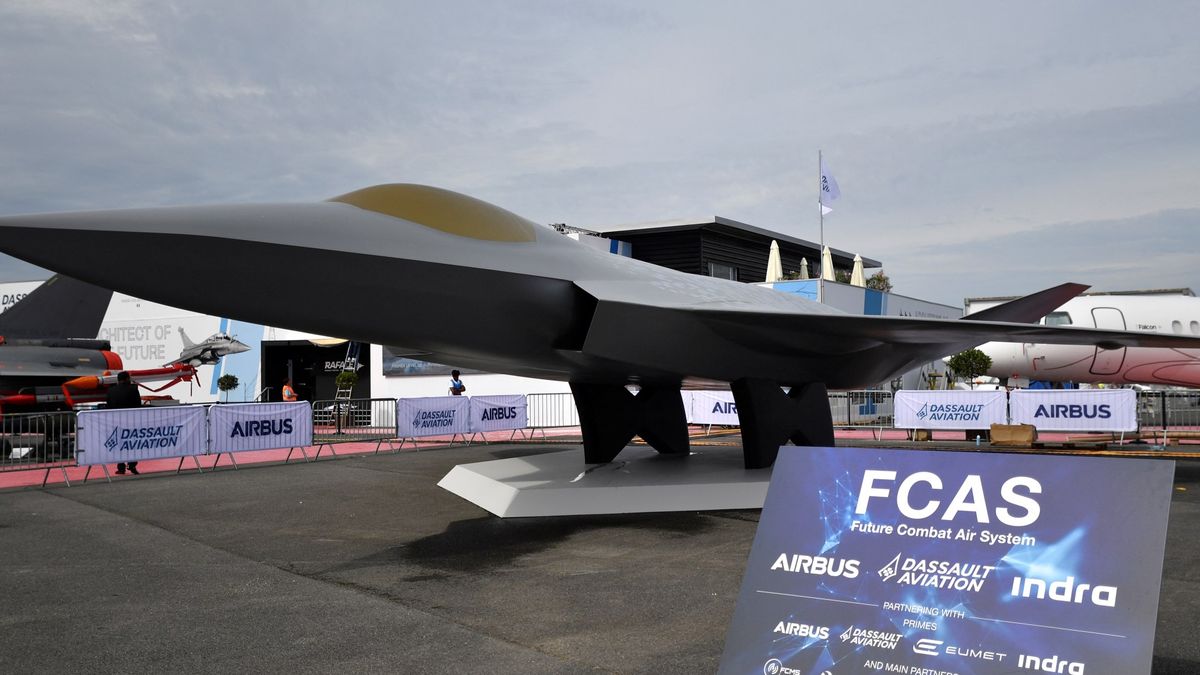
The recent announcement by France and Germany to terminate the Future Combat Air System (FCAS) project marks a significant blow to Europe's efforts to boost defense cooperation and reduce its reliance on the US. The project, which aimed to develop a sixth-generation fighter jet, was seen as a counterweight to the growing concerns over the US's willingness to defend its NATO allies.
The FCAS project was initiated in 2017, a time when the US was still committed to its NATO obligations. However, since then, the US has withdrawn much of its support for Ukraine and has consistently berated its European partners for not spending enough on their own defense. The Trump administration's approach has created uncertainty among European leaders, who are now reevaluating their defense strategies.
Analysts argue that the FCAS collapse is not a collapse of European defense integration, but rather a setback. They point out that the project was ambitious and complex, and its military relevance may be overstated. However, the failure of FCAS highlights the limitations of Europe's defense industrial landscape, where national interests often clash with the broader goal of defense integration.
Despite the setback, Europe can still achieve strategic autonomy through shared military integration. Analysts suggest that the continent should focus on developing capabilities that are cheap, mass-produced, and easily deployable. The Russia-Ukraine war has shown that such capabilities are essential for deterring and defending against threats.
The war in Ukraine has taught Europe a valuable lesson: the need for cheap, mass-produced capabilities. The FCAS project, which aimed to develop a very expensive capability, was not the key need for Europe's deterrence today. Instead, the continent should focus on developing capabilities that can be produced quickly and in large numbers.
The FCAS collapse highlights the challenge of integrating all systems and domains into a single battlefield management space. The US is ahead of Europe in this regard, but the continent can learn from its mistakes. The Russia-Ukraine war has shown that drones, which are cheap and easily produced, can be a game-changer on the battlefield.
The collapse of the FCAS project is a setback for Europe's defense integration, but it's not a collapse. Analysts argue that the continent can still achieve strategic autonomy through shared military integration and the development of cheap, mass-produced capabilities. The way forward is clear: Europe must focus on developing capabilities that are essential for deterring and defending against threats, and it must do so through shared military integration.
Editor's Note: The analysis is based on the available information, but some aspects of the future consequences of the FCAS collapse are uncertain.
Source referenced: ALJAZEERA
This brief was synthesized by our Editorial Engine and reviewed by The Ground Narrative team.