TRENDING

Saturday, 24 October 2026
----------------------
13 Jumada Al-Awwal 1448 AH
Iran launched ballistic missiles towards Kuwait and Bahrain, prompting US military interception and retaliatory strikes on Iranian sites, marking a significant escalation in the volatile Persian Gulf region. This incident underscores the deepening geopolitical friction between Tehran and Washington, with profound implications for regional stability, energy security, and ongoing diplomatic stalemates.
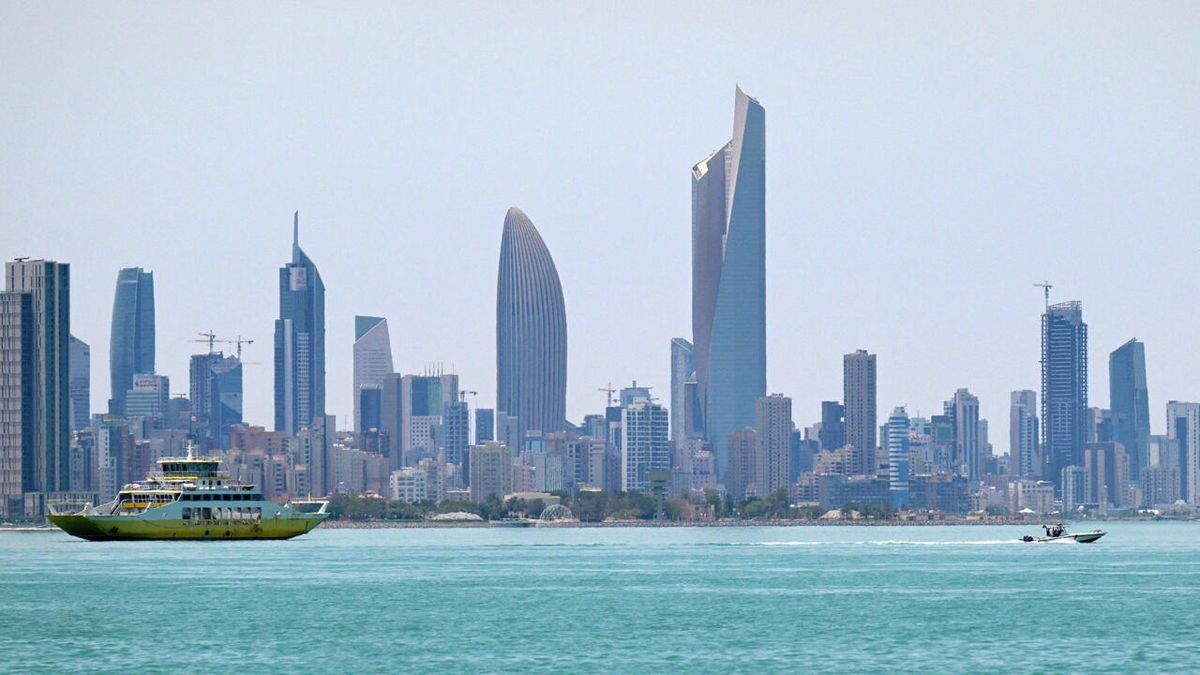
On June 6, 2026, the volatile geopolitical landscape of the Persian Gulf witnessed a significant escalation as Iran launched seven ballistic missiles towards the neighboring Gulf nations of Kuwait and Bahrain. US military officials confirmed that six of these missiles were successfully intercepted by US forces, while a seventh failed to reach its intended target. In a swift and direct response, US Central Command (CENTCOM) subsequently conducted strikes on Iranian coastal surveillance radar sites located in Goruk and on Qeshm Island.
Iran's Revolutionary Guards claimed responsibility for the missile launches, stating they had hit "enemy bases" in the Gulf. This action, according to Iranian state media, was a retaliation for an alleged "invasion of the child-killing and terrorist US army into Sirik and Qeshm Island." Both Kuwait and Bahrain swiftly condemned the attacks, with Bahrain's foreign ministry denouncing them as "blatant aggression" and a "flagrant violation of the sovereignty of both countries." Kuwait's military confirmed it was responding to "hostile" missile and drone attacks, indicating a broader pattern of aerial threats.
This direct military exchange highlights the perilous state of US-Iran relations and the broader regional power struggle. For Iran, the missile launches appear to be a calculated show of force, aimed at demonstrating its capacity to project power and retaliate against perceived aggressions, particularly against US military presence in the region. The targeting of Kuwait and Bahrain, both key US allies and hosts to significant American military assets (including the US Fifth Fleet in Bahrain), serves as a clear message to Washington and its regional partners.
The US response, involving both missile defense and retaliatory strikes, underscores its commitment to protecting its forces and allies in the Gulf. The interception of Iranian drones near the Strait of Hormuz prior to the missile launches further indicates a heightened state of alert and a proactive stance by CENTCOM to maintain freedom of navigation and regional security. This incident also comes shortly after the US authorized a nearly $2 billion sale of anti-drone weapons to Kuwait, signaling Washington's ongoing efforts to bolster its allies' defensive capabilities against evolving threats.
The missile exchange is not an isolated event but rather a symptom of deeper, unresolved tensions between Iran and the West. Diplomatic efforts remain stalled, with Iran's Deputy Foreign Minister Kazem Gharibabadi accusing the International Atomic Energy Agency (IAEA) of politicizing its oversight of Tehran's nuclear program. Iran asserts that the loss of IAEA oversight at some facilities is a consequence of US and Israeli attacks, not a lack of cooperation, creating "ambiguity" about its nuclear ambitions. Concurrently, negotiations between Tehran and Washington regarding the release of frozen Iranian funds, estimated at $100-123 billion, have reportedly faltered, with Iran viewing the release as a "test of trust" for any potential agreement.
Economically, the escalation in the Gulf carries significant global implications. The Strait of Hormuz, a critical chokepoint for global oil shipments, remains a flashpoint. Comments from Rosneft CEO Igor Sechin, stating that China is best prepared for a closure of the Strait due to its energy security policies, highlight the international concern over potential disruptions to global energy supplies. The UN World Food Program (WFP) has also warned that millions are being pushed into acute hunger by the ongoing "Iran war" – a term likely encompassing the broader regional conflicts and their economic fallout – with rising oil and food prices exacerbating a global food insecurity crisis that could affect 45 million more people.
The events in the Gulf are intertwined with wider regional instability. In Lebanon, an Israeli strike reportedly killed several Lebanese soldiers, including an officer, on the Khardali-Nabatieh road in the south. This incident is particularly sensitive as the Lebanese army has historically avoided direct involvement in confrontations between Hezbollah and Israel. Iranian Foreign Minister Abbas Araqchi, however, rejected claims by Lebanese President Joseph Aoun that Lebanon was being used as a "bargaining chip" by Tehran in its negotiations with the US, asserting that Iran's interests do not dictate Lebanon's fate. The rising civilian death toll in Lebanon due to ongoing Israeli-Hezbollah exchanges further underscores the pervasive human cost of these regional conflicts.
The latest military confrontation in the Persian Gulf marks a dangerous turn, elevating the risk of a wider regional conflict. The direct engagement between US forces and Iranian assets, coupled with Iran's willingness to target US allies, signals a more aggressive posture from Tehran. Without a breakthrough in diplomatic negotiations concerning Iran's nuclear program and frozen assets, and with continued US sanctions, the cycle of escalation is likely to persist. The international community faces the urgent challenge of de-escalating tensions to prevent further destabilization of a region critical to global energy security and humanitarian well-being. The incident serves as a stark reminder of the interconnectedness of geopolitical, economic, and security challenges in the Middle East.
Source referenced: FRANCE24
This brief was synthesized by our Editorial Engine and reviewed by The Ground Narrative team.