TRENDING

Monday, 26 October 2026
----------------------
15 Jumada Al-Awwal 1448 AH
WHO Director-General Tedros Adhanom Ghebreyesus visits Uganda to assess the country's response to the Ebola outbreak, which has spread to the DRC's Ituri province. The outbreak has raised concerns about regional coordination and the effectiveness of containment measures.
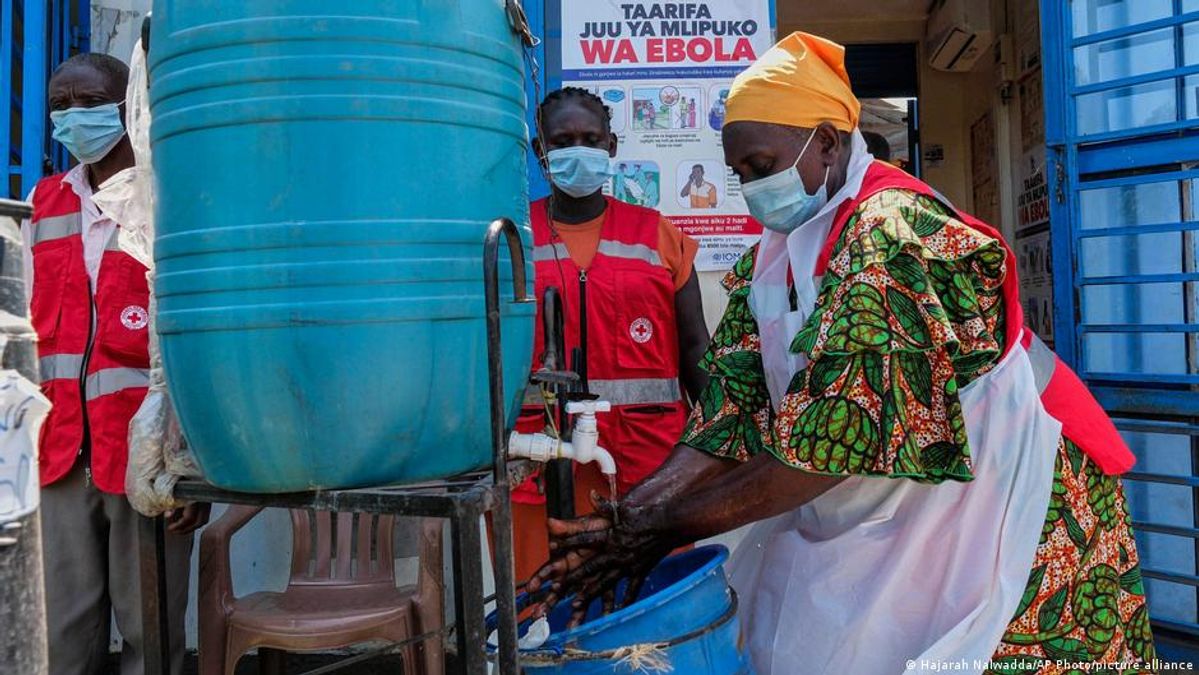
The ongoing Ebola outbreak in the Democratic Republic of Congo (DRC) has raised significant concerns about regional coordination and the effectiveness of containment measures. The World Health Organization (WHO) has declared a public health emergency, and the Africa Centres for Disease Control (Africa CDC) has issued updated lab-confirmed case numbers. The current outbreak, the 17th in the DRC since 1976, involves the Bundibugyo species of ebolavirus, for which there is no recognized vaccine.
The outbreak has spread to Uganda, with 19 confirmed cases, 14 among people who entered from the DRC and five Ugandan nationals. Two deaths have been reported, and the WHO has praised local authorities for their success in largely containing the handful of cases that have come across the border. However, the WHO Director-General, Tedros Adhanom Ghebreyesus, has expressed concerns about blanket travel restrictions, stating that they do not work and may hinder regional coordination.
The WHO's visit to Uganda is a strategic move to assess the country's readiness to respond to the outbreak and to support efforts aimed at strengthening cross-border coordination. The WHO has pledged continued support, in conjunction with the Africa CDC, in combating and controlling the outbreak. The Africa CDC has also launched a $518-million plan to battle the outbreak over the next six months.
The DRC has a history of Ebola outbreaks, with the first reported case dating back to 1976. The current outbreak is the 17th in the country, and it has raised concerns about the effectiveness of containment measures. The Bundibugyo species of ebolavirus is relatively rare, but it has a lower fatality rate compared to other forms of Ebola.
The Ebola outbreak has significant implications for regional health security and economic stability. The outbreak has disrupted daily life in the DRC, and rumors and disinformation have hindered efforts to contain the virus. The WHO's visit to Uganda is a critical step in strengthening regional coordination and ensuring a coordinated response to the outbreak.
The Ebola outbreak in the DRC and Uganda is a regional concern that requires a coordinated response. The WHO's visit to Uganda is a strategic move to assess the country's readiness to respond to the outbreak and to support efforts aimed at strengthening cross-border coordination. The Africa CDC's plan to battle the outbreak over the next six months is a critical step in containing the virus and preventing further spread.
Editor's Note: The analysis is based on available data and information, but the effectiveness of containment measures and the future consequences of the outbreak are uncertain.
Source referenced: DW
This brief was synthesized by our Editorial Engine and reviewed by The Ground Narrative team.