TRENDING

Monday, 26 October 2026
----------------------
15 Jumada Al-Awwal 1448 AH
The Democratic Republic of Congo's National Assembly has passed a referendum bill, intensifying a constitutional crisis as President Felix Tshisekedi's administration is accused of seeking to remove presidential term limits. This move has unified a fragmented opposition and sparked widespread protests, raising concerns about democratic backsliding and regional stability in the resource-rich nation.
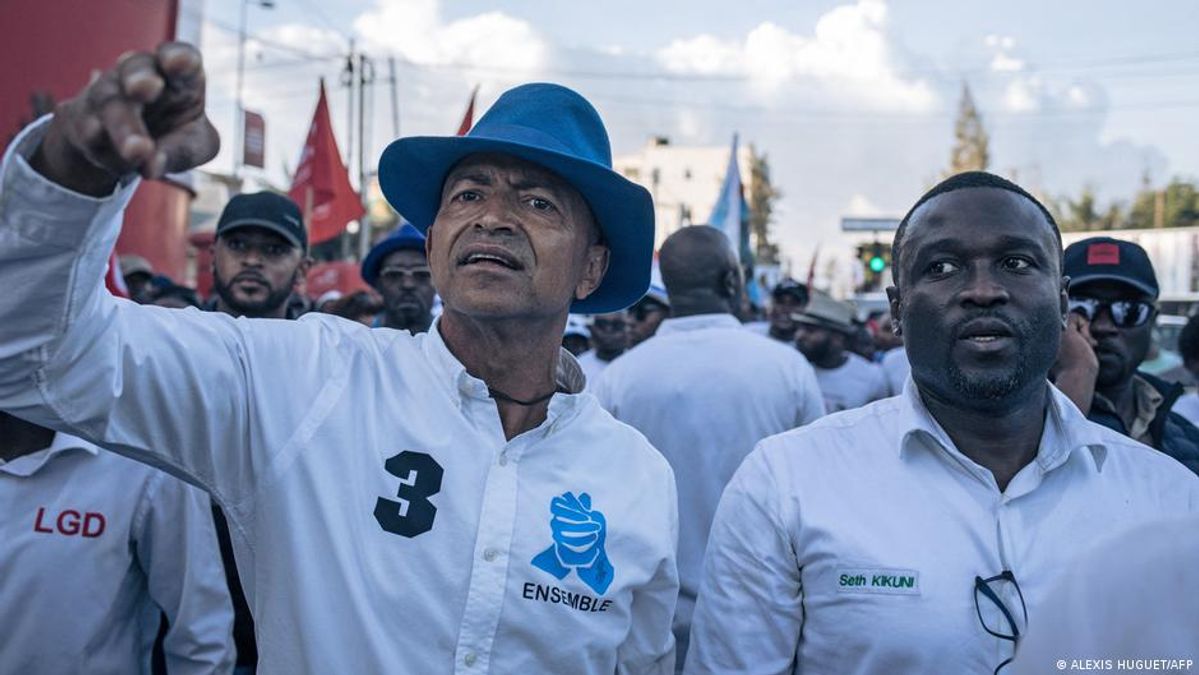
The Democratic Republic of Congo (DRC) is currently embroiled in a significant constitutional standoff following the National Assembly's passage of a bill to organize referendums on June 9. This legislative action, occurring amidst an ongoing Ebola epidemic and persistent insecurity in the eastern regions, is widely perceived by the opposition as a strategic maneuver by President Felix Tshisekedi's ruling coalition to amend the constitution and potentially allow him to seek a third term in office.
President Tshisekedi, whose second and final term is constitutionally set to expire in 2028, has publicly expressed openness to a third term "if the people want me to have a third term." His Union for Democracy and Social Progress (UDPS) party has actively launched a public campaign advocating for constitutional reform. The current constitution, adopted 20 years ago, explicitly limits presidential tenure to two terms, a provision designed to safeguard democratic principles and prevent the concentration of power.
The referendum bill, passed without the participation of boycotting opposition lawmakers, includes a controversial provision that permits changes to presidential term limits in the event of a "major dysfunction" paralyzing state institutions. Critics, including prominent opposition figure Moise Katumbi, who placed second in the 2023 presidential election, have vehemently condemned this as a "subterfuge designed to enable Felix Tshisekedi to carry out a constitutional coup." Katumbi, now in exile, has warned of widespread resistance and protests, emphasizing that the constitution is not a document to be altered at will.
The presidential camp, however, defends the measure as an exercise in popular sovereignty. Paul-Gaspard Ngondankoy, a ruling coalition lawmaker and author of the bill, argues that the "sovereign people who decided in 2006 on the limits set out in the current Constitution can decide again today." This argument frames the proposed changes as a democratic expression of the populace, rather than an executive overreach.
The proposed constitutional overhaul has triggered a profound legal debate within the DRC. Legal experts like Godefroy Mwanabwato of the Tshopo Bar Association contend that popular sovereignty cannot be exercised outside established constitutional limits and anticipate intervention from the Constitutional Court to review the bill's legality. The potential for the judiciary to strike down parts or all of the law underscores the deep institutional challenges facing the country.
Societal reactions are also divided. While some evangelical and Pentecostal churches reportedly view reform favorably, the influential Catholic and Protestant churches have issued warnings against undermining the democratic gains enshrined in the current constitution. This division highlights the broad impact of the political crisis on various segments of Congolese society.
The constitutional standoff carries significant geopolitical weight for the DRC and the wider Great Lakes region. The country, rich in strategic minerals vital for global technology, is already grappling with persistent insecurity in its eastern provinces, exacerbated by the M23 rebellion, which UN experts allege is backed by Rwanda. A prolonged political crisis in Kinshasa could divert attention and resources from these critical security challenges, potentially destabilizing an already fragile region.
Some analysts suggest that President Tshisekedi feels emboldened by international support, particularly in the context of strategic mineral deals. The article notes a DRC-US agreement on minerals, with some observers like Yvon Muya of the University of Ottawa suggesting it strengthens Tshisekedi's political standing and highlights broader geopolitical stakes. Tshisekedi himself has linked constitutional reform to external pressures, stating that "the Americans have demanded certain reforms from us" that "could not be carried out without revising the Constitution." This perspective introduces a complex layer of international influence and resource geopolitics into the domestic political calculus.
The reform push has inadvertently achieved a rare feat: unifying a previously fragmented Congolese opposition. Figures including Moise Katumbi, Martin Fayulu, Matata Ponyo, and Jean-Marc Kabund, alongside civil society groups, have formed the "Article 64 Coalition for the Defense of Constitutional Order" (C64). This coalition is organizing nationwide protests, including a recent "ville morte" (ghost town) strike, and planning further demonstrations.
The opposition is also actively seeking international backing. Katumbi has appealed directly to US leadership, warning that Tshisekedi's disregard for the constitution could jeopardize international partnerships, particularly those related to mineral resources. The former President Joseph Kabila, despite his own legal troubles, has also voiced opposition, labeling the current situation a "dictatorship."
This escalating crisis underscores the precarious balance between executive ambition, constitutional integrity, and the aspirations for democratic governance in the DRC. The outcome will not only shape the country's political future but also have significant ramifications for regional stability and the global supply chain of critical minerals. The international community watches closely as the DRC navigates this critical juncture, with the potential for either democratic consolidation or further political turmoil.
Source referenced: DW
This brief was synthesized by our Editorial Engine and reviewed by The Ground Narrative team.