TRENDING

Saturday, 24 October 2026
----------------------
13 Jumada Al-Awwal 1448 AH
Chinese President Xi Jinping's visit to North Korea marks a significant shift in Beijing's foreign policy, as China seeks to revive and upgrade its relationship with Pyongyang.
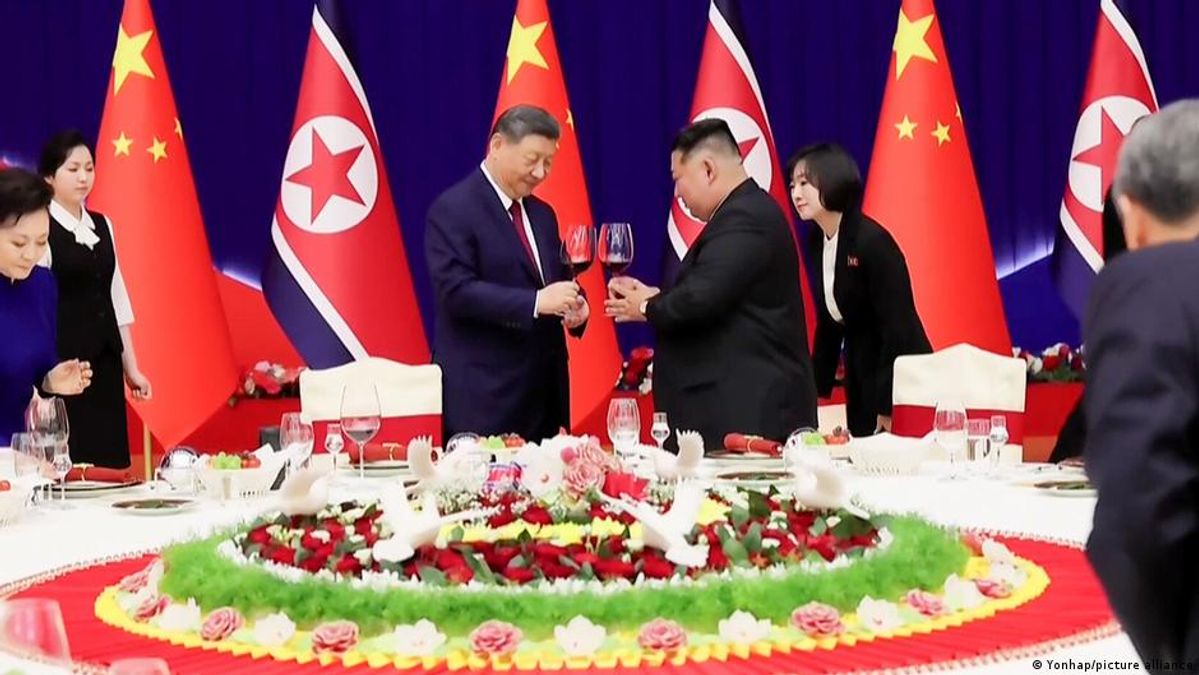
Chinese President Xi Jinping's visit to North Korea marks a significant shift in Beijing's foreign policy, as China seeks to revive and upgrade its relationship with Pyongyang. The visit, which took place on Tuesday, comes as China has seen its traditional ally inch away from its orbit, growing closer to Vladimir Putin's Russia.
The visit is a strategic move by China to reduce North Korea's growing dependence on Russia, as Beijing has become increasingly concerned about North Korea's close military cooperation with Moscow since Russia's full-scale invasion of Ukraine. By strengthening ties with Pyongyang, China aims to secure a stronger strategic partner in addressing broader international and regional challenges.
China and North Korea have a long history of cooperation, dating back to the 1950s. However, in recent years, North Korea has grown closer to Russia, supplying both weaponry and manpower in exchange for Russian military know-how and other support. This shift has raised concerns in Beijing, which has traditionally been North Korea's most prominent supporter on the global stage.
The visit has significant implications for the region, as it suggests that China is willing to tolerate North Korea's nuclear program in exchange for a stronger strategic partnership. This move could embolden North Korea, which has been building up its nuclear weapons program and has tested an array of ballistic missiles in recent years.
The consequences of China's strategic pivot are far-reaching, with potential implications for regional stability and global security. As China and North Korea deepen their cooperation, the risk of conflict in the region increases, particularly if the United States and its allies respond with military action.
The visit is a clear indication that China is willing to prioritize its relationship with North Korea over its concerns about Pyongyang's nuclear program. This move is likely to be seen as a major shift in Beijing's foreign policy, as China seeks to assert its influence in the region and secure a stronger strategic partner.
China's strategic pivot towards North Korea marks a significant shift in Beijing's foreign policy, as China seeks to revive and upgrade its relationship with Pyongyang. The visit has significant implications for regional stability and global security, and its consequences will be far-reaching.
Editor's Note: The analysis is based on publicly available information and may not reflect the full complexity of the situation.
Source referenced: DW
This brief was synthesized by our Editorial Engine and reviewed by The Ground Narrative team.