TRENDING

Friday, 23 October 2026
----------------------
12 Jumada Al-Awwal 1448 AH
Chinese vessels have intruded into waters off Taiwan-controlled Itu Aba and Pratas Islands, marking a significant escalation in Beijing's grey-zone tactics to assert territorial claims. These actions challenge regional stability and international maritime law, drawing strong condemnation from Taipei.
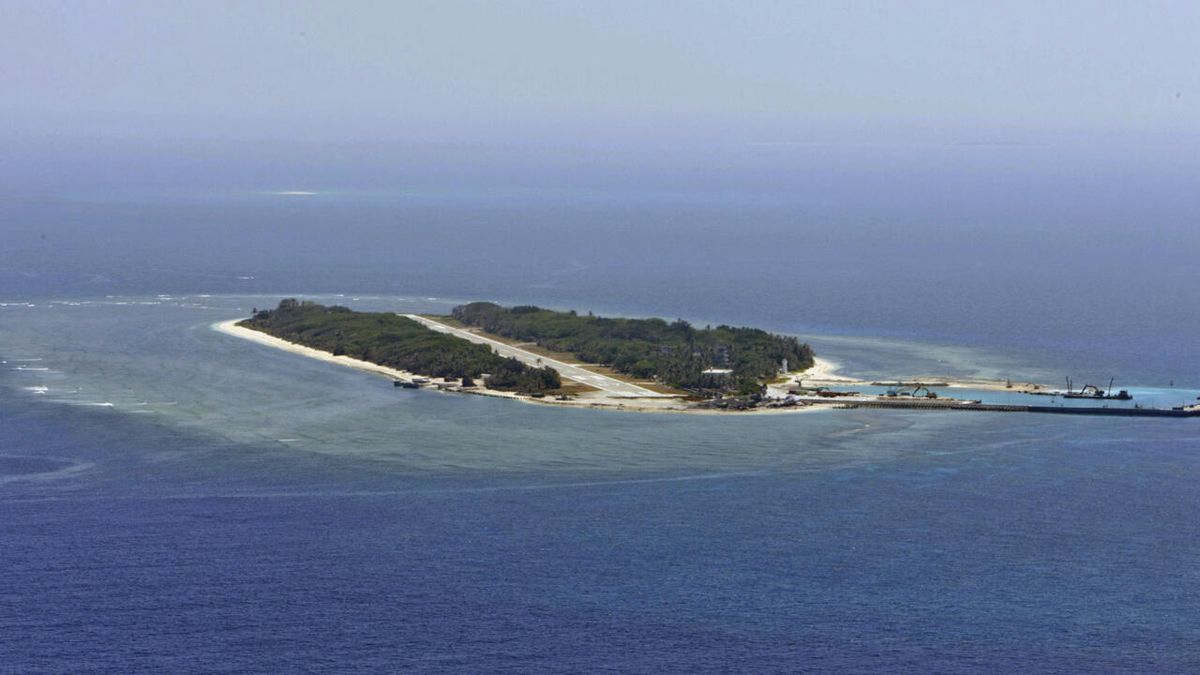
The South China Sea, a critical global waterway, has once again become a focal point of escalating geopolitical tensions following recent actions by Chinese vessels in waters claimed by Taiwan. On Thursday, June 11, 2026, two Chinese vessels "openly intruded" into the "prohibited" waters surrounding Itu Aba (Taiping Island), the largest island in the disputed Spratly archipelago controlled by Taiwan. This incident, marking the first recorded entry of Chinese vessels into these specific waters, saw the ships remain for approximately 15 minutes before being expelled by the Taiwanese coast guard. Taiwan's Ocean Affairs Council, responsible for its coast guard, condemned the act as a "malicious escalation of grey-zone harassment" designed to create a "false impression of jurisdiction."
This intrusion near Itu Aba, an island also claimed by China, the Philippines, and Vietnam, is not an isolated event but rather part of a broader pattern of Chinese assertiveness in the region. Just days prior, Taiwan reported a Chinese operation east of its main island, which Beijing claimed was a response to maritime boundary talks between Japan and the Philippines. Taipei, however, dismissed this as a pretext, branding China's actions as "provocative" and "expansionism in disguise." Further underscoring this coordinated strategy, Taiwan's coast guard also reported on Saturday the unprecedented sight of a Chinese survey vessel operating in conjunction with a Chinese coast guard ship near Pratas Island, another Taiwan-controlled territory in the northern South China Sea also claimed by Beijing.
China's motivations behind these increasingly bold maneuvers are multi-faceted, rooted in its expansive territorial claims over the South China Sea and its unwavering assertion of sovereignty over Taiwan. Beijing views Taiwan as an integral part of its territory, to be unified by force if necessary, and systematically applies pressure across various domains—military, economic, and diplomatic—to achieve this objective. The intrusions into waters around Taiwan-controlled islands serve several strategic purposes. Firstly, they are a direct challenge to Taiwan's administrative control and a test of its resolve and defensive capabilities. By operating within "prohibited" zones, China aims to normalize its presence and gradually erode the existing status quo, thereby strengthening its de facto claims.
Secondly, these actions are a classic example of "grey-zone tactics," a strategy that involves coercive actions below the threshold of armed conflict. This approach allows China to incrementally advance its territorial and maritime claims without triggering a full-scale military confrontation, which could invite a robust international response. The coordination between coast guard and survey vessels, as observed near Pratas Island, exemplifies this strategy, blending civilian-looking activities with state-backed enforcement to project power and gather intelligence. The harassment of commercial cargo ships, by requesting information, further demonstrates an attempt to assert administrative control over international shipping lanes, challenging the principle of freedom of navigation.
The implications of China's escalating grey-zone activities extend far beyond the immediate claimants. The South China Sea is a vital artery for global trade, with an estimated one-third of the world's maritime shipping passing through its waters. Any disruption or increased militarization in this region poses a significant threat to global economic stability and supply chains. China's actions directly challenge the United Nations Convention on the Law of the Sea (UNCLOS) and the established international rules-based order, particularly the principle of freedom of navigation and overflight.
Taiwan's characterization of China's actions as a "challenge to international order" resonates with concerns voiced by numerous regional and international actors, including the United States, Japan, Australia, and European nations. These countries advocate for a free and open Indo-Pacific and view China's assertiveness as a destabilizing force. The timing of these incidents, particularly in the wake of Japan-Philippines maritime talks, suggests China's intent to deter regional alliances and partnerships aimed at countering its expansionist agenda. By demonstrating its willingness to act unilaterally and disregard international norms, Beijing seeks to intimidate smaller nations and discourage collective security arrangements.
The continued "systematic harassment" of Taiwan, coupled with increasingly aggressive maneuvers in the South China Sea, heightens the risk of miscalculation or accidental confrontation. While Taiwan's coast guard successfully expelled the Chinese vessels, the potential for a more serious incident remains ever-present. The international community faces a critical juncture: how to effectively respond to China's grey-zone tactics without escalating to direct conflict, while simultaneously upholding international law and supporting the sovereignty of nations like Taiwan. The ongoing developments underscore the fragility of regional stability and the persistent geopolitical contest for influence and control in one of the world's most strategically important maritime domains.
Source referenced: FRANCE24
This brief was synthesized by our Editorial Engine and reviewed by The Ground Narrative team.