TRENDING

Thursday, 15 October 2026
----------------------
4 Jumada Al-Awwal 1448 AH
China's Ministry of Natural Resources has issued a stark warning about a developing 'super El Niño' that could rival or surpass the devastating 1997-98 event, prompting calls for urgent preparedness against widespread climate hazards. This forecast, corroborated by international agencies, signals significant geopolitical and economic risks, particularly for China and the broader global community.
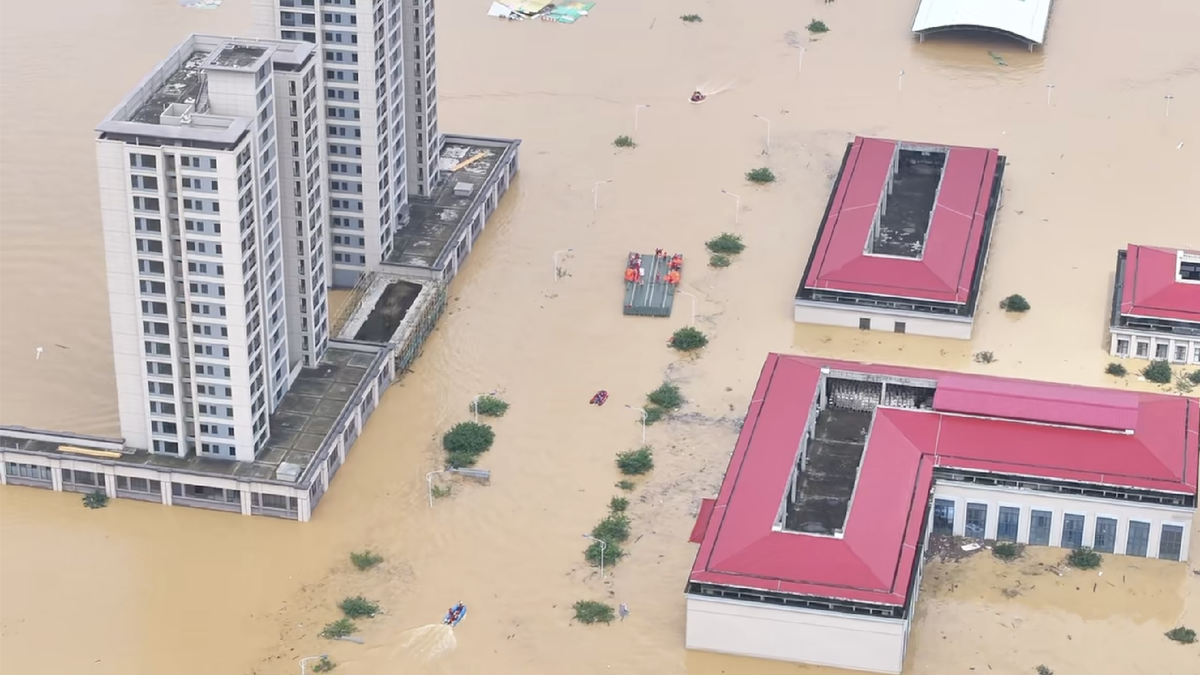
China's Ministry of Natural Resources, through its National Marine Environment Forecasting Center (NMEFC), issued a significant warning on Friday, July 11, 2026, regarding the imminent development of a 'super El Niño.' This climatic phenomenon is projected to intensify during the autumn and winter of 2026, with the potential to rival or even exceed the intensity of the record-setting 1997-98 event. The ministry has urged authorities across China to brace for a spectrum of climate- and ocean-related hazards, underscoring the severe implications for national stability and global interconnectedness.
El Niño is a naturally occurring climate pattern characterized by unusually warm sea surface temperatures in the central and eastern tropical Pacific Ocean. Its development disrupts global weather patterns, leading to extreme events such as severe floods, prolonged droughts, and intense heatwaves across various regions. The NMEFC's assessment indicates that sea surface temperatures in the equatorial Pacific have risen rapidly since spring 2026, already surpassing the warming observed at the same stage during the 1997-98 super El Niño. This rapid escalation suggests a high probability of the current El Niño, which emerged in May, strengthening into a 'strong' or 'super' event. This assessment aligns broadly with other international forecasting models, including an advisory from the US National Oceanic and Atmospheric Administration (NOAA), which indicated an 81 percent chance of a very strong El Niño developing between October and December, likely ranking among the strongest since 1950.
The warning comes as parts of China are already grappling with the aftermath of extreme weather events, including deadly floods and tornadoes triggered by Typhoon Maysak, while other regions prepare for Typhoon Bavi during the country's peak flood season. The NMEFC specifically highlighted that El Niño's effects often become more pronounced in the year following its emergence. Consequently, it forecasts above-average rainfall across the vital Yangtze River Basin in the summer of 2027. This prediction significantly elevates the risk of severe flooding in one of China's most economically crucial and densely populated regions, placing immense pressure on existing flood-control infrastructure and emergency response mechanisms. The historical context of the 1998 floods, which were China's worst since 1949 and necessitated extensive military deployment for relief efforts, serves as a stark reminder of the potential scale of devastation.
The potential for a super El Niño carries profound geopolitical and economic implications, extending far beyond China's borders. For China, a major agricultural and industrial powerhouse, widespread flooding or drought could severely disrupt food production, supply chains, and critical infrastructure. Such disruptions could lead to significant economic losses, potentially impacting global commodity markets and exacerbating inflationary pressures. The strain on resources and the need for large-scale disaster relief efforts could also test the government's administrative capacity and potentially affect social stability, particularly in vulnerable rural areas.
Globally, a strong El Niño event can trigger a cascade of environmental and socio-economic challenges. Regions in Southeast Asia, Australia, and parts of Africa often face severe droughts, impacting agriculture and water security. Conversely, parts of the Americas can experience increased rainfall and flooding. These widespread disruptions can contribute to food insecurity, population displacement, and increased humanitarian crises, potentially straining international aid efforts and fostering regional instability. The interconnectedness of the global economy means that agricultural shortfalls or supply chain disruptions in one major region, such as China, can have ripple effects worldwide.
The coordinated warnings from both Chinese and US meteorological agencies underscore the global nature of climate phenomena and the imperative for international scientific collaboration and preparedness. While El Niño is a natural cycle, its interaction with a warming global climate could potentially amplify its intensity and the severity of its impacts, making climate resilience and adaptation strategies more critical than ever. For China, the warning serves as a critical call to action, demanding robust investment in early warning systems, resilient infrastructure, and comprehensive disaster management plans. The effectiveness of these preparations will not only determine China's ability to mitigate internal risks but also its capacity to maintain economic stability and contribute to global resilience in the face of escalating climate challenges.
The impending super El Niño represents a significant test of national and international preparedness, highlighting the urgent need for proactive measures to safeguard populations, economies, and geopolitical stability against the increasing volatility of global climate patterns.
Source referenced: CGTN
This brief was synthesized by our Editorial Engine and reviewed by The Ground Narrative team.


