TRENDING

Saturday, 25 July 2026
----------------------
11 Safar 1448 AH
China's top diplomat Wang Yi emphasizes the importance of a comprehensive and lasting ceasefire in the Middle East, while also highlighting China's commitment to promoting peace and de-escalation in the region.
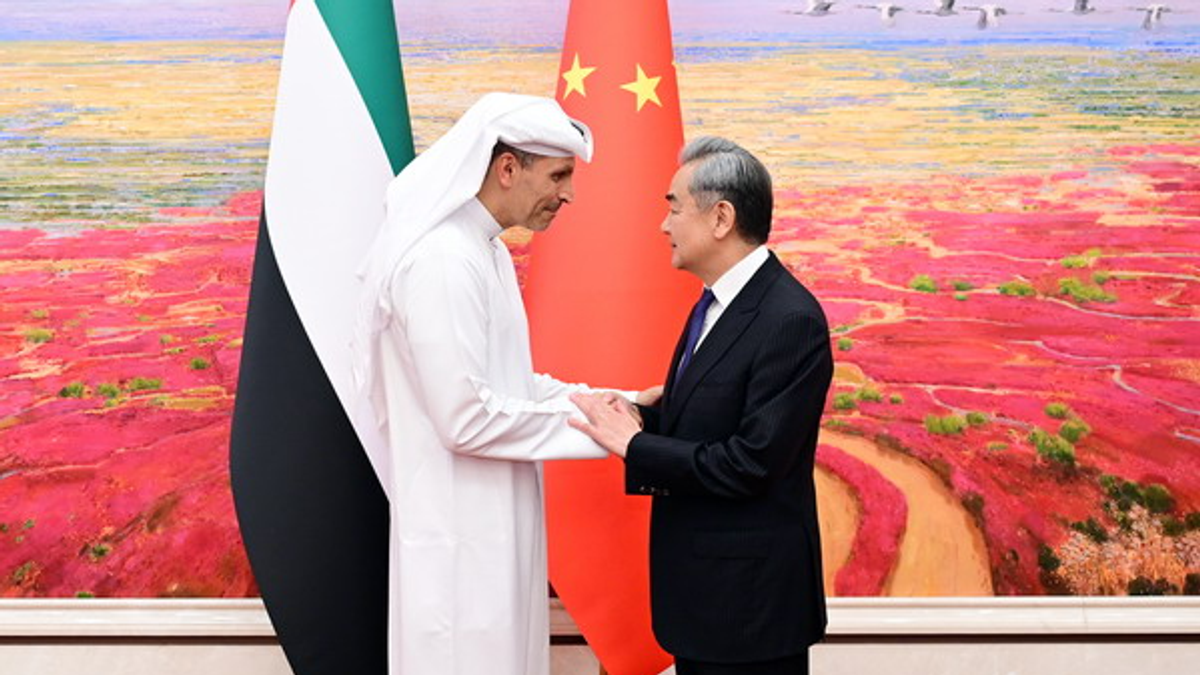
China's top diplomat Wang Yi recently emphasized the importance of a comprehensive and lasting ceasefire in the Middle East, while also highlighting China's commitment to promoting peace and de-escalation in the region. This statement comes at a critical juncture in the Middle East, where tensions between regional powers have been escalating in recent years.
The Strait of Hormuz, a critical waterway connecting the Persian Gulf to the Gulf of Oman, has been a focal point of regional tensions. The blockade of the strait, which has been threatened by Iran in the past, would have severe consequences for global energy markets and regional stability. China's opposition to such a blockade is not surprising, given its significant economic interests in the region and its commitment to promoting peace and stability.
Wang Yi's statement reflects China's principled position on the current situation in the Middle East. China has consistently emphasized the importance of a comprehensive and lasting ceasefire, which would require the involvement of all regional parties. This approach is in line with China's long-standing commitment to promoting peace and de-escalation in the region.
China's diplomatic efforts in the Middle East have significant regional implications. By emphasizing the importance of a comprehensive and lasting ceasefire, China is sending a clear signal to regional powers that it will not support any actions that could exacerbate tensions in the region. This approach is likely to be welcomed by regional powers such as the United Arab Emirates, which has been a key player in regional efforts to promote peace and stability.
The future consequences of China's diplomatic efforts in the Middle East are uncertain. However, it is clear that China's commitment to promoting peace and de-escalation in the region will have a significant impact on regional stability. If China's efforts are successful, it could lead to a significant reduction in regional tensions and a more stable security environment. However, if China's efforts are unsuccessful, it could lead to a further escalation of tensions in the region.
China's diplomatic efforts in the Middle East are a critical component of its broader strategy to promote peace and stability in the region. By emphasizing the importance of a comprehensive and lasting ceasefire, China is sending a clear signal to regional powers that it will not support any actions that could exacerbate tensions in the region. This approach is likely to be welcomed by regional powers and could have significant implications for regional stability.
Source referenced: CGTN
This brief was synthesized by our Editorial Engine and reviewed by The Ground Narrative team.

