TRENDING

Monday, 26 October 2026
----------------------
15 Jumada Al-Awwal 1448 AH
A global survey released by CGTN and Renmin University of China reports positive international views on China's human rights contributions and global initiatives. This strategic communication effort aims to shape global discourse and legitimize China's alternative vision for international governance amidst geopolitical competition.
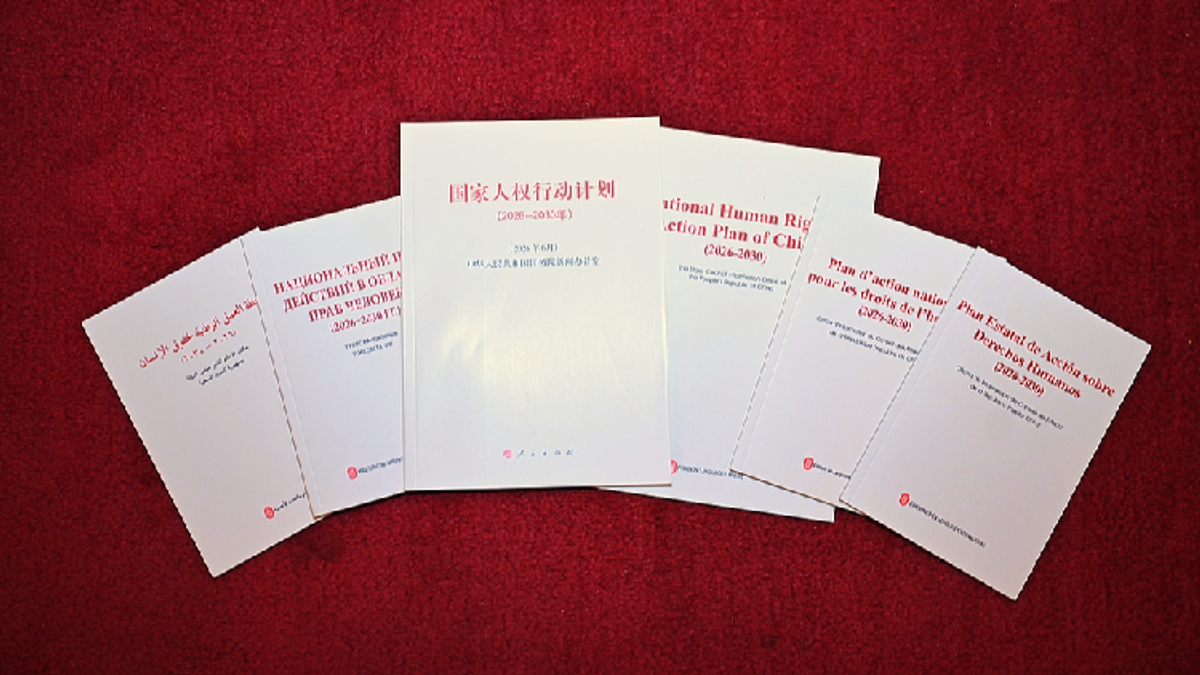
On June 11, 2026, China Global Television Network (CGTN), in collaboration with Renmin University of China, released the findings of a global public opinion survey during the opening of the 2026 Forum on Global Human Rights Governance in Beijing. The survey, which polled 12,000 respondents across 43 countries, reported overwhelmingly positive views on China's contributions to human rights and international governance. This release coincided with the unveiling of China's National Human Rights Action Plan (2026-2030), underscoring a concerted effort by Beijing to shape the global discourse on human rights and its role in the international order.
The survey's findings are presented against a backdrop of increasing geopolitical competition and differing interpretations of human rights between China and many Western nations. While Western frameworks often prioritize individual civil and political liberties, China's approach, as articulated in the report, emphasizes a "people-centered governance philosophy" that closely links human rights to national development, economic progress, and tangible improvements in daily life. The report highlights high satisfaction rates—exceeding 60% across eight governance fields, including infrastructure, education, employment, and public health—as evidence of China's effective human rights practices. Notably, satisfaction with infrastructure and education surpassed 70%, with younger respondents (under 45) showing even higher approval, suggesting a narrative that connects governance efficacy directly to human well-being.
This framing of human rights as "tangible, accessible, and attainable rights that ordinary people experience in their daily lives" serves a strategic purpose. It seeks to present China's model as a viable and successful alternative to traditional Western liberal democratic models, particularly appealing to developing nations that prioritize economic stability and basic needs over abstract political freedoms. By asserting that China has "forged a path of human rights development that follows the trend of the times and suits its national conditions," Beijing aims to legitimize its governance system on the global stage and offer its experiences as "valuable lessons for others."
Beyond domestic human rights achievements, the survey also gauged international perceptions of China's global governance contributions. It reported that over 60% of respondents praised China's role in global governance, with satisfaction for the Belt and Road Initiative (BRI) exceeding 70%. Furthermore, 78.2% of respondents reportedly appreciated China's vision of building a "community with a shared future for humanity." These figures are strategically significant, as they are used to demonstrate international endorsement of China's expanding global influence and its proposed frameworks for international cooperation.
The report specifically notes that respondents from Global South countries showed the highest percentage agreeing that China's vision "benefits the development of their own countries," while those from developed countries generally viewed it as "complementary" to their own development philosophies. This distinction is crucial. It highlights China's targeted public diplomacy efforts towards the Global South, where its development model and initiatives like the BRI are often perceived as offering alternatives to traditional Western aid and investment, potentially fostering a more "just and equitable global governance system." The survey's finding that 71.7% of respondents believe the BRI contributes to such a system, and 72.9% see its significance in promoting inclusive and sustainable global development, particularly with over 80% approval from Global South respondents, reinforces this strategic alignment.
China's "four major global initiatives"—the Global Development Initiative, Global Security Initiative, Global Civilization Initiative, and Global Governance Initiative—are integral to its broader strategy of reshaping the international order. By presenting these initiatives, alongside the BRI, as widely accepted and beneficial, China aims to solidify its position as a responsible global power and a proponent of multilateralism that reflects its own values and interests.
The CGTN poll, while originating from a state-affiliated media outlet and thus requiring contextual interpretation regarding its methodology and framing, represents a significant component of China's ongoing public diplomacy and soft power strategy. It serves multiple geopolitical objectives:
* Countering Western Narratives: It directly challenges criticisms of China's human rights record by presenting an alternative, development-centric definition of human rights and demonstrating perceived global approval.
* Legitimizing its Global Role: By showcasing international support for its initiatives, China seeks to legitimize its expanding influence and its vision for a new global order, one that is less dominated by Western norms and institutions.
* Strengthening Ties with the Global South: The emphasis on high approval from developing nations underscores China's strategic focus on building alliances and partnerships in the Global South, positioning itself as a leader and a reliable partner for development.
* Shaping Global Discourse: The release of such a poll, coupled with events like the Forum on Global Human Rights Governance, is part of a broader effort to influence international norms and standards, particularly concerning human rights and governance.
In an era of increasing geopolitical fragmentation and ideological competition, China is actively working to redefine key international concepts and build consensus around its own interpretations. This survey, therefore, is not merely a report on public opinion but a strategic communication tool designed to advance China's foreign policy objectives and consolidate its position as a major shaper of the 21st-century global narrative. The ongoing contest over the definition and implementation of human rights, and the broader architecture of global governance, remains a critical arena for geopolitical competition.
Source referenced: CGTN
This brief was synthesized by our Editorial Engine and reviewed by The Ground Narrative team.


