TRENDING

Sunday, 18 October 2026
----------------------
7 Jumada Al-Awwal 1448 AH
The Africa Centers for Disease Control and Prevention (Africa CDC) has lauded China's substantial financial and technical support in combating the ongoing Bundibugyo Ebola outbreak. This aid underscores China's deepening health diplomacy and strategic engagement across the African continent, reinforcing its role as a key partner in global health security.
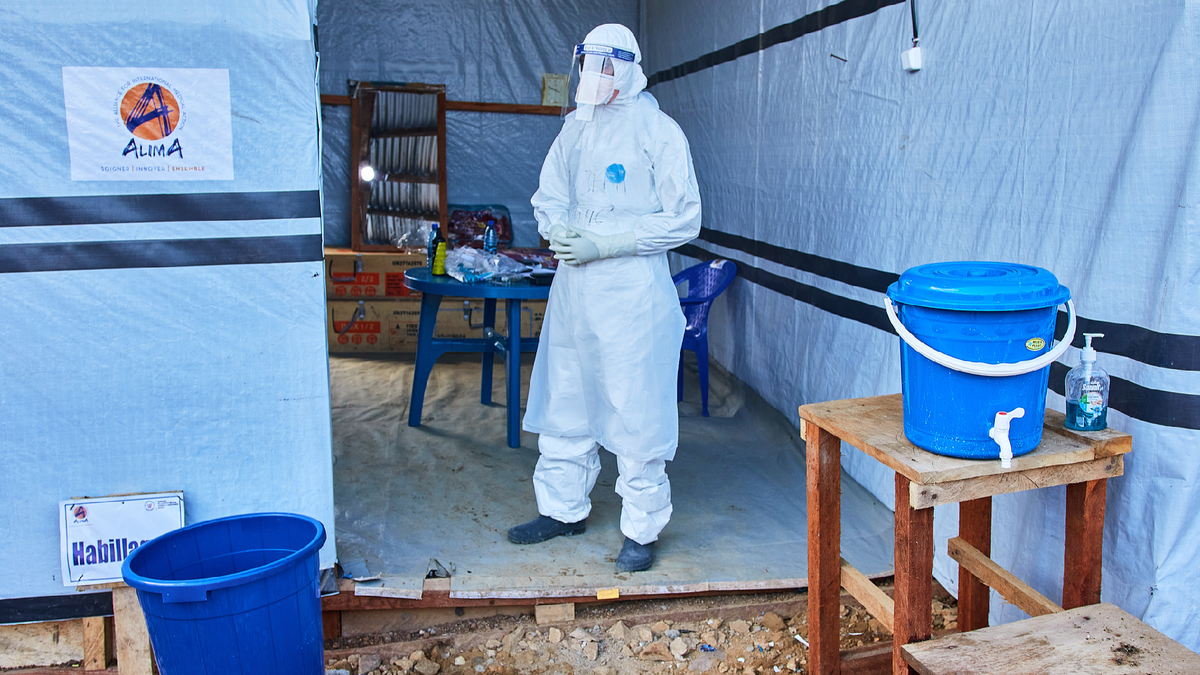
On Friday, July 17, 2026, the Africa Centers for Disease Control and Prevention (Africa CDC) publicly commended China for its significant contributions to the ongoing Bundibugyo Ebola outbreak response. The commendation came from Africa CDC Director General Jean Kaseya following a meeting with Jiang Feng, head of the Chinese Mission to the African Union (AU), at the agency's headquarters in Addis Ababa, Ethiopia. This event marks a critical juncture in the collaborative efforts to contain a severe public health crisis and highlights the evolving dynamics of international aid and geopolitical influence in Africa.
During the meeting, officials formalized an additional emergency contribution of $2.5 million from the Chinese government, bringing China's total direct financial support for Africa's Ebola response to $4.5 million. This latest tranche follows an initial $2 million provided in late June. Beyond financial aid, China has also deployed a second anti-epidemic medical expert team to Kinshasa, the capital of the Democratic Republic of the Congo (DRC), in early July. This team is tasked with providing crucial technical support and facilitating exchanges in areas such as epidemiological investigation, laboratory testing, case management, infection prevention and control, and personnel training, thereby enhancing the DRC's capacity to manage the epidemic.
China's proactive and substantial support for Africa's Ebola response is not merely an act of humanitarian goodwill; it is a multifaceted strategic endeavor that aligns with its broader foreign policy objectives on the continent. From a geopolitical perspective, this aid serves several key purposes:
* Soft Power Projection: By providing timely and significant assistance in a public health crisis, China reinforces its image as a reliable and compassionate partner to African nations. This strengthens its soft power, fostering goodwill and trust that can translate into diplomatic and economic advantages. Director General Kaseya's statement, noting Africa received a "powerful expression of solidarity," underscores the positive reception of this approach.
* Deepening Bilateral and Multilateral Ties: The direct engagement with Africa CDC and the African Union strengthens China's institutional relationships with continental bodies. This is crucial for China's long-term strategy of fostering a multipolar world order where its influence is recognized and respected. The aid also deepens bilateral ties with affected nations like the DRC, where China has significant economic interests.
* Safeguarding Economic Interests: Africa is a cornerstone of China's Belt and Road Initiative (BRI) and a vital source of raw materials and a growing market for Chinese goods and services. Public health crises like Ebola can severely disrupt economic activity, destabilize regions, and impact the safety of Chinese nationals and investments. By helping to control outbreaks, China protects its extensive economic footprint and ensures a more stable environment for its ventures.
* Global Health Governance Leadership: China aims to position itself as a responsible major power contributing to global public goods, including health security. Its engagement in Africa's health crises allows it to demonstrate leadership in global health governance, potentially influencing international health standards and practices, and showcasing its medical expertise on a global stage.
* Counterbalancing Western Influence: While not explicitly stated, China's robust health diplomacy in Africa can be seen as part of a broader strategy to expand its influence and offer an alternative to traditional Western development models and aid frameworks. This contributes to a more diversified landscape of international partnerships for African nations.
China's medical aid to Africa has a long history, dating back to the 1960s when it first dispatched medical teams to the continent. This current support for the Ebola response is a continuation of that established tradition, building on decades of medical cooperation and goodwill. The deployment of expert teams, offering technical training and capacity building, reflects a shift towards more comprehensive and sustainable forms of aid, moving beyond mere financial contributions to direct knowledge transfer.
Looking ahead, this sustained engagement in public health is likely to further solidify China-Africa relations. It sets a precedent for how China will respond to future crises on the continent and globally, potentially leading to more extensive partnerships in health infrastructure, pharmaceutical development, and medical research. The emphasis on strengthening frontline operations and protecting health workers directly addresses critical needs, demonstrating a practical and impactful approach to international cooperation. As Africa continues to face various health challenges, China's role as a key partner in building resilient health systems is poised to grow, with significant geopolitical ramifications for the continent and the broader international community.
Ultimately, China's support for Africa's Ebola response is a clear illustration of its strategic foreign policy, leveraging health diplomacy to advance its geopolitical and economic interests while simultaneously addressing critical humanitarian needs. It underscores the intricate interplay between global health, international relations, and the evolving landscape of global power dynamics.
Source referenced: CGTN
This brief was synthesized by our Editorial Engine and reviewed by The Ground Narrative team.