TRENDING

Thursday, 17 September 2026
----------------------
6 Rabi' Al-Thani 1448 AH
Canada's bid for 'associate member' status with the European Union sparks a trade war threat from the US, revealing a deeper struggle for global influence and security diversification.
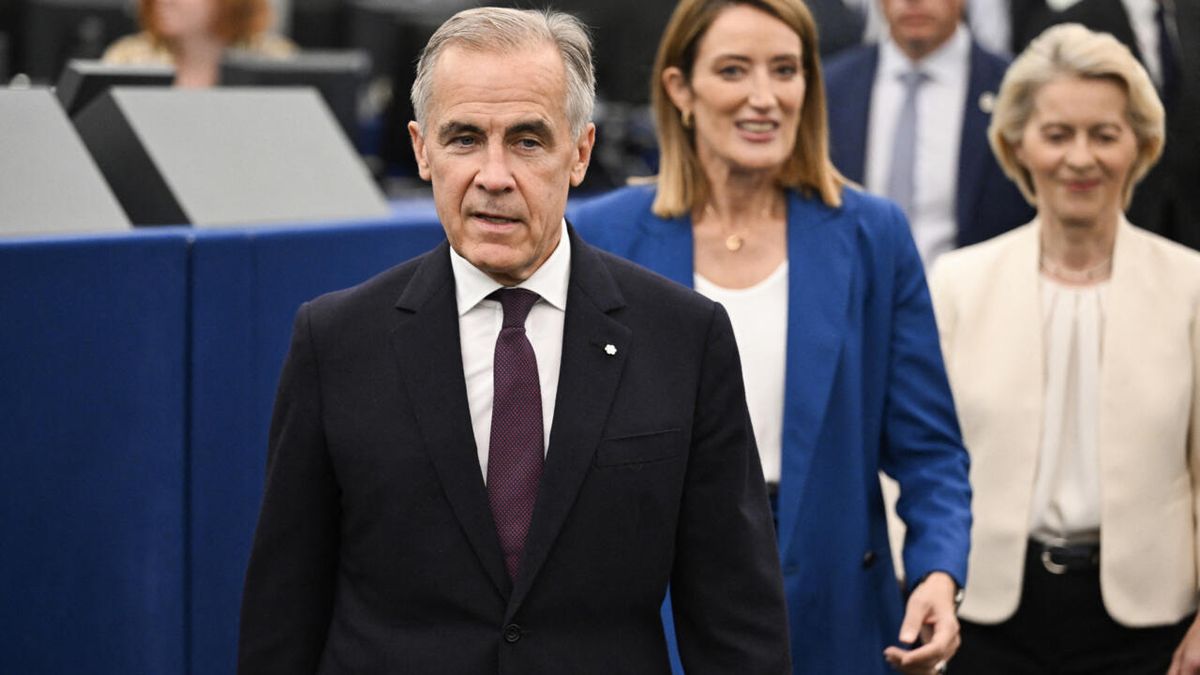
Canadian Prime Minister Mark Carney is addressing the European Parliament to advance Canada's unusual bid for 'associate member' status with the European Union. This move comes swiftly after US President Donald Trump threatened the EU with "very serious tariffs" and a halt to trade if the alliance proceeds, labeling it a "hostile act." The EU, through President Ursula von der Leyen, has framed the overture as an "Alliance for the Future" rooted in shared democratic values, while downplaying any anti-US sentiment.
This diplomatic dance exposes a fundamental realignment in global power dynamics. For Canada, the pursuit of closer ties with the EU, including defense cooperation through initiatives like the British-led Joint Expeditionary Force (JEF) and the Canada-led Defence Security Resilience Bank (DSRB), signals a clear strategy to diversify its security and economic relationships beyond its historically dominant neighbor, the United States. An unpredictable US foreign policy, particularly under a protectionist administration, has pushed Ottawa to seek more stable and multilateral partnerships. The Arctic, where both the US and Russia have growing interests, adds a critical strategic layer to Canada's need for robust alliances.
The European Union, in turn, sees an opportunity to strengthen its own geopolitical standing. By embracing Canada, the EU not only expands its network of like-minded democracies but also sends a clear message to Washington that it will not be dictated to on its foreign policy choices, as articulated by France's Europe Minister. This move is a test of European sovereignty and a pushback against economic coercion. The 'associate member' concept itself, initially floated for Ukraine, offers a flexible framework for deepening ties without the full commitments of traditional membership, allowing the EU to project influence without internal strain.
For the United States, particularly under President Trump, any move by allies to strengthen independent blocs is perceived as a challenge to its global hegemony. The threat of tariffs is a familiar tool of economic leverage, aimed at punishing perceived disloyalty and maintaining American economic dominance. This reaction underscores a transactional view of alliances, where economic benefits and allegiance are expected in return for security guarantees.
The immediate human cost of this geopolitical maneuvering falls squarely on ordinary citizens and businesses. Should President Trump follow through on his tariff threats, European and Canadian consumers would face higher prices on imported goods, while exporters in both regions would see reduced market access and profitability. Industries reliant on transatlantic trade, from agriculture to manufacturing, would experience significant disruption, potentially leading to job losses and economic instability. The uncertainty itself creates a chilling effect on investment and long-term planning. For Canadians, a significant shift away from US economic reliance, while strategically sound in the long term, could entail short-term economic pain as new supply chains and markets are established. Meanwhile, the unratified CETA agreement by 10 EU nations highlights internal European divisions that could delay or dilute any promised economic benefits for citizens.
What remains conspicuously vague is the actual definition and scope of "associate member" status. While EU chief Ursula von der Leyen speaks of a "common prosperity and economic security space," the practical implications – voting rights, budget contributions, regulatory alignment – are largely undefined. This ambiguity allows for political flexibility but also risks creating a largely symbolic arrangement that lacks substantive economic or security guarantees, potentially leaving Canada vulnerable and the EU's credibility diminished. Furthermore, the underlying competition for influence in the Arctic, mentioned briefly in the intelligence, is a critical, unspoken driver. Both the US and Russia covet the region's resources and strategic waterways, making Canada's alignment a significant factor in future Arctic power plays. The EU's internal struggle to fully ratify the existing CETA free trade agreement also casts a shadow, suggesting that grand declarations of alliance may face significant friction when it comes to concrete implementation.
Readers should closely watch several key developments. Firstly, the specifics of Canada's 'associate member' status will need to be defined. Will it be a robust framework offering tangible benefits and security, or a largely symbolic gesture? Secondly, the EU's internal unity will be tested, particularly regarding the full ratification of CETA and the consensus required for Canada's new status. Any internal dissent will weaken the bloc's position. Thirdly, the US response will be critical: will Trump's tariff threats materialize, and if so, how severe will they be? The scale of US economic retaliation will determine the immediate economic fallout. Finally, observe Canada's continued efforts to diversify its defense relationships, particularly its engagement with the Joint Expeditionary Force and the fate of the Defence Security Resilience Bank, as these will indicate the depth of its commitment to moving beyond America's shadow.
Source referenced: FRANCE24
This brief was synthesized by our Editorial Engine and reviewed by The Ground Narrative team.


