TRENDING

Saturday, 24 October 2026
----------------------
13 Jumada Al-Awwal 1448 AH
The United States faces a significant geopolitical challenge in Latin America as China dramatically expands its economic, technological, and strategic presence across the region. Washington is urged to move beyond an outdated strategy of exclusion, instead adopting a nuanced approach of 'strategic displacement' by offering competitive alternatives in critical sectors.
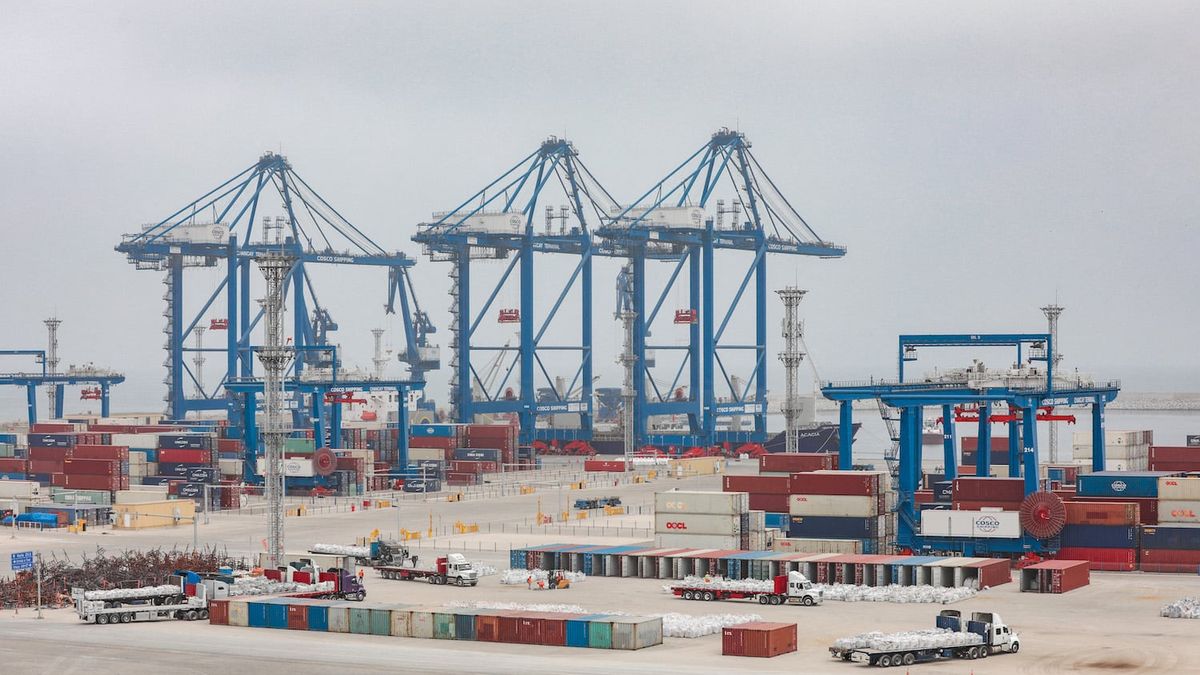
For nearly two decades, China has significantly expanded its economic, technological, and strategic presence across Latin America and the Caribbean, presenting a complex geopolitical challenge to the United States. This expansion, unlike historical interventions, is not characterized by military conquest or territorial occupation. Instead, Beijing has deeply embedded itself within the region's critical infrastructure, trade networks, energy systems, digital ecosystems, and strategic industries, leveraging economic integration, technological dependence, and structural influence.
China has emerged as a leading trade partner, a major source of financing, and a crucial market for commodities and agricultural exports for many Latin American nations. For these governments, often grappling with persistent infrastructure deficits, sluggish economic growth, and chronic underinvestment, engagement with China is primarily an economic imperative rather than an ideological alignment. Countries in the hemisphere generally seek diversified economic relationships and greater strategic autonomy, resisting binary choices between global powers.
The current geopolitical landscape fundamentally differs from the era of the Monroe Doctrine, which historically sought to exclude external powers from establishing territorial and political control in the Western Hemisphere. This 19th-century framework is ill-suited for 21st-century competition, where influence is wielded through economic and technological means. The United States cannot realistically exclude China from Latin America, nor should it attempt to force regional governments into an either/or choice between Washington and Beijing.
Instead, a new strategic approach, termed 'strategic displacement,' is advocated. This strategy moves beyond reflexive opposition to all Chinese commercial activity and focuses on selectively competing to displace Chinese influence in sectors with the most significant geopolitical and national security implications. This requires a coherent, coordinated framework from Washington to encourage U.S. companies to offer competitive alternatives.
Five critical sectors have been identified where the United States must aggressively compete to counter China's growing leverage:
1. Strategic Infrastructure: Chinese firms have expanded their presence across ports, logistics corridors, transportation hubs, and energy systems. These assets are not merely commercial; they shape trade flows, supply chain access, maritime connectivity, and strategic mobility, creating enduring political and economic leverage. The Chancay port in Peru, developed largely by Chinese shipping giant Cosco and opened in 2024, exemplifies this, designed to connect South America more directly to Asian markets and deepen China's role in Pacific trade. The U.S. must provide more competitive financing and infrastructure alternatives rather than simply opposing such projects.
2. Digital Infrastructure and Telecommunications: Chinese tech giants like Huawei and ZTE are deeply embedded in Latin America's telecommunications infrastructure, cloud systems, surveillance technologies, smart-city initiatives, and digital payment platforms. These systems are not politically neutral; they influence data governance standards, create potential cybersecurity vulnerabilities, and could expand opportunities for Chinese intelligence collection and political influence. Venezuela's Chinese-supported "fatherland card" system, developed with ZTE's assistance, illustrates how digital systems can evolve into instruments of political surveillance and social control.
3. Critical Minerals: Latin America holds vast reserves of essential minerals such as lithium, copper, and rare-earth elements, crucial for advanced manufacturing, semiconductors, energy technologies, and defense systems. China has strategically positioned itself across the extraction, processing, and transportation networks for these resources, particularly in the "lithium triangle" of Argentina, Bolivia, and Chile. The U.S. should focus on financing viable projects in countries like Argentina and Chile, supporting processing and refining within the hemisphere to build resilient supply chains and reduce dependence on Chinese-controlled processing.
4. Hemispheric Energy Resilience: Chinese state-linked firms have increased investments in electricity transmission, renewable energy, oil production, and broader energy infrastructure. In Lima, Peru, for instance, Chinese companies hold dominant positions across electricity generation, transmission, and distribution. While commercially rational in isolation, these projects collectively deepen Beijing's role in sectors vital for national resilience and long-term economic development.
5. Space and Dual-Use Infrastructure: Chinese investments in satellite systems, aerospace cooperation, artificial intelligence, and advanced telecommunications may serve legitimate commercial objectives while also expanding Beijing's strategic access and intelligence capabilities. A Chinese-operated deep space facility in Neuquén, Argentina, though formally civilian, has raised concerns among U.S. and regional officials due to its limited transparency and ties to China's military-linked space apparatus.
The U.S.-China competition in Latin America is fundamentally structural, not primarily ideological. For too long, the United States has vacillated between neglect and alarmism, often framing nearly all Chinese activity as a threat without scaling credible U.S. economic alternatives. This approach misunderstands both Chinese statecraft and the economic pressures faced by regional governments. Countries like Brazil, Mexico, Colombia, and Chile are not passive arenas for great-power competition; they possess their own national interests and development priorities, often resisting frameworks that imply binary geopolitical alignment or revive perceptions of U.S. paternalism.
China's advantage stems from its ability to align financing, diplomacy, industrial policy, and corporate activity behind long-term geopolitical objectives. While the U.S. need not replicate China's state-capitalist model, it requires a coordinated framework to enable its companies to compete effectively in strategically significant sectors. The focus must shift from blocking symbolic projects to aggressively competing in areas that shape long-term strategic resilience and offer genuine, sustainable alternatives to Latin American partners.
Source referenced: FOREIGNPOLICY
This brief was synthesized by our Editorial Engine and reviewed by The Ground Narrative team.