TRENDING

Saturday, 24 October 2026
----------------------
13 Jumada Al-Awwal 1448 AH
Armenia stands at a critical geopolitical juncture, with upcoming elections poised to determine its future alignment between the European Union and its traditional ally, Russia. Prime Minister Nikol Pashinyan's pro-EU stance signals a significant shift, prompting strong reactions from Moscow and reshaping regional dynamics.
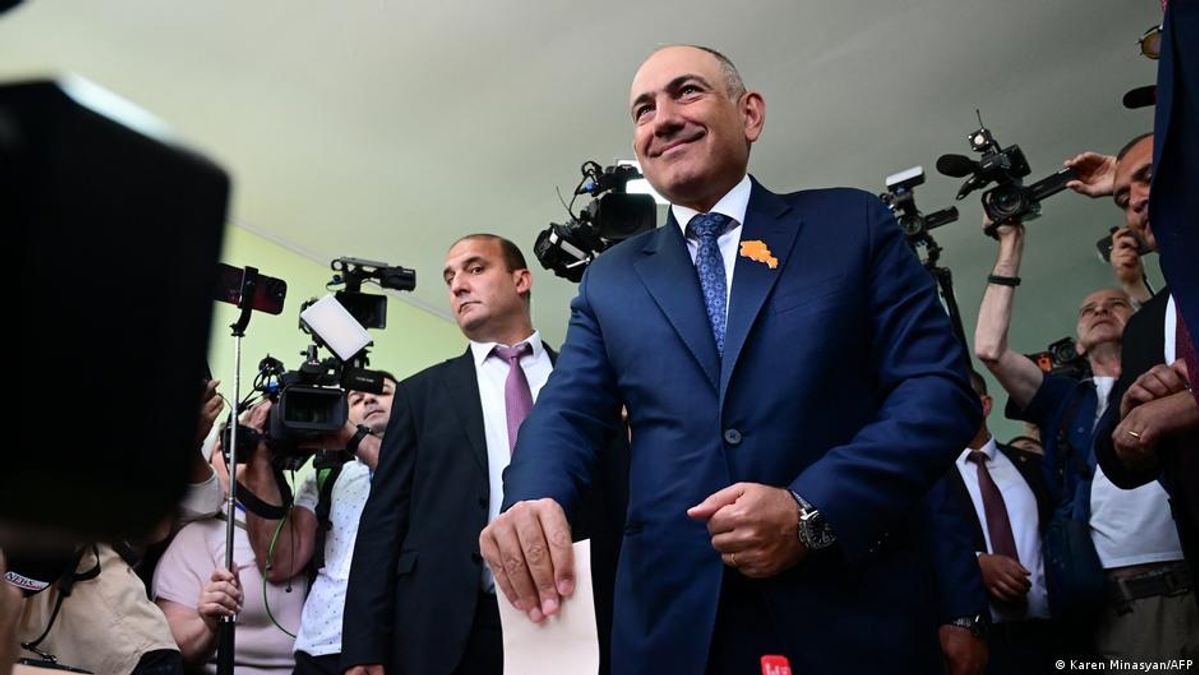
Armenia is currently navigating a pivotal moment in its geopolitical trajectory, with an imminent national election serving as a de facto referendum on the country's future international alignment. The choice before Armenian citizens is stark: a path towards deeper integration with the European Union or a return to Russia's long-standing sphere of influence. This strategic reorientation, spearheaded by Prime Minister Nikol Pashinyan and his pro-EU Civil Contract party, carries profound implications for the South Caucasus region and the broader global power balance.
Recent pre-election surveys, including one commissioned by the Washington-based International Republican Institute (IRI), indicate that Pashinyan's party holds a leading position, with approximately 32% of respondents expressing support. While experts caution about the low response rate in these polls, other surveys corroborate a lead for Civil Contract, albeit with a potentially narrower margin. The opposition, largely characterized by pro-Russian views, is fragmented among several parties, including the "Strong Armenia" bloc led by Samvel Karapetyan, the "Armenia Alliance" associated with former president Robert Kocharyan, and the "Prosperous Armenia" party, which is officially partnered with Russia's ruling United Russia party. These opposition forces currently lag significantly behind the ruling party.
The impetus for Armenia's strategic shift stems largely from a growing disillusionment with Russia's role as its primary security guarantor. This sentiment intensified following Russia's perceived failure to provide adequate military assistance during border clashes with Azerbaijan in 2022 and, critically, during the 2023 war that saw Azerbaijan regain control of Nagorno-Karabakh. For decades, Armenia had relied heavily on Russia and the Collective Security Treaty Organization (CSTO) for its defense, but these recent events have prompted Yerevan to seek security diversification.
Prime Minister Pashinyan's government has actively pursued closer ties with the European Union. In May 2025, the Armenian parliament adopted legislation to initiate the process of joining the EU, and Pashinyan has publicly committed to securing a visa-free regime with Europe within two years. This diplomatic push was underscored by Yerevan's hosting of the European Political Community Summit in early May, where Pashinyan explicitly stated that Armenia is "no ally of Russia's" regarding the conflict in Ukraine. Furthermore, Armenia has been deepening its dialogue with the United States, signing a charter on a comprehensive strategic partnership and a memorandum on rare earths. In August 2025, a U.S.-mediated logistics project, informally known as "Trump's Route," aimed at connecting Azerbaijan with its exclave of Nakhichevan through Southern Armenia, marked a significant step towards ending Armenia's landlocked status and regional isolation.
Moscow has reacted sharply to Armenia's reorientation, viewing it as a direct challenge to its influence in the South Caucasus. Russian President Vladimir Putin has threatened economic repercussions, including the imposition of tariffs, the suspension of preferential gas and petroleum supplies, and restrictions on Armenian agricultural imports, which find their largest market in Russia. Putin also suggested a referendum on Armenia's EU or Eurasian Economic Union (EAEU) membership, drawing parallels to the 2014 crisis in Ukraine.
Allegations of Russian interference in the Armenian elections have also surfaced, with reports from independent media outlets detailing an alleged Russian spy network and the arrest of pro-Russian opposition figures on charges of treason and espionage. These actions highlight Russia's determination to maintain its historical sphere of influence and prevent a full-scale geopolitical pivot by Yerevan.
Domestically, the election campaign is deeply intertwined with the Nagorno-Karabakh issue. Prime Minister Pashinyan has centered his campaign on the idea of a "real Armenia," advocating for the acceptance of current borders and implicitly moving past irredentist claims over Nagorno-Karabakh. This stance contrasts sharply with the opposition, which criticizes Pashinyan for not advocating for the return of ethnic Armenians who fled the region after the 2023 war. The authorities, in turn, accuse the opposition of risking renewed conflict with Azerbaijan through their rhetoric.
The outcome of this election will not only determine Armenia's immediate political leadership but also its long-term strategic direction. A decisive move towards the EU would signify a significant shift in the geopolitical landscape of the South Caucasus, potentially fostering greater regional stability through new economic corridors and diplomatic engagements, while simultaneously escalating tensions with Russia. Conversely, a return to a pro-Russian alignment would reaffirm Moscow's regional dominance but might leave Armenia vulnerable to future security challenges and limit its economic diversification. The stakes are exceptionally high, making this election a critical moment for Armenia and a key indicator of evolving power dynamics in a strategically vital region.
Source referenced: DW
This brief was synthesized by our Editorial Engine and reviewed by The Ground Narrative team.