TRENDING

Wednesday, 7 October 2026
----------------------
26 Rabi' Al-Thani 1448 AH
US forces have launched a second consecutive day of strikes against Iran, escalating tensions in the Gulf and prompting international calls for de-escalation. The military actions have severely disrupted global shipping through the strategic Strait of Hormuz, causing oil prices to surge.
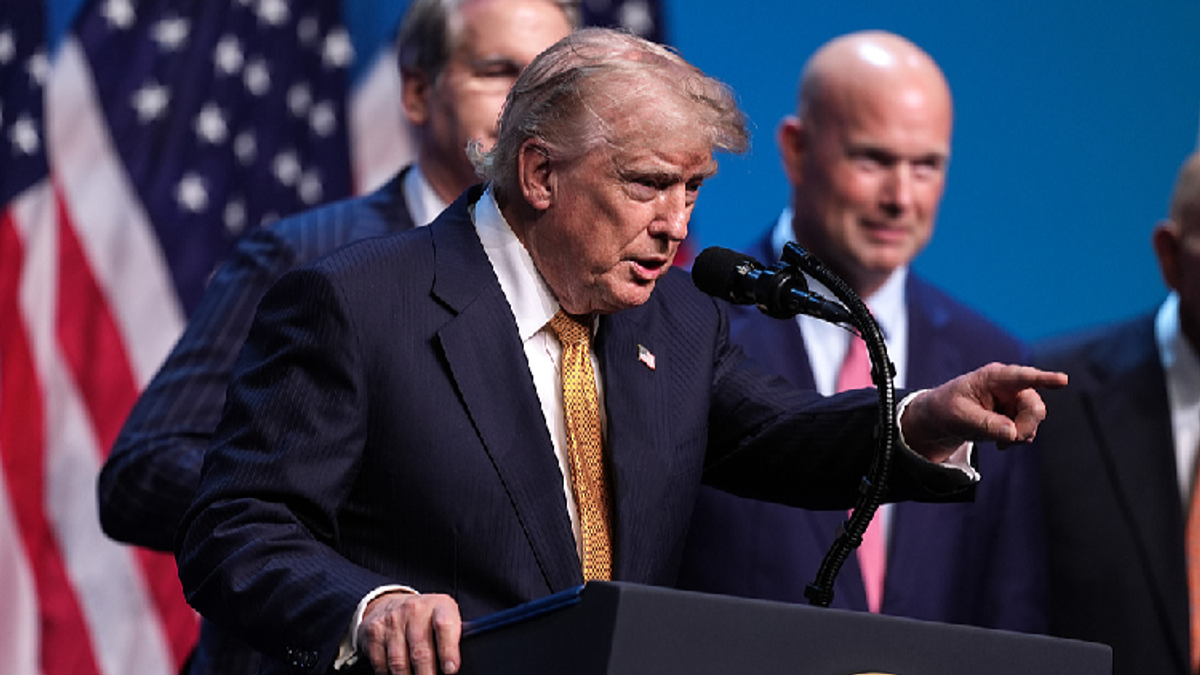
In a significant escalation of tensions in the Middle East, United States forces conducted a second consecutive day of military strikes against Iran late Wednesday, July 8, 2026. The actions, confirmed by the US Central Command (CENTCOM) and ordered by President Donald Trump, targeted several Iranian locations, including the port cities of Bandar Abbas, Sirik, Chabahar, Bushehr, and Abu Musa Island. Iranian media reported explosions and the activation of coastal defense systems near Bandar Abbas, Qeshm Island, and Bushehr, indicating a direct engagement with incoming aerial targets.
CENTCOM stated that these strikes were intended to "degrade" Iran's capacity to threaten freedom of navigation in the Strait of Hormuz. This military response followed what Washington described as Iranian attacks on three commercial vessels transiting the vital waterway. President Trump, speaking at the NATO summit in Ankara, Turkiye, earlier on Wednesday, had warned of impending, harder strikes against Iran, though he expressed a desire to avoid a full-scale conflict. Iranian authorities, however, reported casualties, including two fishermen killed and two others injured in the missile strikes, claims which the United States has not yet addressed.
The immediate trigger for the US military action, as articulated by Washington, centers on safeguarding maritime security in the Strait of Hormuz. This narrow chokepoint is globally critical, with approximately one-fifth of the world's oil supply passing through it daily. Disruptions here have immediate and far-reaching economic consequences. The US perceives Iran's alleged actions against commercial shipping as a direct challenge to international law and a threat to global energy security.
From Tehran's perspective, the US strikes constitute a "blatant violation of Article 2, paragraph 4, of the UN Charter" and a fundamental breach of the Islamabad Agreement, a memorandum of understanding between the two countries. Iranian Foreign Ministry spokesman Esmaeil Baghaei asserted Iran's right to defend its national interests and sovereignty. Military adviser to Iran's supreme leader, Mohsen Rezaei, warned of a "severe response" against "aggressors and their accomplices," with Iranian military sources indicating a potential large-scale missile and drone counter-attack on US bases in the Middle East.
Analysts, such as Li Zixin from the China Institute of International Studies, suggest that the US strategy may involve using military pressure to compel negotiations, while also potentially bolstering domestic support for the White House. The timing of this escalation is particularly sensitive, coinciding with the funeral of Iran's late Supreme Leader Ayatollah Ali Khamenei, a factor that could stiffen Tehran's resolve and limit diplomatic flexibility.
The escalating confrontation has triggered widespread international concern. UN Secretary-General Antonio Guterres has urgently called for immediate de-escalation, warning that a return to full-scale hostilities would have "catastrophic consequences" for the region, international peace, and the global economy. He urged all parties to exercise maximum restraint and resume diplomatic negotiations to resolve outstanding issues.
The most immediate and tangible impact of the heightened tensions has been on global shipping. According to US assessments and reports from energy research firms like Rystad Energy, tanker traffic through the Strait of Hormuz has largely ceased amid the uncertainty. Jorge Leon, head of geopolitical analysis at Rystad Energy, noted that shipping activity appeared "completely stalled," with market perceptions of risk now outweighing official statements. This disruption has led to a significant surge in global oil prices, reflecting fears of a prolonged closure or increased instability in the vital waterway.
International Maritime Organization Secretary-General Arsenio Dominguez highlighted the humanitarian aspect, reporting that hundreds of ships and approximately 6,000 seafarers remain stranded in the Gulf due to security concerns. He echoed calls for restraint and urged assistance for the trapped vessels.
The current trajectory points to a highly volatile situation with significant risks of further escalation. The tit-for-tat military actions, coupled with strong rhetoric from both Washington and Tehran, leave little room for miscalculation. While President Trump expressed a desire to avoid a full-scale conflict, the activation of Iranian coastal defenses and threats of retaliation underscore the potential for a rapid and uncontrolled spiral of violence. The international community's urgent calls for de-escalation highlight the profound geopolitical and economic implications should this critical maritime artery remain imperiled. The coming days will be crucial in determining whether diplomacy can reassert itself or if the region will descend into a more profound and destabilizing conflict.
Source referenced: CGTN
This brief was synthesized by our Editorial Engine and reviewed by The Ground Narrative team.