TRENDING

Wednesday, 28 October 2026
----------------------
17 Jumada Al-Awwal 1448 AH
Former President Donald Trump has stated he will only respect the upcoming US midterm election results if he deems them 'honest'. This declaration fuels ongoing concerns about electoral integrity and the foundational principles of American democracy.
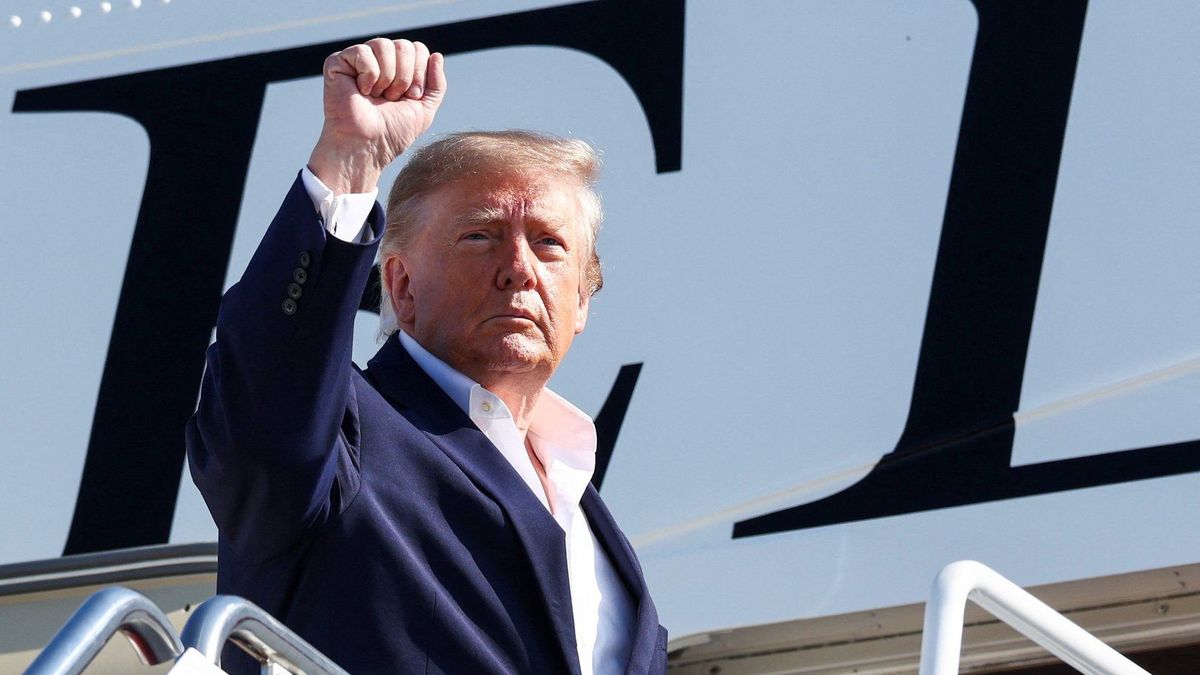
On October 27, 2026, former US President Donald Trump stated publicly that he would only respect the results of the upcoming November 3 midterm elections if he deemed them “honest.” This declaration was made in the context of crucial elections that will determine which political party controls the United States Congress, a factor that significantly influences the legislative agenda and the power of the sitting presidency. Trump's statement echoes a pattern of questioning electoral legitimacy that has become a recurring feature in American political discourse, particularly following elections where his preferred outcomes were not achieved.
The statement by Donald Trump regarding the conditional acceptance of election results is not an isolated incident but a calculated maneuver within a broader strategy to exert and maintain political influence. At its core, this tactic weaponizes public trust, transforming the foundational process of democratic elections into a battleground for political legitimacy. The power mechanics at play are multi-layered, extending beyond the immediate electoral outcome.
Firstly, the declaration undermines the very principle of a peaceful transfer of power, a cornerstone of American democracy. By pre-emptively casting doubt on the integrity of the electoral process, a powerful political figure creates an environment where any unfavorable outcome can be dismissed as illegitimate. This tactic serves to mobilize a loyal base, providing them with a narrative to justify potential future actions, whether those are legal challenges, protests, or continued political opposition. For the individual making such claims, it is a potent tool for political survival and relevance, ensuring continued engagement from supporters and maintaining a prominent position in the national conversation, irrespective of holding formal office.
Secondly, the stakes of the midterm elections are immense. Control of Congress dictates legislative priorities, the ability to pass or obstruct laws, and the power to conduct oversight investigations into the executive branch. A shift in control can fundamentally alter the trajectory of national policy, from economic regulations to social issues and foreign relations. Therefore, questioning the legitimacy of the process itself is a direct assault on the institutional mechanisms that determine who wields this significant power. It creates a pretext for challenging the authority of any incoming legislative majority that does not align with the speaker's political interests.
Thirdly, this rhetoric strains the system of checks and balances designed to ensure fair elections. Election administration in the United States is largely decentralized, managed by thousands of local and state officials, often on a bipartisan basis. The judicial system, from state courts to the Supreme Court, is tasked with adjudicating disputes. When a prominent figure declares these processes potentially “dishonest” without specific, verifiable evidence, it places immense pressure on these institutions, forcing them to defend their impartiality and competence against a backdrop of public skepticism. This creates a feedback loop: claims of dishonesty lead to distrust, which then fuels more claims, regardless of factual basis.
Finally, the United States has historically projected itself as a beacon of democratic stability and electoral integrity globally. When its own electoral processes are publicly and repeatedly questioned by its former leaders, it provides ammunition to authoritarian regimes and illiberal actors worldwide. It weakens the US's soft power, making it harder to advocate for democratic norms abroad when its own house appears to be in disarray. The message sent internationally is that even established democracies are vulnerable to internal challenges to their foundational principles, potentially emboldening those who seek to undermine democratic movements elsewhere. This is a significant blow to the credibility of American foreign policy and its long-standing role as a proponent of democratic governance.
The abstract concept of “electoral integrity” might seem distant to daily life, but its erosion carries profound and tangible human costs, impacting the fabric of society far beyond the ballot box. When the legitimacy of a nation's voting process is consistently questioned, the most immediate casualty is public trust – not just in elections, but in the entire system of governance.
At a fundamental level, the constant questioning of election results fosters deep societal divisions. Citizens are increasingly polarized, not just on policy issues, but on the very reality of shared facts and democratic processes. This leads to a breakdown in social cohesion, where neighbors, colleagues, and even family members find themselves on opposing sides of a fundamental belief: whether their country's elections are fair. This erosion of a common understanding makes it harder to address collective challenges, as consensus-building becomes nearly impossible in an environment of pervasive distrust. The human cost here is a society fractured by suspicion, where civic engagement is replaced by partisan animosity.
For many ordinary citizens, repeated claims of “dishonest” elections can lead to either profound disillusionment or outright apathy. If the outcome is predetermined or rigged, why bother participating? This sentiment can suppress voter turnout, particularly among those who feel their voice is already marginalized. Conversely, it can also lead to a sense of urgency and anger among those who believe the system *is* being undermined, potentially pushing them towards more extreme forms of political action. Both outcomes represent a failure of the democratic promise: either citizens withdraw from the process, or they engage in ways that further destabilize it. The human cost is a weakening of civic participation and a sense of powerlessness among the populace.
Perhaps the most severe human cost is the increased risk of political instability and, in extreme cases, violence. When a significant portion of the population believes their democratic rights are being stolen, and that established legal channels are insufficient, the potential for civil unrest escalates. The events of January 6, 2021, at the US Capitol, serve as a stark reminder of how rhetoric questioning election legitimacy can translate into real-world physical confrontations, endangering lives and property. Election workers, poll volunteers, and local officials, who are often ordinary citizens performing civic duties, increasingly face threats and harassment, often with limited resources. The human cost is the fear and insecurity that permeates communities, transforming civic engagement into a perilous act.
Beyond the immediate social and political impacts, the erosion of electoral trust has economic repercussions. Political instability, or even the perception of it, deters investment, both domestic and foreign. Businesses thrive on predictability and a stable regulatory environment, which are undermined when the legitimacy of a government is constantly in question. This can lead to job losses, reduced economic growth, and a general sense of uncertainty that impacts the financial well-being of ordinary families. Globally, the United States' diminished reputation as a stable democracy affects its ability to lead on international issues, impacting its diplomatic influence and the effectiveness of its foreign policy, which ultimately has consequences for global peace and trade that touch every citizen. The human cost is a less prosperous and less secure future, both at home and abroad.
While official statements and media narratives often focus on the immediate political sparring, the deeper, more insidious aspects of conditional election acceptance are frequently downplayed or omitted. The true “untold story” lies in the subtle but profound ways power actors manipulate perceptions, the long-term institutional damage, and the quiet burden placed on the very systems designed to uphold democracy.
Governments and powerful political figures rarely define what constitutes an “honest” election when making such conditional statements. This ambiguity is not accidental; it is a strategic tool. By leaving the definition open-ended, the goalposts can be moved at will. If an election yields an unfavorable outcome, any minor procedural anomaly, any unsubstantiated rumor, or even the mere fact of losing can be retroactively framed as evidence of “dishonesty.” This allows for a continuous narrative of grievance, irrespective of verifiable facts. What is omitted is that “honest” often becomes synonymous with “favorable to my side,” transforming a universal standard into a partisan criterion. This creates a perpetual state of doubt, making it nearly impossible for any election to be universally accepted by all factions, regardless of its actual integrity.
The public narrative often centers on national political figures and high-profile legal battles. What is frequently downplayed is the immense, often thankless, burden placed on thousands of local election officials, poll workers, and volunteers across the United States. These are often ordinary citizens who dedicate their time to ensure the democratic process functions. They are the frontline against misinformation, the ones who implement complex election laws, manage voter rolls, and count ballots. When election integrity is questioned without basis, these individuals face harassment, threats, and intense scrutiny, often with limited resources. The untold story is the quiet erosion of morale and the increased difficulty in recruiting and retaining these essential civic servants, threatening the very practical infrastructure of democracy from the ground up.
Perhaps the most critical omission is the long-term impact of normalizing doubt about electoral outcomes. What begins as a controversial statement can, through repetition and amplification by partisan media, become an accepted premise for a significant segment of the population. Governments and political parties often benefit from this normalization, as it allows them to maintain a narrative of victimhood or righteous opposition, regardless of their actual electoral performance. The “untold story” is that this sustained campaign of doubt isn't just about winning one election; it's about fundamentally altering the public's relationship with democratic institutions. It aims to create a permanent state of skepticism, where trust in official results is always conditional, thereby weakening the collective capacity to distinguish fact from partisan fiction. This makes citizens more susceptible to future claims of fraud, even when baseless, and less likely to accept legitimate results if they don't align with their preferred narrative.
While the focus is often on political motives, the economic dimensions of spreading election disinformation are rarely highlighted. Political campaigns and allied organizations spend vast sums on legal challenges, public relations campaigns, and media outreach to promote narratives of fraud. This creates an entire ecosystem of consultants, lawyers, and media outlets that profit from the ongoing controversy. What is downplayed is how this financial incentive structure can perpetuate and amplify claims of dishonesty, even when evidence is scarce. The “truth” becomes secondary to the financial and political rewards of maintaining a state of contention, creating a self-sustaining industry around electoral skepticism.
As the United States approaches and navigates the aftermath of the November 3 midterm elections, several key indicators will reveal the true impact and trajectory of the ongoing challenges to electoral integrity. Observing these dynamics will offer insight into the resilience of American democratic institutions and the future of its political discourse.
Firstly, post-election rhetoric will be paramount. Regardless of which party secures control of Congress, pay close attention to whether claims of “dishonesty” persist, particularly from figures like Donald Trump and his allies. Will the narrative of a rigged system be amplified if results are unfavorable, or will it recede if preferred outcomes are achieved? The consistency and intensity of this rhetoric will indicate whether conditional acceptance is a temporary tactic or a permanent feature of political campaigning. A sustained campaign of doubt, even after results are certified, signals a deepening crisis of legitimacy.
Secondly, the volume and nature of legal challenges will be a critical barometer. Following the election, watch for how many lawsuits are filed to contest results, the specific allegations made, and the evidence presented. More importantly, observe how the judicial system responds. Will courts continue to uphold established legal precedents, or will there be any signs of judicial bodies being swayed by political pressure or unsubstantiated claims? The courts' ability to act as impartial arbiters is crucial to maintaining public trust in the finality of election outcomes.
Thirdly, the public reaction to the election results and any subsequent challenges will be telling. Will there be widespread protests or counter-protests? How will different segments of the American populace, particularly those who feel disenfranchised or believe the election was unfair, express their views? The potential for civil unrest or a peaceful acceptance of certified results will speak volumes about the state of social cohesion and the effectiveness of democratic mechanisms in managing dissent.
Fourthly, keep an eye on the international response. How will key US allies and rivals comment on the American electoral process and its aftermath? Will the United States' standing as a stable democracy be further eroded, or will its institutions demonstrate resilience? The global perception of American democracy has significant implications for its foreign policy and its ability to advocate for democratic values worldwide.
Finally, observe the future of political discourse within both major parties. Will other political figures adopt similar conditional acceptance rhetoric, or will there be a concerted effort to reaffirm faith in the electoral process? The normalization of questioning election results could fundamentally alter the landscape of American politics, making every future election a potential crisis of legitimacy. Conversely, a strong bipartisan commitment to upholding electoral integrity could begin to repair the damage to public trust. The actions and statements of elected officials and party leaders in the coming months will shape whether this period marks a temporary challenge or a lasting shift in the foundations of American democracy.
They determine which party controls Congress, impacting the President's legislative agenda, judicial appointments, and investigative powers. A shift in control can significantly alter the direction of national policy.
It implies that the legitimacy of an election is subject to a subjective judgment, rather than established legal and procedural standards. This erodes public trust in institutions and can destabilize the peaceful transfer of power.
Such claims can lead to increased social division, distrust in government, and potential civic disengagement. They can also fuel anxieties about political stability and, in extreme cases, contribute to unrest.
Editor's Note: Analysis is straightforward, based on established patterns of rhetoric and their known effects on democratic systems.
Source referenced: ALJAZEERA
This brief was synthesized by our Editorial Engine and reviewed by The Ground Narrative team.