TRENDING

Thursday, 8 October 2026
----------------------
27 Rabi' Al-Thani 1448 AH
The fragile cease-fire between the United States and Iran has officially ended, marked by a surge in military strikes across the Persian Gulf. Regional powers are intensifying mediation efforts to de-escalate tensions and facilitate renewed negotiations, even as Washington declares the truce over.
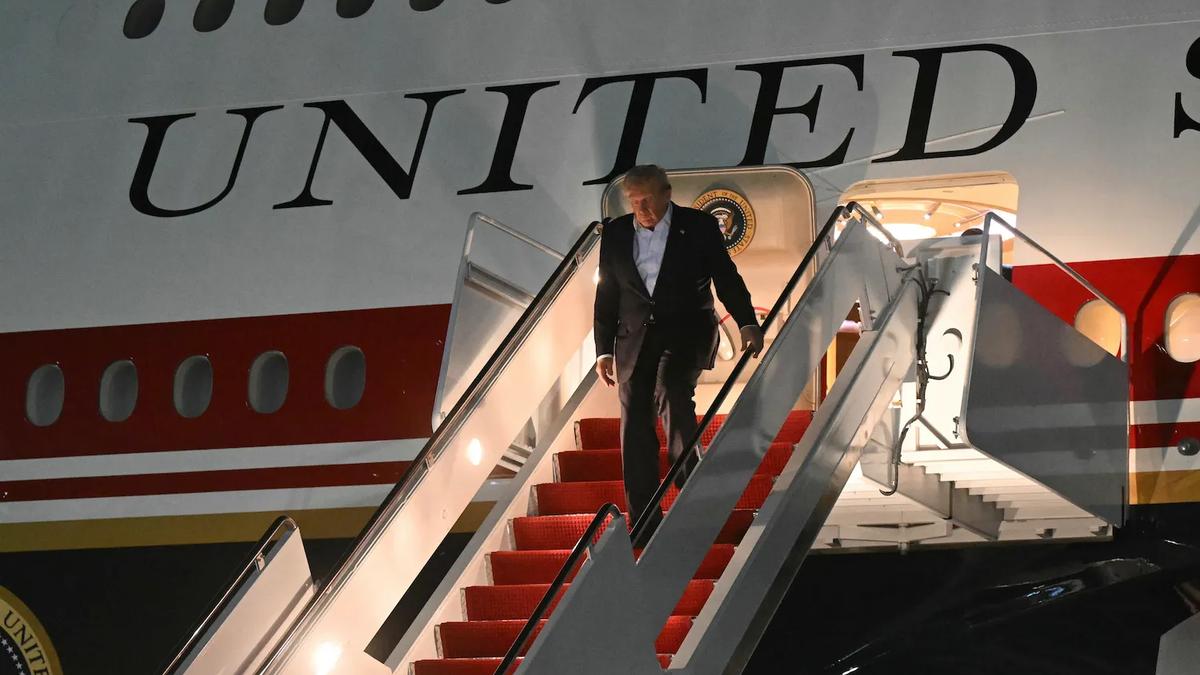
The fragile cease-fire between the United States and Iran has officially concluded, as declared by Washington, following a significant escalation of military strikes across the Persian Gulf. This development, unfolding in July 2026, marks a critical juncture in the long-standing tensions between the two nations, raising concerns about regional stability and global economic repercussions.
The recent surge in hostilities commenced on Tuesday when Iranian forces launched strikes against three oil and gas tankers navigating the strategically vital Strait of Hormuz. This action prompted immediate retaliation from the United States. In the subsequent days, both sides engaged in an exchange of fire, with Tehran targeting U.S. military facilities located in Bahrain, Jordan, Kuwait, and Qatar. Concurrently, U.S. Central Command (CENTCOM) reported striking Iranian air defense systems, coastal surveillance assets, missile and drone storage sites, naval capabilities, and military logistics infrastructure along Iran's coastline. While fighting appeared to subside by Friday, scattered reports of overnight explosions in Iran on Thursday underscore the volatile nature of the situation, despite CENTCOM denying new assaults.
Amidst this renewed military confrontation, regional mediators have intensified efforts to de-escalate tensions and bring both Washington and Tehran back to the negotiating table. On Friday, a Qatari delegation, reportedly coordinating with the U.S., flew to Iran to urge the regime to curb its attacks on U.S. military sites and commercial shipping. Simultaneously, officials from Egypt, Pakistan, Saudi Arabia, and Turkey engaged in multiple phone calls with representatives from both the U.S. and Iran, pressing for a pause in operations and a return to dialogue.
U.S. President Donald Trump confirmed on Truth Social that Iran had requested a continuation of talks, to which the U.S. agreed. However, he unequivocally stated, "the Cease Fire is OVER!" This declaration signals a shift in the U.S. approach, indicating a willingness to engage diplomatically while maintaining a firm stance against Iranian military actions. Trump had previously expressed skepticism about negotiations with Tehran, labeling them a "waste of time" and accusing Iranian leaders of being untrustworthy. Tehran has yet to issue a public response to the U.S. claims regarding the cease-fire's end or the proposed talks.
At the heart of this renewed conflict lies the Strait of Hormuz, a critical maritime choke point through which a significant portion of the world's oil supply transits. The escalation of fighting has once again severely disrupted commercial operations in the strait. Since the resumption of active conflict on Tuesday, no large vessel has attempted to traverse the U.S.-designated route, which circumvents Iranian waters by hugging Oman's coast. Only five ships have transited the thoroughfare in the past few days, a stark contrast to the 45 transits recorded on Monday. This disruption is poised to exacerbate existing global supply chain issues, with the International Monetary Fund (IMF) warning on Wednesday that the global economy is projected to slow dramatically in 2026, with growth falling to 3 percent from 3.5 percent the previous year, and global inflation rates expected to jump to 4.7 percent from 4.1 percent.
The end of the cease-fire and the subsequent escalation underscore the persistent instability in the Persian Gulf region. For the United States, the objective remains to deter Iranian aggression, protect vital commercial shipping lanes, and safeguard its regional military assets and allies. For Iran, these actions may be interpreted as an assertion of regional power and a means to gain leverage in future negotiations. The involvement of multiple regional powers in mediation efforts highlights the widespread concern over the potential for a wider, more devastating conflict that could have profound geopolitical and economic consequences.
The willingness of both sides to consider renewed talks, despite the U.S. declaration of the cease-fire's end, suggests a complex diplomatic landscape where communication channels remain open, albeit under immense pressure. However, the deep-seated mistrust, coupled with ongoing military actions, makes any path to a lasting de-escalation precarious. The international community will closely monitor these developments, as the trajectory of U.S.-Iran relations directly impacts global energy security, trade, and regional stability in one of the world's most volatile areas.
Source referenced: FOREIGNPOLICY
This brief was synthesized by our Editorial Engine and reviewed by The Ground Narrative team.