TRENDING

Wednesday, 14 October 2026
----------------------
3 Jumada Al-Awwal 1448 AH
US President Donald Trump's meeting with Iraqi Prime Minister Ali al-Zaidi at the White House marks a significant development in the complex dynamics of the Middle East, with both leaders pledging to deepen economic ties and boost Iraq's oil output.
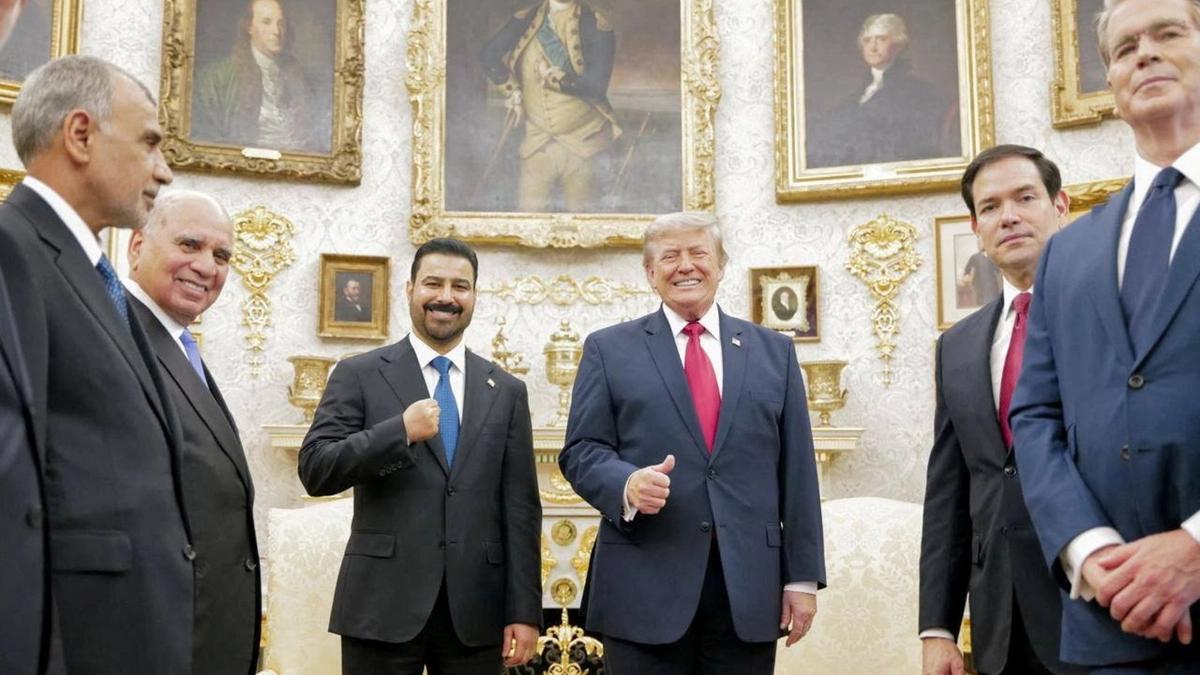
The meeting between US President Donald Trump and Iraqi Prime Minister Ali al-Zaidi at the White House on July 15, 2026, marks a significant development in the complex dynamics of the Middle East. The meeting comes as the US prepares to reduce its military presence in Iraq, a move that has been met with both hope and skepticism by various stakeholders in the region.
The US has maintained a military presence in Iraq since the 2003 invasion, with the primary objective of combating the Islamic State (IS) and stabilizing the country. However, the US has been gradually reducing its military presence in Iraq, with the aim of transitioning security responsibilities to the Iraqi military. This move has been driven by the US's desire to reduce its military footprint in the Middle East and focus on other strategic priorities.
The meeting between Trump and al-Zaidi is seen as a strategic gamble by both leaders. For Trump, the meeting is an opportunity to demonstrate his administration's commitment to deepening economic ties with Iraq and boosting the country's oil output. This move is likely driven by the US's desire to reduce its dependence on Middle Eastern oil and promote energy security. For al-Zaidi, the meeting is an opportunity to secure US support for his government's efforts to stabilize the country and promote economic growth.
The meeting between Trump and al-Zaidi has significant regional implications. The US's decision to reduce its military presence in Iraq is likely to be met with skepticism by Iran, which has been a key player in the region for decades. Iran has long been a rival of the US in the Middle East, and its reaction to the US's decision to reduce its military presence in Iraq will be closely watched by regional stakeholders.
The future consequences of the meeting between Trump and al-Zaidi are uncertain. However, it is likely that the US's decision to reduce its military presence in Iraq will have significant implications for regional stability. The US's decision to deepen economic ties with Iraq and boost the country's oil output is also likely to have significant implications for the global energy market.
The meeting between Trump and al-Zaidi marks a significant development in the complex dynamics of the Middle East. The US's decision to reduce its military presence in Iraq and deepen economic ties with the country is a strategic gamble that has significant regional implications. The future consequences of this move are uncertain, but it is likely to have significant implications for regional stability and the global energy market.
Editor's Note: The future consequences of the US's decision to reduce its military presence in Iraq and deepen economic ties with the country are uncertain.
Source referenced: ALJAZEERA
This brief was synthesized by our Editorial Engine and reviewed by The Ground Narrative team.