TRENDING

Wednesday, 14 October 2026
----------------------
3 Jumada Al-Awwal 1448 AH
Syria's newly formed People's Assembly convened for the first time, marking a milestone in the country's political transition. The Parliament's limited powers and contentious selection process raise questions about its effectiveness in building an inclusive new order.
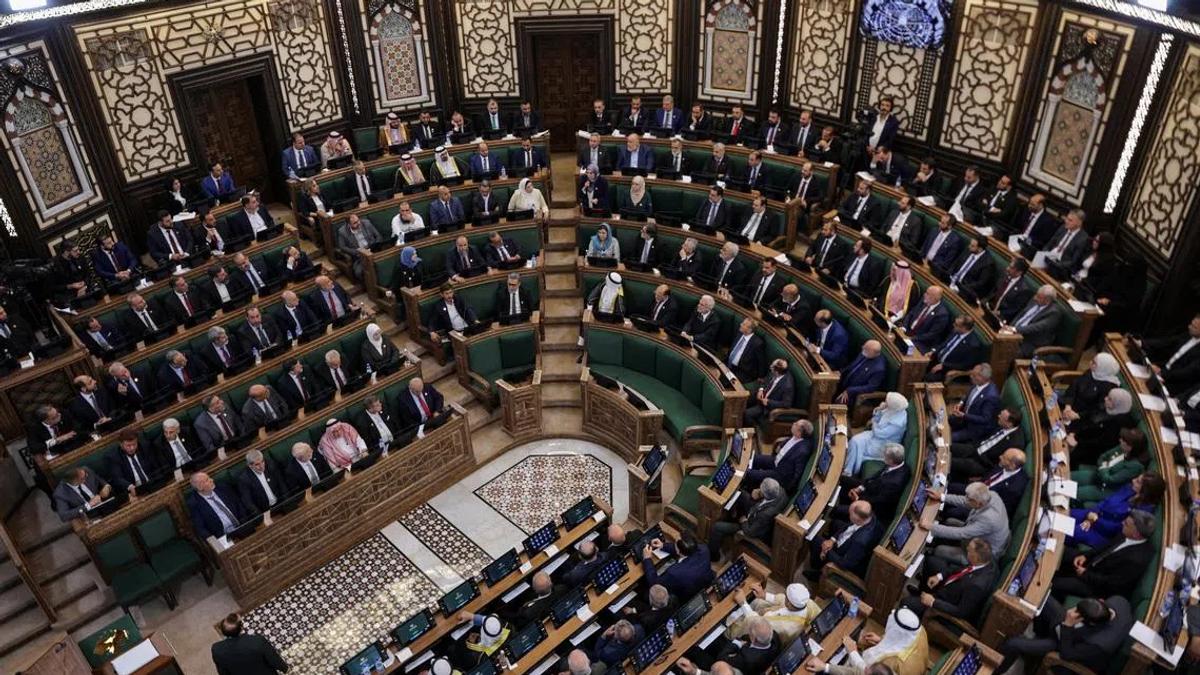
The convening of Syria's new Parliament on July 12 marks a significant milestone in the country's political transition. The Assembly, comprising 210 lawmakers, is seen as a test of President Ahmed al-Sharaa's pledge to build an inclusive new order in Syria. Sharaa, who toppled Bashar al-Assad in 2025, has vowed to create a more representative government, but the Parliament's limited powers and contentious selection process raise questions about its effectiveness.
For decades, Syria was run as a police state by the Assad family, with a legislative chamber that was seen as a rubber stamp. The new Parliament is a departure from this authoritarian past, but its current limitations are a result of the country's tumultuous history. The Syrian Civil War, which lasted from 2011 to 2025, left millions displaced and made it impossible to rely on accurate population records or voter rolls. This has led to a system where two-thirds of the members were chosen by regional electoral colleges, while Sharaa named the remaining third.
The Parliament's composition reflects the country's complex demographics. Women make up 10% of lawmakers, with 15 of the 21 female lawmakers nominated by Sharaa. However, the breakdown of lawmakers from ethnic and religious minorities is unclear. Unofficial tallies suggest that 10 seats were allocated to members of religious and ethnic minorities, including Kurds, Christians, and Alawites. The absence of a clear breakdown raises concerns about representation and inclusivity.
The Parliament's limited powers and the contentious selection process raise questions about its ability to effectively represent the Syrian people. The Assembly can propose and approve laws, but there is no requirement for the government to win a parliamentary vote of confidence. This has led to criticism that the executive branch has extensive control over the selection process. Sharaa has said he supports holding general elections once infrastructure and documentation allow, but the timeline for these elections remains unclear.
Sharaa's vision for an inclusive Syria is a significant departure from the authoritarian past. His close ties with Western states and vow to create a new era of freedoms are a testament to his commitment to reform. However, the Parliament's limitations and the contentious selection process raise questions about his ability to deliver on these promises. The convening of the Parliament marks a significant milestone, but its effectiveness in building an inclusive new order remains to be seen.
The convening of Syria's new Parliament marks a significant milestone in the country's political transition. However, the Parliament's limited powers and contentious selection process raise questions about its effectiveness in building an inclusive new order. The future consequences of this development are uncertain, but one thing is clear: the Syrian people are watching closely to see if Sharaa's vision for an inclusive Syria will become a reality.
Editor's Note: The effectiveness of the Parliament in building an inclusive new order remains uncertain due to its limited powers and contentious selection process.
Source referenced: STRAITSTIMES
This brief was synthesized by our Editorial Engine and reviewed by The Ground Narrative team.