TRENDING

Monday, 26 October 2026
----------------------
15 Jumada Al-Awwal 1448 AH
Thousands of Malawian and other foreign nationals are fleeing South Africa amid escalating xenophobic threats and attacks, fueled by economic grievances and political opportunism. This humanitarian crisis highlights deep-seated socio-economic challenges and poses significant risks to regional stability and diplomatic relations within Southern Africa.
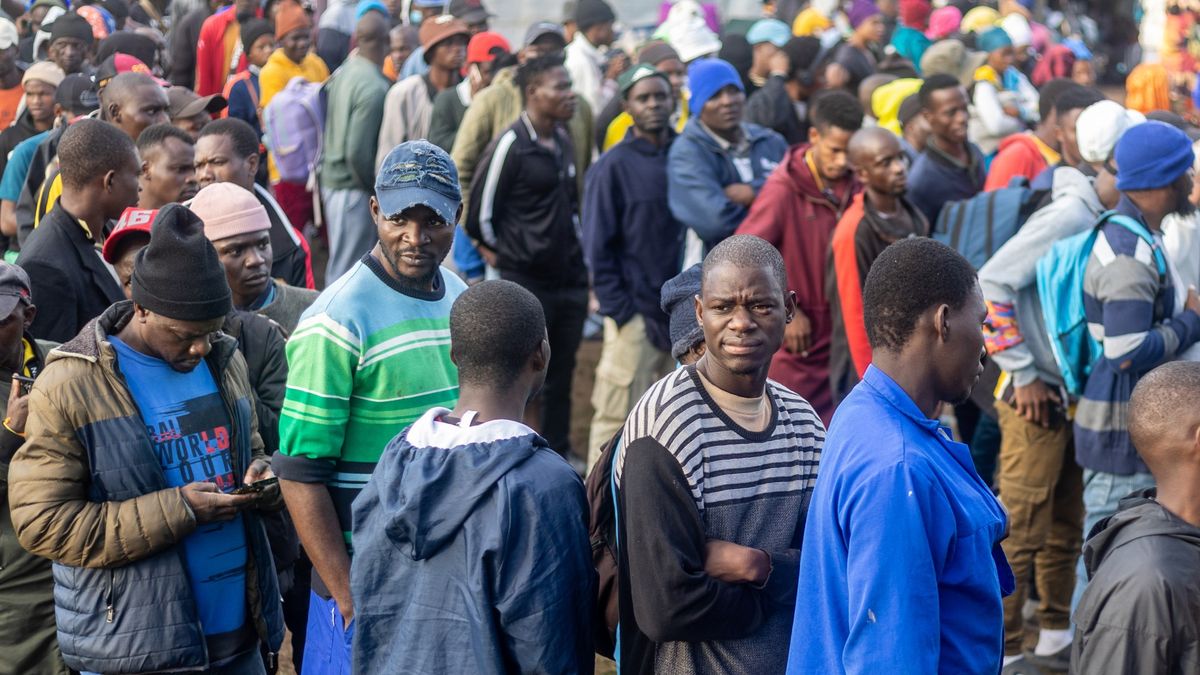
South Africa is currently grappling with a severe humanitarian crisis as over 3,000 Malawian nationals, including hundreds of children, have been displaced from their homes in the port city of Durban. This mass exodus, which began weeks prior to June 10, 2026, is a direct consequence of escalating anti-immigrant threats and violent attacks across various parts of the country. Foreign nationals, including those from Mozambique, Nigeria, Ghana, Zimbabwe, Burundi, and Ethiopia, are facing organized intimidation, with groups armed with sticks, whips, and shields demanding their departure by a June 30 deadline. Many have sought refuge in makeshift transit camps, such as an open field in Durban, or are being repatriated by their home governments, highlighting the dire security situation.
The immediate impact on those displaced is profound. Families are living in precarious conditions, exposed to the elements, and children are forced to abandon their education. Reports indicate that homes have been burned and belongings lost, underscoring the destructive nature of the violence. The desperation is palpable, with many viewing repatriation as their only safe option, preferring the uncertainty of returning home to the constant threat of violence in South Africa.
The underlying causes of this renewed wave of xenophobia are complex, primarily rooted in South Africa's persistent socio-economic challenges. High unemployment rates, poverty, and economic inequality have created fertile ground for resentment, with foreign nationals frequently scapegoated for the country's domestic woes. Protesters accuse undocumented foreigners of taking jobs and economic opportunities that they believe rightfully belong to South Africans, despite evidence suggesting that migrants often fill labor gaps or create their own economic opportunities.
This anti-immigrant sentiment has been overtly leveraged by political actors, most notably the MK Party, led by former President Jacob Zuma. The party, which commands significant support, particularly in KwaZulu-Natal province, has actively called on its supporters to march against undocumented migrants. This political opportunism is particularly concerning as it coincides with campaigning ahead of local government elections in November, suggesting that xenophobia is being weaponized for electoral gain. Such rhetoric not only incites violence but also diverts attention from systemic issues that require comprehensive policy solutions.
This is not an isolated incident but rather the latest in a series of recurring waves of xenophobic violence that have plagued South Africa since 2008. That year, dozens of migrants were killed and thousands displaced, setting a grim precedent. Subsequent flare-ups have continued to target foreign nationals, particularly those from other African countries, reflecting a deep-seated tension within South African society. The country, an economic powerhouse in Southern Africa, has historically attracted migrants seeking better opportunities, with approximately three million foreigners—about 5 percent of the population—residing within its borders. Over 63 percent of these migrants originate from within the Southern African Development Community (SADC) bloc, underscoring the regional dimension of this migration.
The ongoing crisis carries significant geopolitical and economic implications for the Southern African region. South Africa's role as a regional hegemon and a key member of SADC means that internal instability has ripple effects across its neighbors. The mass repatriation of citizens by countries like Malawi, Mozambique, Nigeria, Ghana, and Zimbabwe places an immediate humanitarian and logistical burden on these nations. Furthermore, it strains diplomatic relations within the SADC bloc, potentially undermining efforts towards regional integration and cooperation.
Economically, persistent xenophobia could deter foreign investment and skilled labor, further exacerbating South Africa's own economic challenges. The disruption of informal and formal labor markets, coupled with the potential loss of remittances, could have broader economic consequences for both South Africa and the sending countries. The perception of South Africa as an unstable or hostile environment for foreign workers could diminish its standing as a regional economic hub and lead to a re-evaluation of migration policies and economic partnerships across the continent.
Addressing this complex issue requires a multi-faceted approach. The South African government faces the immediate challenge of ensuring the safety and protection of all residents, regardless of nationality, and holding perpetrators of violence accountable. Beyond immediate security measures, there is a critical need to tackle the root causes of xenophobia, including high unemployment, economic inequality, and social exclusion. This involves implementing inclusive economic policies, promoting social cohesion, and countering inflammatory political rhetoric.
For the wider Southern African region, the crisis underscores the importance of regional dialogue and cooperation on migration policies, economic development, and humanitarian assistance. The long-term stability and prosperity of SADC depend on its members' ability to manage migration humanely and address the socio-economic pressures that fuel xenophobia, ensuring that the benefits of regional integration are shared equitably and sustainably.
Source referenced: ALJAZEERA
This brief was synthesized by our Editorial Engine and reviewed by The Ground Narrative team.


