TRENDING

Saturday, 24 October 2026
----------------------
13 Jumada Al-Awwal 1448 AH
The fragile government of Somalia is on the verge of collapse due to a deepening political crisis, which has led to clashes between government forces and opposition-allied militias. The crisis centers around the country's electoral system, with President Hassan Sheikh Mohamud pushing for a one-person, one-vote system, while opposition leaders reject the move as illegal and demand the reinstatement of the old clan-based system.
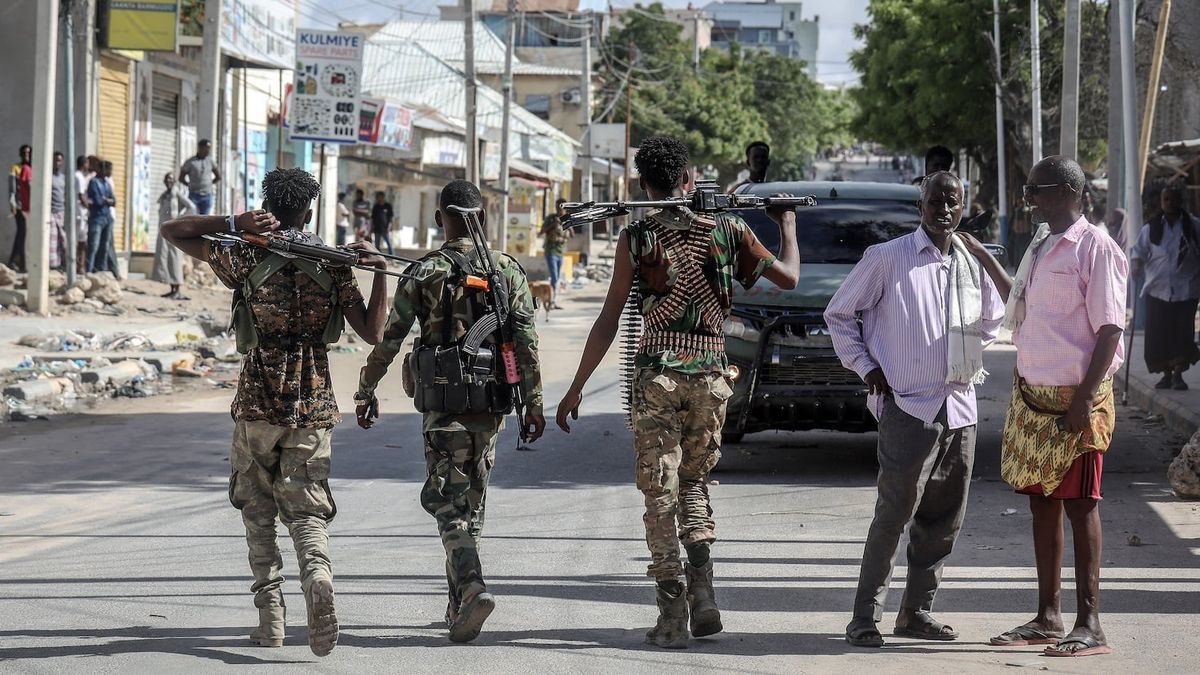
Somalia's fragile government is on the verge of collapse due to a deepening political crisis. The crisis centers around the country's electoral system, with President Hassan Sheikh Mohamud pushing for a one-person, one-vote system, while opposition leaders reject the move as illegal and demand the reinstatement of the old clan-based system.
Somalia has not held a direct national vote since a 1969 coup by autocratic leader Mohamed Siad Barre. Since a central state was reestablished in 2012, leaders have been elected through indirect clan-based power-sharing. This system has been criticized for being corrupt and undemocratic, with parliamentary seats being bought for anywhere from $100,000 to $1.3 million.
Opposition leaders, including former President Mohamed Abdullahi Mohamed and former Prime Minister Hassan Ali Khaire, argue that direct voting is a pretext to entrench the president's power. They also say it is unworkable due to militant group al-Shabab's control over parts of the country.
The Somali government has blamed the violence on "opposition group militias" and accused Khaire and Ahmed of leading a coup attempt, without providing evidence. The government has also been accused of cutting the electricity and water supply to Ahmed's home following the fighting.
The collapse of Somalia's government would have significant regional implications. The breakaway region of Somaliland has already declared its independence and has been operating independently from Mogadishu. Two other states, Puntland and Jubaland, have also started to operate independently from Mogadishu. The collapse of the government would likely lead to further fragmentation of the country.
The international community has been involved in Somalia's electoral process, with the United States and the United Kingdom leading official talks between the government and opposition. However, these talks have not resumed since they collapsed on May 15.
The collapse of Somalia's government would have significant geopolitical implications, including the potential for further fragmentation of the country and the rise of extremist groups such as al-Shabab. The international community must take a proactive role in supporting Somalia's electoral process and promoting stability in the region.
The World Cup has also highlighted the challenges faced by Somalia. Omar Artan, who was set to become the first Somali to referee a game at the FIFA World Cup, was denied entry to the United States after an 11-hour interrogation. Somalia is among the 75 nations, largely in Africa and Latin America, impacted by travel bans or restrictions introduced by the Trump administration as part of its broader crackdown on immigration.
South Africa's President Cyril Ramaphosa is walking a delicate tightrope on immigration as deadly protests against Black African migrants have prompted several nations to organize charter flights to evacuate their citizens. Some South African groups have blamed African migrants for the country's high unemployment and crime rates, though researchers and others have pushed back against this narrative.
The collapse of Somalia's government and the challenges faced by African nations at the World Cup highlight the complex geopolitical landscape of the region. The international community must take a proactive role in supporting Somalia's electoral process and promoting stability in the region.
Editor's Note: The analysis is based on available information and may be subject to change as new developments emerge.
Source referenced: FOREIGNPOLICY
This brief was synthesized by our Editorial Engine and reviewed by The Ground Narrative team.


