TRENDING

Friday, 16 October 2026
----------------------
5 Jumada Al-Awwal 1448 AH
North Korea is undertaking significant military engineering activities along the Demilitarized Zone (DMZ), raising concerns in South Korea and challenging the 1953 Armistice Agreement. These actions are seen as a deliberate testing of boundaries, emboldened by Pyongyang's deepening alliances with Russia and China.
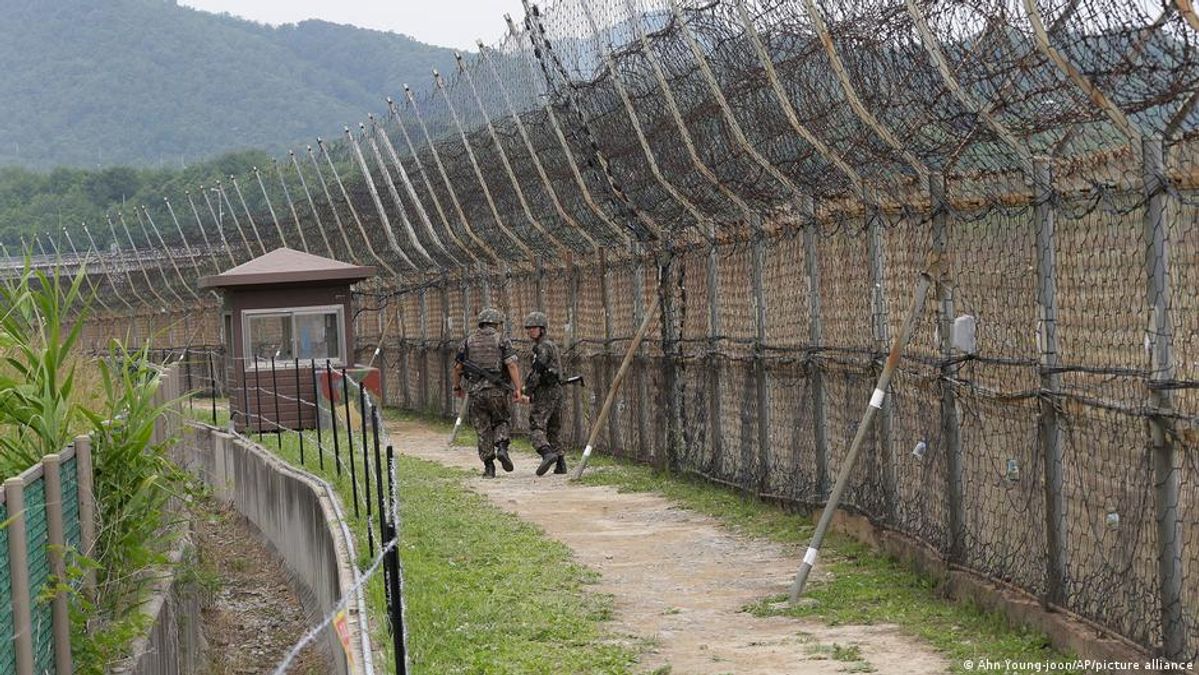
North Korea has significantly intensified its military engineering and construction activities along the Demilitarized Zone (DMZ) since approximately April 2024, prompting considerable concern from South Korea and the United Nations Command (UNC). These developments, occurring along the 238-kilometer-long buffer zone that has divided the Korean Peninsula since the 1950-53 Korean War armistice, are viewed by Seoul as a deliberate attempt to test boundaries and redefine the strategic landscape of the region.
The activities involve North Korean engineering troops erecting new fences, constructing anti-tank berms and ditches, digging trenches, building new military roads, clearing land, and laying new minefields. While these operations are primarily conducted on the North Korean side of the Military Demarcation Line (MDL) – the exact halfway point within the 4-kilometer-wide DMZ – their proximity to the MDL, in some cases less than 100 meters, has effectively begun to neutralize the DMZ's traditional function as a buffer zone. South Korea's Defense Ministry has expressed alarm, suggesting this encroaching activity breaches the spirit, if not the letter, of the armistice.
Analysts suggest that Pyongyang's heightened assertiveness is driven by a confluence of factors. A primary motivation appears to be a strategic redefinition of its relationship with South Korea. Kim Jong Un's earlier announcement to redefine ties from reconciliation and reunification to viewing the South as "two hostile countries and two belligerents at war" underpins these actions. This constitutional shift implies that North Korea now perceives the MDL as its de facto southern border, seeking to extend its control to the very limits of this newly conceptualized frontier.
Furthermore, North Korea's actions are widely seen as emboldened by its strengthening security and economic alliances with Russia and China. Pyongyang's support for Russia's invasion of Ukraine, including the provision of troops and military equipment, has reportedly provided North Korea with significant financial resources and potentially access to advanced military and dual-use technologies from both Moscow and Beijing. This external backing is perceived to grant Kim Jong Un a greater sense of impunity, allowing him to "push the envelope" in challenging regional stability without fear of significant international pushback. Experts draw parallels to China's incremental territorial assertions in areas like the South China Sea, suggesting North Korea is adopting a similar strategy of gradual encroachment to test international resolve.
The UN Command, responsible for overseeing the 1953 Armistice Agreement, has acknowledged and is monitoring these activities. While the UNC states that constructing roads, fences, and laying mines are generally permitted north of the MDL, provided no heavy weapons or drone capabilities are introduced, it is actively investigating reports of North Korean fences crossing the MDL and mines being laid on the South Korean side. Any confirmed crossings or mine placements south of the MDL would constitute an automatic violation of the armistice, triggering immediate protocols.
The erosion of the DMZ's buffer function carries significant geopolitical implications. It increases the risk of accidental clashes or miscalculations, potentially escalating tensions on one of the world's most heavily fortified borders. Beyond the DMZ, there is concern that North Korea might extend its probing to other disputed areas, such as the Northern Limit Line (NLL) in the West Sea, a maritime border that has been the site of deadly confrontations in the past. The NLL, which Pyongyang disputes, remains a flashpoint, and any similar testing there would further destabilize regional security.
South Korea and the UN Command are maintaining careful vigilance over North Korea's evolving activities. While current confirmed actions may not constitute direct violations of the armistice, their strategic intent to assert control and redefine borders is clear. The nature of modern warfare, coupled with North Korea's increasingly aggressive posture and its robust support from major powers, necessitates a cautious and strategic response from the international community. The ongoing developments underscore the persistent fragility of peace on the Korean Peninsula and the broader implications of shifting global power dynamics on regional security architectures.
Source referenced: DW
This brief was synthesized by our Editorial Engine and reviewed by The Ground Narrative team.