TRENDING

Thursday, 15 October 2026
----------------------
4 Jumada Al-Awwal 1448 AH
The recent NATO summit in Ankara, Turkey, highlighted a fundamental divergence in strategic outlook among member states, epitomized by the contrasting approaches of Canadian Prime Minister Mark Carney and NATO Secretary-General Mark Rutte. This split reflects deep anxieties over the future of U.S. commitment to the alliance and the necessity for European and middle powers to redefine their defense posture.
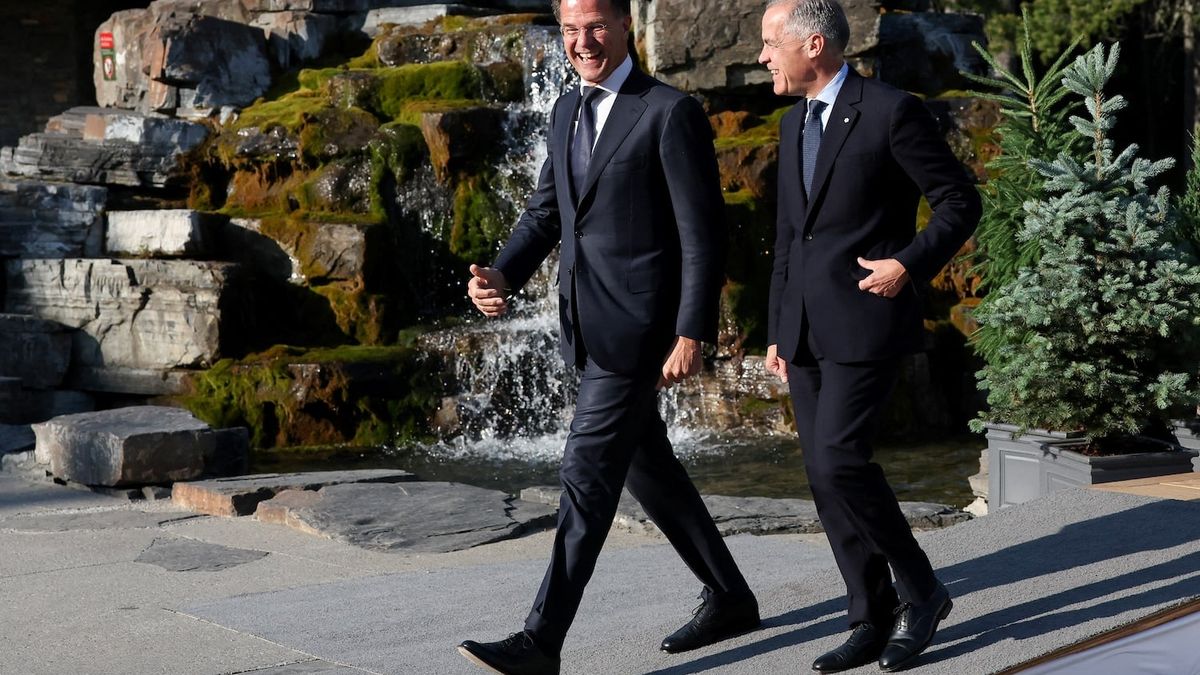
The recent NATO summit, held in Ankara, Turkey, in July 2026, was outwardly hailed as a success, marked by a seemingly harmonious joint communique and a notable absence of the public disputes that have characterized previous gatherings during the U.S. presidency of Donald Trump. European leaders reportedly appeased President Trump with evidence of increased military spending, while Turkish President Recep Tayyip Erdogan advanced closer to the lifting of U.S. sanctions, potentially paving the way for Turkey to acquire F-35 fighter jets. Even the unexpected resumption of air strikes against Iran during the summit did not derail the proceedings, underscoring a collective effort to maintain alliance cohesion.
However, beneath this veneer of unity, the Ankara summit underscored a profound and growing strategic divergence within the transatlantic alliance. While there has been significant progress in burden-sharing, particularly in defense expenditure, NATO members remain fundamentally divided on the ultimate purpose of this increased investment. This schism, described by some as a potential 'splitting in two,' reflects deep-seated anxieties about the reliability of U.S. commitment and the future role of the alliance in an increasingly multipolar world.
At the heart of this strategic debate are two prominent figures: Canadian Prime Minister Mark Carney and NATO Secretary-General Mark Rutte, who represent two distinct philosophies for navigating NATO's future. Their approaches, while differing in rhetoric and style, embody fundamentally opposing views on how non-U.S. members should secure their defense and manage their relationship with Washington.
Mark Rutte's Approach: Appeasement and Sustained U.S. Commitment
NATO Secretary-General Mark Rutte has cultivated a reputation as the 'Trump whisperer,' adept at managing the U.S. President and mitigating the risk of a U.S. withdrawal from the alliance. His strategy hinges on demonstrating substantial progress in military spending by European and Canadian allies. Since Rutte assumed his role, Canada and Europe have committed an additional $1.2 trillion to defense, with Germany planning a significant $125 billion expenditure in 2027 and Poland aiming for 5 percent of its GDP on defense. Rutte's core argument is that this increased spending is not intended to displace U.S. capabilities but rather to sustain and reinforce continued U.S. commitment to European security. This includes a preference for 'buying American' defense equipment, signaling good faith and a desire to maintain interoperability and dependency on U.S. military industrial complex.
Mark Carney's Approach: Strategic Autonomy and Hedging Against U.S. Erraticism
In stark contrast, Canadian Prime Minister Mark Carney has emerged as a vocal critic of the U.S. President and a proponent of greater strategic autonomy for middle powers. Carney's perspective, articulated at the World Economic Forum in Davos, suggests that countries like Canada and its European allies must develop independent defense capabilities to avoid becoming 'prey' in a multipolar world dominated by great powers, implicitly including both the United States and China. His subsequent visit to Beijing further underscored this emphasis on hedging and diversifying strategic partnerships.
Carney's model advocates for non-American NATO members to develop robust, independent defense capabilities. This is not merely a hedge against a potential drawdown of U.S. forces but a fundamental reorientation aimed at reducing dependency and vulnerability to a United States perceived as increasingly erratic. This approach resonates with long-standing French calls for European strategic autonomy, championed by leaders like President Emmanuel Macron, who have historically advocated for a more independent European defense posture.
The divergence between the Rutte and Carney schools of thought carries profound implications for the future of NATO and the broader geopolitical landscape. While both approaches acknowledge the necessity of increased defense spending, they differ critically on *how* these investments should be directed and *what* strategic outcomes they should achieve.
If Rutte's vision prevails, NATO might continue as a U.S.-led alliance, albeit with greater burden-sharing from European members. However, this path risks perpetuating a fundamental dependency on a potentially unpredictable U.S. foreign policy. Conversely, if Carney's vision gains traction, it could lead to a more strategically autonomous Europe and Canada, capable of independent action and less susceptible to shifts in U.S. priorities. This could strengthen European defense capabilities but might also strain the traditional transatlantic bond if not carefully managed.
The Ankara summit, despite its outward calm, highlighted that the fundamental question of NATO's strategic direction remains unresolved. The alliance faces a critical juncture, where the choices made regarding defense investments and strategic partnerships will determine its cohesion, effectiveness, and relevance in an evolving global order. The ability of NATO members to reconcile these competing visions will be crucial for the alliance's long-term stability and its capacity to address future security challenges.
Source referenced: FOREIGNPOLICY
This brief was synthesized by our Editorial Engine and reviewed by The Ground Narrative team.


