TRENDING

Tuesday, 6 October 2026
----------------------
25 Rabi' Al-Thani 1448 AH
The 2026 NATO Summit in Ankara underscored the Alliance's unwavering commitment to collective defense, significantly increasing military spending and pledging long-term, substantial support for Ukraine. The declaration explicitly identified Russia as a persistent threat while outlining a comprehensive modernization strategy to adapt to evolving global security challenges.
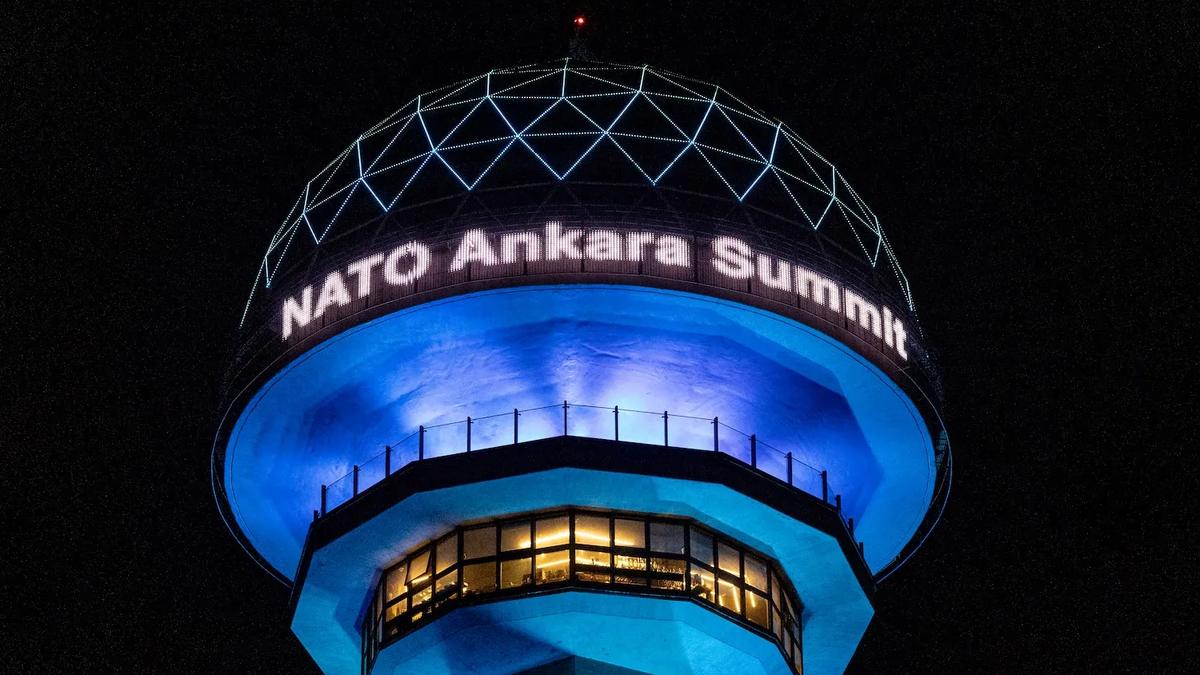
The North Atlantic Treaty Organization (NATO) concluded its 2026 summit in Ankara, Türkiye, on July 8, 2026, with a declaration that firmly reiterated the Alliance's core principles and outlined a robust strategy to address contemporary and emerging geopolitical challenges. The Ankara Summit Declaration, issued by the Heads of State and Government of the North Atlantic Alliance, underscored an ironclad commitment to collective defense under Article 5 of the Washington Treaty and the enduring transatlantic bond, emphasizing that "An attack on one is an attack on all."
A central theme of the Ankara Declaration was the explicit identification of Russia as a long-term threat to Euro-Atlantic security and stability. This clear articulation solidifies NATO's strategic posture, which has increasingly focused on collective deterrence and defense in the wake of heightened geopolitical tensions. To counter this threat, Allies affirmed their commitment to The Hague defense commitment, with European Allies and Canada having increased their core defense investments by over $139 billion in 2025. The Ankara summit further announced more than $50 billion in new procurements and pledged to expand collective manufacturing capacity, accelerate innovation, and eliminate defense trade barriers among members. This significant financial commitment highlights a concerted effort to enhance military readiness and industrial resilience across the Alliance.
The declaration articulated a vision for "a stronger Europe in a stronger NATO," signaling a strategic evolution where European Allies and Canada, in collaboration with the United States, are assuming greater responsibility for the Alliance’s defense. This shift reflects ongoing discussions about burden-sharing and the need for a more balanced distribution of defense capabilities and responsibilities within the transatlantic framework. The modernization agenda is comprehensive, encompassing an appropriate mix of nuclear, conventional, and missile defense capabilities, complemented by advanced space and cyber assets. Investments are specifically targeting deep precision strike capabilities, integrated air and missile defense, uncrewed systems, cutting-edge technologies, and intelligence. Furthermore, the Alliance is developing an interoperable transatlantic warfighting cloud and adopting powerful AI models, indicating a strong focus on technological superiority and integrated, multi-domain operations.
One of the most significant aspects of the Ankara Declaration was the unwavering and long-term support for Ukraine. Allies recognized Ukraine's contribution to transatlantic security and pledged continued assistance in defending its freedom, sovereignty, and territorial integrity. Notably, the declaration highlighted that European Allies and Canada now finance the vast majority of security assistance to Ukraine through bilateral and multilateral means. For 2026, Allies committed €70 billion in military equipment, assistance, and training for Ukraine, with a sovereign commitment to sustain at least equivalent levels in 2027. This substantial, multi-year commitment, further bolstered by the European Union’s decision to provide multi-year funding through the Ukraine Support Loan, aims to provide predictable and sustainable support crucial for Ukraine's defense and long-term stability. This institutionalized approach signifies a profound, enduring commitment to Ukraine's security, moving beyond immediate crisis response to a sustained strategic partnership.
Beyond the immediate Euro-Atlantic security concerns, the Alliance also addressed broader strategic competition and pervasive instability. The declaration reiterated that Iran must never possess a nuclear weapon and called on Tehran to fully respect freedom of navigation in the Strait of Hormuz. This inclusion underscores NATO's awareness of and concern for security challenges extending beyond its traditional operational theater, particularly in regions critical for global energy security and international trade. The Alliance's commitment to adapting to hybrid threats and recurrent shocks demonstrates a comprehensive approach to security that acknowledges the multifaceted nature of modern geopolitical risks.
In conclusion, the 2026 Ankara Summit Declaration represents a pivotal moment for NATO, reaffirming its foundational principles while aggressively adapting to a complex and evolving global security landscape. By explicitly naming Russia as a long-term threat, significantly increasing defense investments, committing to advanced military modernization, and institutionalizing long-term support for Ukraine, NATO has signaled a robust and unified posture. The Alliance's attention to broader strategic concerns, such as Iran's nuclear ambitions, further illustrates its comprehensive approach to safeguarding the security and prosperity of its one billion citizens.
Source referenced: FOREIGNPOLICY
This brief was synthesized by our Editorial Engine and reviewed by The Ground Narrative team.


