TRENDING

Saturday, 24 October 2026
----------------------
13 Jumada Al-Awwal 1448 AH
As Mexico prepares to host the 2026 World Cup, a wave of teacher-led protests has brought the capital city to a standstill, highlighting the country's deepening social and economic challenges.
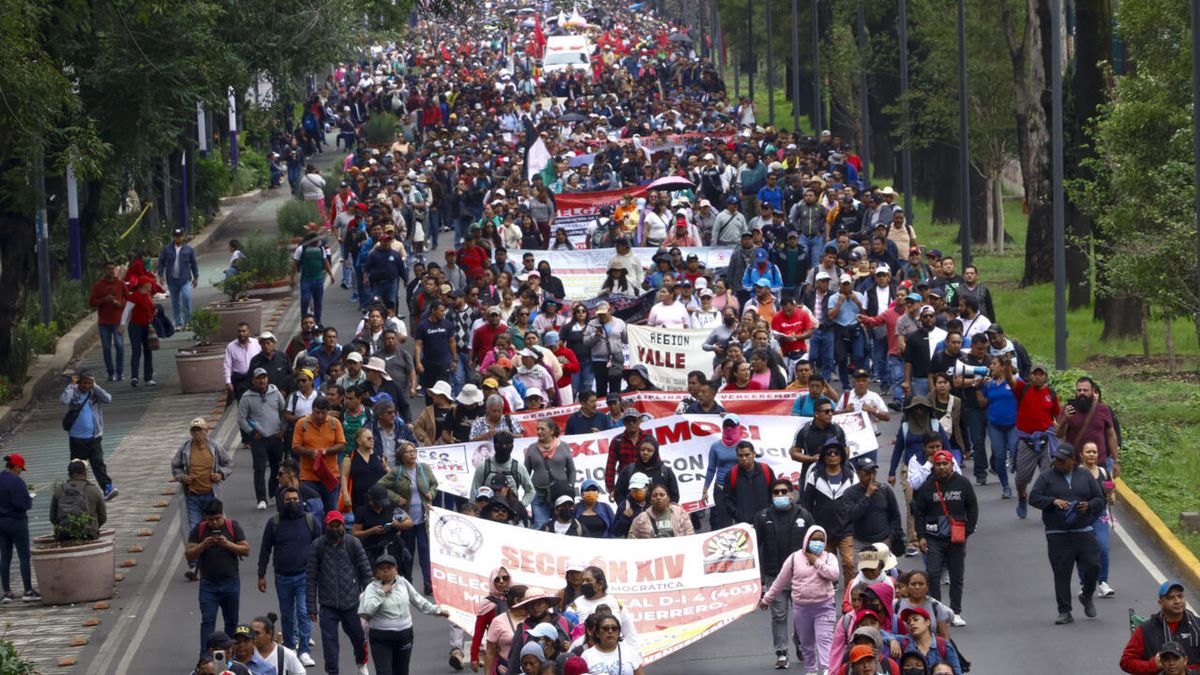
Mexico's preparations for the 2026 World Cup have been overshadowed by a wave of teacher-led protests that have brought the capital city to a standstill. The demonstrations, led by a breakaway group of the CNTE teachers union, are demanding a salary raise and the reversal of a pension law that the government considers unfeasible.
The protests are the latest manifestation of a perfect storm of social and economic unrest that has been brewing in Mexico for years. The country's economy has been struggling to recover from the COVID-19 pandemic, and the government's efforts to address the crisis have been hampered by corruption and inefficiency.
The protests are also a symbolic showdown between the government and the teachers, who are seen as a key sector of the country's civil society. The government has favored dialogue with the protesting teachers, but to no avail. The protesters are determined to make their voices heard, and the World Cup provides a high-profile platform for their demands.
The protests have significant regional implications, as Mexico is set to co-host the 2026 World Cup with the United States and Canada. The tournament is expected to attract a vast global TV audience, and the protests could tarnish Mexico's reputation as a host country.
The future consequences of the protests are uncertain, but they could have far-reaching implications for Mexico's social and economic stability. The government may be forced to reconsider its policies and make concessions to the protesting teachers, but this could also embolden other sectors of society to demand change.
The protests are part of a longer history of social unrest in Mexico, dating back to the 1960s and 1970s. The country has a long tradition of teacher-led protests, which have often been driven by demands for better working conditions, higher salaries, and greater autonomy.
The strategic motivations behind the protests are complex and multifaceted. The protesting teachers are driven by a desire for better working conditions, higher salaries, and greater autonomy, but they are also seeking to challenge the government's policies and assert their influence in the country's social and economic landscape.
Editor's Note: The analysis is based on publicly available information and may not reflect the full complexity of the situation.
Source referenced: FRANCE24
This brief was synthesized by our Editorial Engine and reviewed by The Ground Narrative team.