TRENDING

Friday, 16 October 2026
----------------------
5 Jumada Al-Awwal 1448 AH
June 2026 registered as the Earth's second-warmest June on record, accompanied by unprecedented ocean surface temperatures and critically low polar sea ice, according to NOAA. These escalating climate trends carry profound geopolitical implications, from resource security to international stability and Arctic competition.
The Earth experienced its second-warmest June on record in 2026, a stark indicator of accelerating global warming trends. An analysis released by the US National Oceanic and Atmospheric Administration (NOAA), specifically its National Centers for Environmental Information (NCEI), highlighted that global ocean surface temperatures reached an all-time high for the month. This alarming data underscores the pervasive and intensifying impact of climate change across the planet, with significant geopolitical, economic, and humanitarian ramifications.
According to the NOAA report, global surface temperatures in June 2026 were 1.09 degrees Celsius above the 20th-century average, trailing only June 2024 as the warmest on record. This widespread warming was observed across much of the world, with several continents and regions experiencing one of their ten warmest Junes. The report also detailed critically low sea ice extents in both the Arctic and Antarctic, ranking among their respective ten lowest on record for June. Globally, sea ice extent was the fourth smallest in the 48-year satellite record, covering 22.7 million square kilometers—approximately 2.02 million square kilometers less than the 1991-2020 average. Concurrently, global tropical cyclone activity was reported as above average, further illustrating the destabilization of global weather patterns.
The persistent and intensifying warming trend, exemplified by the June 2026 data, presents a complex web of geopolitical and economic challenges. The receding polar ice caps, particularly in the Arctic, are opening new shipping routes and access to previously inaccessible natural resources. This development intensifies geopolitical competition among Arctic nations such as Russia, the United States, Canada, Norway, and Denmark, each vying for strategic advantage, resource exploitation rights, and control over emerging trade passages. The potential for increased military presence and territorial disputes in the Arctic region is a growing concern, transforming it into a new frontier for global power dynamics.
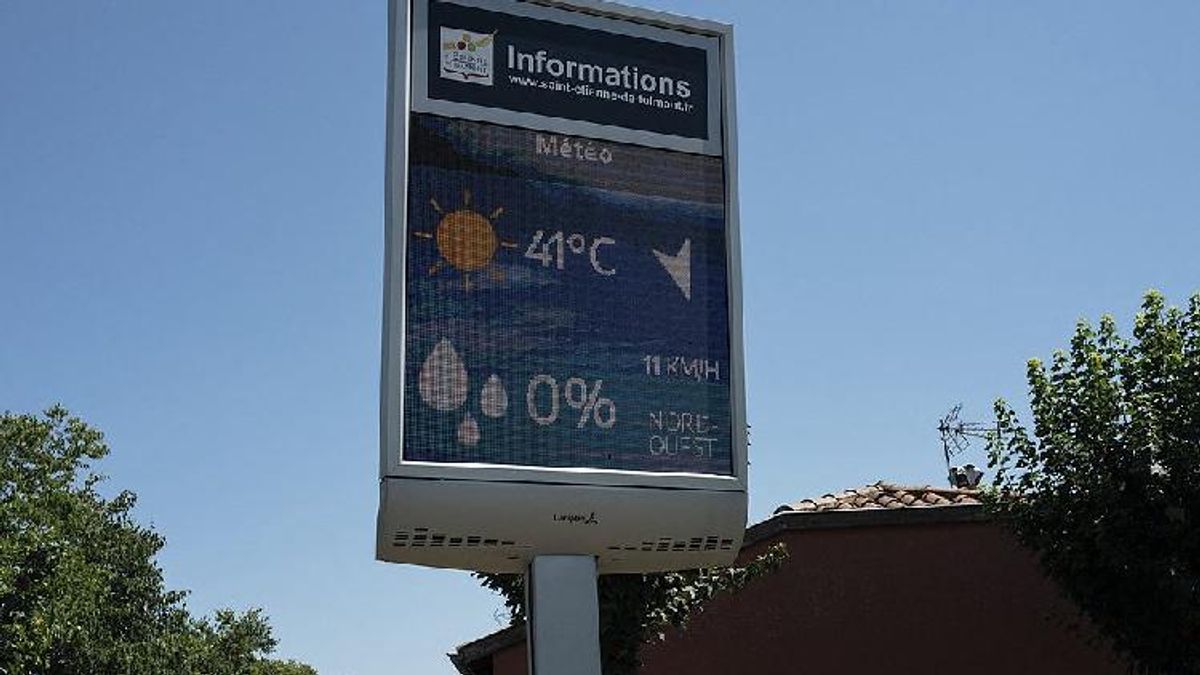
Beyond the poles, extreme weather events—such as the heatwave in France where temperatures reached 41 degrees Celsius and glaciers receded—threaten global food and water security. Prolonged droughts, altered precipitation patterns, and increased frequency of tropical cyclones can devastate agricultural yields, disrupt supply chains, and exacerbate existing resource scarcities. This can lead to internal displacement and cross-border migration, placing immense strain on national infrastructures and international humanitarian aid systems. The potential for climate-induced migration to fuel social unrest and regional instability is a critical emerging concern for policymakers worldwide.
Economically, the costs associated with climate change are escalating. Infrastructure damage from extreme weather, increased insurance premiums, and disruptions to key industries like agriculture, tourism, and energy production represent significant financial burdens. Nations heavily reliant on climate-sensitive sectors face heightened economic vulnerability, potentially widening the gap between developed and developing economies and complicating global trade relations. The imperative for a rapid transition to renewable energy sources is amplified, creating both opportunities for technological innovation and potential for economic disruption in fossil fuel-dependent states.
The consistent reporting of record-breaking temperatures, like those in June 2026, places immense pressure on international diplomatic efforts to combat climate change. Global forums and agreements, such as the United Nations Climate Change Conferences (COPs), become increasingly critical platforms for negotiating emissions reductions, climate finance, and adaptation strategies. However, these discussions are often fraught with disagreements over historical responsibility, equitable burden-sharing, and the pace of decarbonization, potentially leading to new geopolitical alignments or deepening existing divisions.
Looking at the year to date, the January-June global surface temperature was the third-highest on record, and NCEI's Global Annual Temperature Outlook indicates it is very likely that 2026 will rank among the five-warmest years on record. This trajectory underscores the long-term strategic challenge posed by climate change, which acts as a threat multiplier, exacerbating existing vulnerabilities and creating new ones. Addressing this requires not only ambitious climate policies but also robust international cooperation, investment in resilient infrastructure, and proactive strategies to manage climate-induced migration and resource conflicts. The data from June 2026 serves as a potent reminder that the window for effective global action is rapidly narrowing, with profound implications for the future of international stability and human well-being.
Source referenced: CGTN
This brief was synthesized by our Editorial Engine and reviewed by The Ground Narrative team.