TRENDING

Sunday, 20 September 2026
----------------------
9 Rabi' Al-Thani 1448 AH
A Japanese lawyer representing wartime victims warns that Japan's increasing military capabilities and deeper US cooperation signal a dangerous trajectory, rooted in an incomplete reckoning with its past. This analysis explores the power dynamics driving Japan's defense shift and the regional anxieties it ignites.
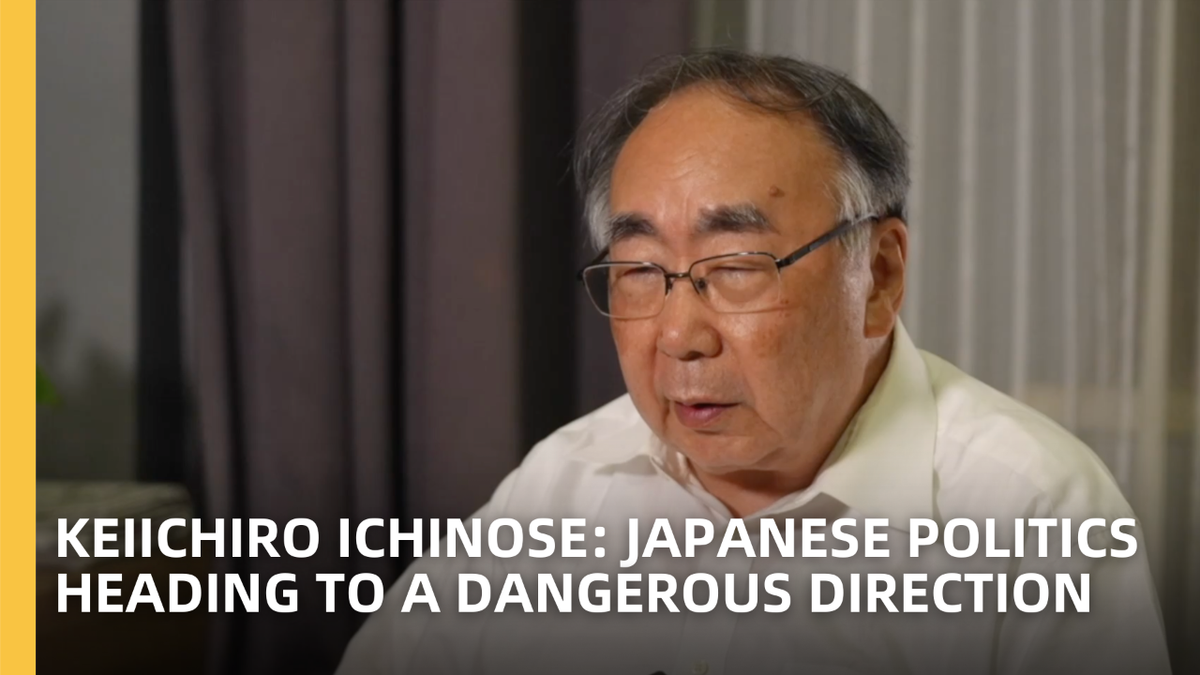
Japanese lawyer Keiichiro Ichinose, known for representing Chinese victims of Japan's wartime bacterial warfare, recently stated that Japan's political direction is becoming "dangerous." In an interview with CGTN, Ichinose criticized Japan for failing to fully confront its wartime history, even as it expands its military capabilities and strengthens cooperation with the United States. He emphasized the need for Japan to acknowledge its past aggressions and prevent future tragedies.
Japan's post-war constitution, drafted under Allied occupation, famously renounced war and prohibited the maintenance of military forces, though it allowed for "self-defense forces." For decades, this framework, coupled with the US security umbrella, allowed Japan to focus on economic growth. However, in recent years, a confluence of factors has pushed Japan towards a more assertive defense posture. The perceived rise of China's military power, North Korea's ballistic missile program, and Russia's actions in Ukraine have provided powerful incentives for Tokyo to reinterpret its constitutional limits and increase defense spending. The ruling Liberal Democratic Party (LDP), particularly its conservative wing, has long advocated for a stronger military, viewing the post-war pacifist stance as an impediment to Japan's full sovereignty and regional influence. Deepening military cooperation with the United States is a critical component of this shift, providing access to advanced technology, intelligence sharing, and a robust alliance framework that serves as a deterrent. For the US, a militarily stronger Japan is seen as a vital partner in its Indo-Pacific strategy, sharing the burden of regional security and counterbalancing China's growing influence. This strategic alignment creates a powerful feedback loop: regional tensions fuel Japan's military expansion, which in turn reinforces its alliance with the US, further solidifying its role in a complex power balance.
While national security debates often focus on state-level actors and military hardware, the human cost of unaddressed history and escalating military postures is borne by ordinary citizens. For the victims of Japan's wartime atrocities and their descendants, Ichinose's statements highlight a persistent wound. The failure to fully acknowledge and atone for past actions, particularly in areas like bacterial warfare, means that closure and justice remain elusive. This historical burden affects diplomatic relations, fostering distrust and resentment across East Asia, particularly in China and South Korea. Furthermore, the shift towards increased military spending inevitably diverts resources from social welfare, healthcare, or education, impacting the daily lives of Japanese citizens, especially in an aging society. The narratives of national security and deterrence, while framed as protecting the populace, often overshadow the tangible trade-offs in public services and the psychological toll of living in a region with heightened military tensions. For those who remember the horrors of war, the expansion of military capabilities, however justified by current threats, carries an unsettling echo of a past they hoped would never return.
Governments and official statements often frame Japan's military expansion purely as a necessary response to contemporary security threats, emphasizing "self-defense" and "regional stability." What is frequently downplayed or omitted is the internal political calculus within Japan and the long-term implications for regional reconciliation. The push for constitutional revision and military normalization isn't solely about external threats; it's also about a segment of the Japanese political establishment seeking to shed what they perceive as the shackles of post-war guilt and reclaim a "normal" nation status. This internal narrative often minimizes the historical grievances of neighboring countries, portraying their concerns as mere propaganda or an overreaction. Furthermore, the economic incentives for Japan's defense industry, while not explicitly stated, play a role. Increased defense budgets translate into contracts and technological development, creating a powerful domestic constituency for continued military growth. The broader narrative of "deterrence" also glosses over the potential for miscalculation or escalation, which could plunge the region into conflict, a scenario that would devastate global trade and human lives far beyond national borders.
Readers should closely watch several key developments. First, monitor Japan's defense budget allocations and the specific types of military capabilities it acquires, particularly offensive strike capabilities. These acquisitions will signal the true extent of its military transformation beyond purely defensive measures. Second, observe the upcoming elections and political debates within Japan regarding constitutional revision. Any move to formally amend Article 9 would be a monumental shift with profound regional consequences. Third, pay attention to the diplomatic responses from China and South Korea. Their reactions, whether through increased military exercises, diplomatic protests, or economic measures, will indicate the level of regional destabilization. Finally, observe the US role: how Washington balances its support for Japan's rearmament with calls for regional de-escalation and historical reconciliation will be crucial. The interplay of these factors will determine whether Japan's new military path leads to greater regional stability or further entrenchment of historical divisions and heightened risk.
Source referenced: CGTN
This brief was synthesized by our Editorial Engine and reviewed by The Ground Narrative team.


