TRENDING

Wednesday, 7 October 2026
----------------------
26 Rabi' Al-Thani 1448 AH
Three years after the Oct 7 attack, Israel’s campaign has razed Gaza but not achieved its stated goals. The article dissects the power dynamics, human toll, and the narratives being hidden.
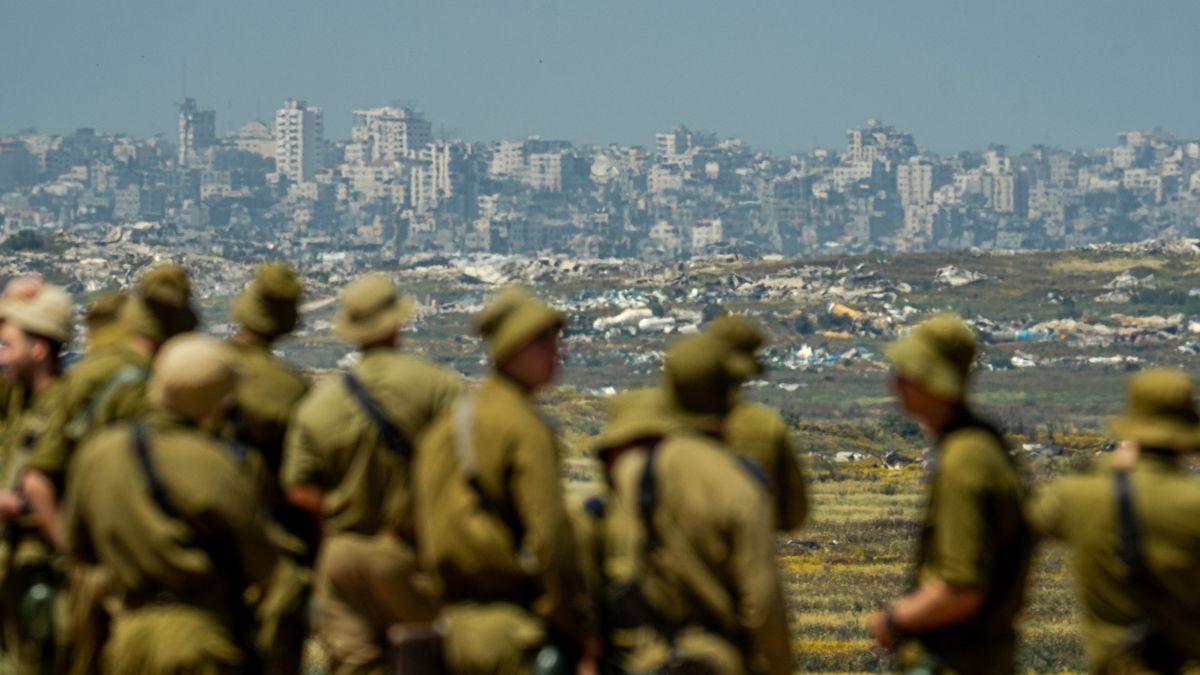
Three years after the Oct 7 assault that shocked Israel, the conflict has settled into a brutal stalemate. Israeli forces have unleashed an unprecedented bombing campaign across Gaza, killing over 74,000 people, injuring 180,000, and dismantling most of the Strip’s infrastructure. Despite the devastation, the war has not produced the decisive political outcome Israel announced at the outset.
Israel’s strategy rests on three intertwined pillars: military dominance, diplomatic backing, and domestic political calculus. First, the Israel Defense Forces deployed the full spectrum of its arsenal—stealth jets, autonomous drones, and AI‑guided munitions—to overwhelm Hamas’s limited firepower. The objective was to force a swift capitulation and erase any capacity for future resistance. Second, the United States supplied billions in weapons, intelligence, and diplomatic cover, framing the war as a fight against terrorism while shielding Israel from UN resolutions. This alliance also served U.S. interests in maintaining a strategic foothold in the Eastern Mediterranean. Third, Israeli leaders, especially Prime Minister Netanyahu, leveraged the war to consolidate power at home, portraying a hard‑line stance as essential for national survival. The narrative of an existential threat helped suppress dissent and justify extraordinary budget allocations to the defense sector. Yet each of these levers encounters limits: the sheer scale of destruction raises questions in Washington, the civilian toll erodes international legitimacy, and the prolonged occupation strains Israel’s own security apparatus.
The death toll in Gaza now exceeds 74,000, a figure that includes a large proportion of women, children, and the elderly. Hospitals have been reduced to makeshift clinics, and the injured—many with severe burns or shrapnel wounds—face a chronic shortage of medicines and surgical supplies. The trauma extends beyond physical wounds; entire families have lost breadwinners, plunging households into poverty.
Gaza’s health system, once a modest network of public hospitals, has been crippled. Power outages force generators to run on scarce fuel, limiting the ability to perform life‑saving procedures. Water treatment plants and desalination units have been destroyed, leaving residents dependent on unsafe wells and humanitarian trucks. Outbreaks of water‑borne diseases are now a looming threat.
More than 1.5 million people have been displaced within the Strip, living in overcrowded shelters that lack sanitation. The destruction of schools and markets has halted any semblance of normal economic activity. Youth unemployment, already high, has surged as reconstruction remains stalled, creating a generation that knows only conflict.
While official statements emphasize Israel’s right to self‑defence, several critical dimensions are downplayed. First, the UN has been largely excluded from reconstruction plans, with Israel and the United States promoting a parallel “Board of Peace” that bypasses traditional humanitarian mechanisms. This sidestepping limits transparency and reduces the leverage of international law. Second, the International Criminal Court has issued an arrest warrant for Prime Minister Netanyahu, yet diplomatic corridors in Washington continue to discuss aid packages without addressing accountability. Third, media coverage in many Western outlets focuses on Israeli military precision while marginalizing Palestinian voices, creating a narrative gap that obscures the daily reality of scarcity, fear, and resistance among Gaza’s residents. Finally, the economic cost to Israel—rising defense spending, potential sanctions, and the erosion of its global image—receives scant attention compared to the emphasis on battlefield victories.
The next months will reveal whether diplomatic pressure can translate into a viable governance framework for Gaza. Key indicators include: the pace of any U.S. congressional votes on conditioning aid, the emergence of a credible Palestinian administrative body accepted by both Israel and the international community, and the response of regional actors such as Egypt and Qatar to renewed displacement flows. Additionally, the durability of Israel’s domestic political coalition will hinge on public sentiment as the war’s human cost becomes more visible at home. Observers should track shifts in UN voting patterns, the implementation (or lack thereof) of reconstruction funds, and any legal actions stemming from the ICC warrant. The interplay of these factors will determine if the conflict remains a frozen tragedy or moves toward a contested peace.
No. While Israel has freed a handful of hostages and weakened Hamas militarily, it has not eliminated resistance, secured lasting security control, or established a new administration.
The United States provides extensive military aid, diplomatic shielding at the UN, and political support, but faces growing domestic debate over the continuation of that assistance.
Civilians endure massive casualties, a collapsed health system, lack of clean water, and widespread displacement, relying increasingly on limited humanitarian aid.
Source referenced: ALJAZEERA
This brief was synthesized by our Editorial Engine and reviewed by The Ground Narrative team.