TRENDING

Friday, 16 October 2026
----------------------
5 Jumada Al-Awwal 1448 AH
Iran's pivot from targeting the UAE to focusing on Bahrain and Kuwait has significant implications for regional stability and the Gulf Cooperation Council's security order.
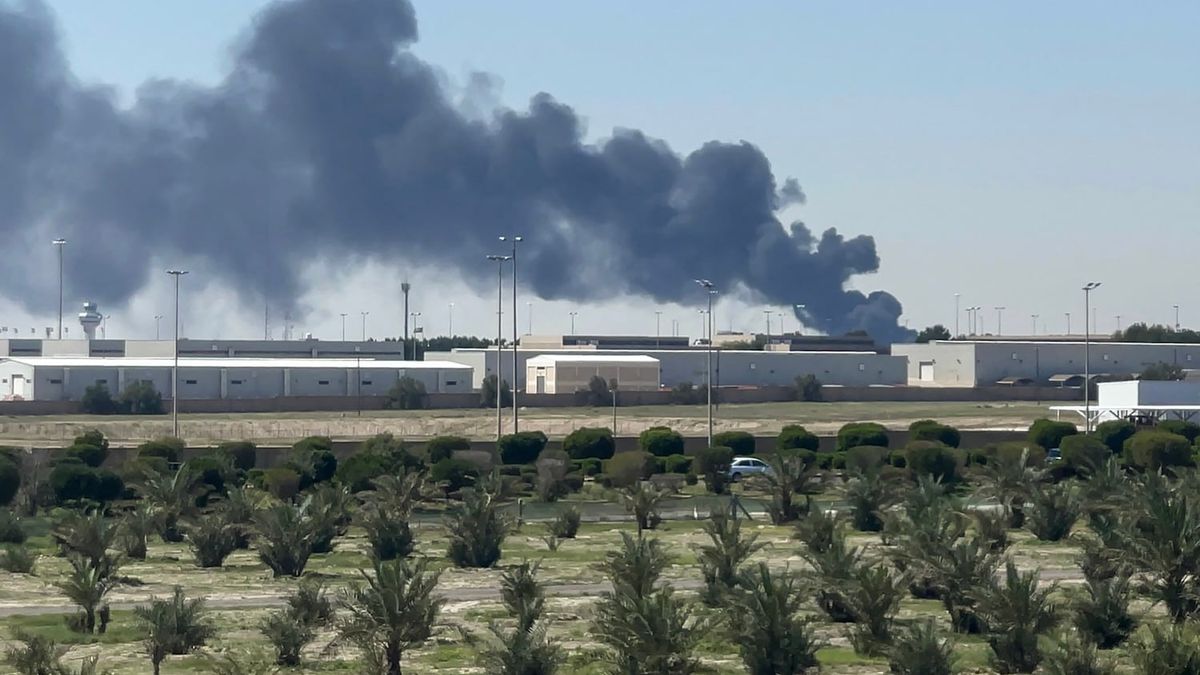
Iran's recent escalation of attacks on Bahrain and Kuwait has sent shockwaves throughout the Gulf region, highlighting the country's evolving strategic priorities and the fragility of the Gulf Cooperation Council's (GCC) security order.
Iran's decision to pivot from targeting the United Arab Emirates (UAE) to focusing on Bahrain and Kuwait is a deliberate strategic choice. The commonality between these two states is that they are both seen as Washington's regional center of gravity, and Iran seeks to signal its resolve without provoking a return to hostilities. By targeting these smaller states, Iran aims to demonstrate its ability to disrupt global commerce and create economic chaos, thereby forcing a cease-fire.
The Gulf region has been a hotbed of tensions for decades, with Iran's nuclear program and ballistic missile capabilities posing a significant threat to regional stability. The ongoing U.S.-Iran escalations have further exacerbated the situation, with neither side willing to back down. The GCC states, including Bahrain and Kuwait, have found themselves caught in the middle, struggling to maintain their neutrality and avoid being drawn into the conflict.
The lack of a coherent GCC response to Iran's attacks has created a permissive environment for Tehran's selective coercion. The failure of the U.S. and Gulf states to respond decisively to Iran's repeated strikes has emboldened Tehran to continue its attacks, forcing a reassessment of assumptions long embedded in the Gulf's security order.
Bahrain and Kuwait share similar predicaments, being reliant on the Strait of Hormuz for commerce and sandwiched between larger, competing neighbors. Their small size and limited geopolitical weight make them vulnerable to becoming frontiers of conflict and even victims of conquest. The failure of these states to deter Iran on their own is a symptom of a more systemic problem, highlighting the need for collective security and a more robust GCC response.
The U.S. is trapped in a dilemma, with either refraining from responding to Iran's attacks damaging its credibility or escalating and risking plunging the region back into a war that no one wants. The belated U.S. retaliation in mid-July has only intensified Iran's attacks, setting the stage for further escalation.
Iran's strategic shift towards targeting Bahrain and Kuwait has significant implications for regional stability and the GCC's security order. The lack of a coherent GCC response and the U.S. strategic incoherency have created a permissive environment for Tehran's selective coercion. The situation demands a more robust and collective response from the GCC states and the U.S. to prevent further escalation and maintain regional stability.
Editor's Note: The analysis is based on publicly available information and may not reflect the full complexity of the situation. Further research and analysis are necessary to fully understand the motivations and implications of Iran's strategic shift.
Source referenced: FOREIGNPOLICY
This brief was synthesized by our Editorial Engine and reviewed by The Ground Narrative team.