TRENDING

Tuesday, 6 October 2026
----------------------
25 Rabi' Al-Thani 1448 AH
Following the death of Supreme Leader Ayatollah Ali Khamenei in a US-Israeli strike, both Iranian regime supporters and opposition factions have deployed AI-generated images to manipulate public narratives surrounding his funeral, highlighting the weaponization of information in a volatile geopolitical landscape. This digital information warfare underscores the intense struggle for legitimacy and control during a critical leadership transition, further complicating an already tense regional environment.
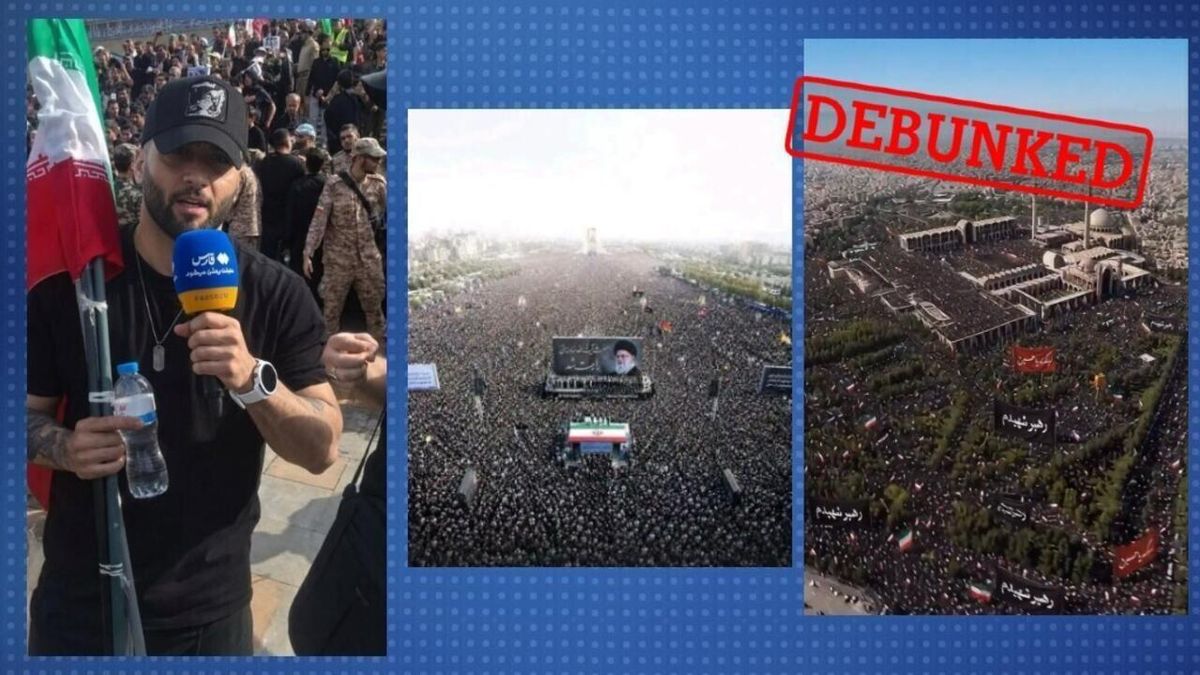
The death of Iran's Supreme Leader, Ayatollah Ali Khamenei, on February 28, 2026, reportedly in a US-Israeli strike, has triggered a profound geopolitical crisis and an intense domestic power struggle, immediately amplified by sophisticated information warfare. The subsequent circulation of AI-generated images depicting his funeral in early July 2026 by both regime loyalists and opposition groups underscores the evolving nature of conflict in the digital age, where narrative control is as crucial as military or political power.
The reported US-Israeli strike that led to Khamenei's demise represents a dramatic escalation in regional tensions, marking a direct military confrontation with potentially far-reaching consequences for the Middle East and global stability. Khamenei, who had led Iran for decades, was a pivotal figure in the Islamic Republic's political and religious establishment, shaping its domestic and foreign policies, including its nuclear program and regional proxy networks. His sudden death creates a significant power vacuum and initiates a complex succession process, which is inherently a period of vulnerability and intense internal maneuvering within Iran's opaque political system. The timing of the information warfare, coinciding with the funeral, highlights the immediate need for various factions to assert their influence and shape public perception during this critical transition.
In the immediate aftermath of Khamenei's funeral, which authorities claimed drew millions, a parallel narrative emerged online, fueled by AI-generated images. These fabricated visuals were strategically deployed across social media platforms, primarily X (formerly Twitter), by both sides of Iran's deeply polarized political spectrum.
Regime Supporters' Objectives: Pro-regime social media users disseminated AI-generated images purporting to show immense crowds at significant Tehran landmarks, such as the Grand Mosalla Mosque and Azadi Tower. These images, designed to exaggerate the scale of public mourning and national unity, aimed to project an image of overwhelming popular support for the regime and its institutions, thereby legitimizing the ongoing succession process and reinforcing state authority. The goal was to demonstrate stability and continuity in a moment of profound uncertainty, both domestically and internationally, following the unprecedented US-Israeli strike.
Opposition's Counter-Narrative: Conversely, elements of the Iranian opposition, including supporters of Reza Pahlavi, the son of the late Shah, utilized AI to create images intended to sow discord and discredit figures. A notable example involved an AI-generated image of dissident rapper Toomaj Salehi, a vocal critic of the regime, seemingly participating in the funeral and carrying an Islamic Republic flag. This fabrication aimed to portray Salehi as having betrayed the opposition, potentially exploiting existing rifts within the anti-regime movement, particularly between pro-monarchy and other opposition factions. The use of AI in this manner illustrates a sophisticated attempt to manipulate internal dynamics and undermine opposition solidarity.
The proliferation of these AI-generated images underscores the growing challenge of distinguishing authentic content from synthetic media. Tools like ChatGPT's SynthID were instrumental in detecting the artificial nature of these images, revealing tell-tale signs such as inconsistent architectural details, non-existent geographical features, and illegible text—a common weakness in current AI image generation. The rapid deployment and detection of these fakes highlight an escalating arms race in the information domain, where technological advancements in generation are met with equally rapid developments in detection.
This episode is more than just a case of online fakery; it is a significant indicator of the future of geopolitical conflict and domestic power struggles. The weaponization of AI for disinformation during a major leadership transition, especially one precipitated by an external military strike, has several critical implications:
* Erosion of Trust: The widespread circulation of AI-generated content further erodes public trust in media, official narratives, and even eyewitness accounts, making it increasingly difficult for citizens to discern truth from fiction in high-stakes situations.
* Internal Destabilization: For Iran, the information war exacerbates internal divisions and complicates the succession process. The regime's efforts to project unity and the opposition's attempts to sow discord both contribute to a volatile domestic environment.
* Regional Instability: In the context of a US-Israeli strike, the information war adds another layer of complexity to an already tense regional landscape. Misinformation can fuel miscalculation, escalate conflicts, and hinder diplomatic efforts.
* Future of Warfare: This event serves as a stark reminder that information warfare, powered by AI, is now an integral component of geopolitical strategy, capable of influencing public opinion, shaping political outcomes, and potentially even impacting the trajectory of conflicts.
As the world grapples with the implications of Khamenei's death and the subsequent power dynamics in Iran, the sophisticated use of AI-generated disinformation marks a critical juncture in the ongoing struggle for narrative control, posing profound challenges for media literacy, national security, and global stability.
Source referenced: FRANCE24
This brief was synthesized by our Editorial Engine and reviewed by The Ground Narrative team.


