TRENDING

Sunday, 25 October 2026
----------------------
14 Jumada Al-Awwal 1448 AH
Chinese scientists have made a groundbreaking discovery in the Indian Ocean, uncovering the world's largest whale graveyard, which holds significant implications for our understanding of marine ecosystems and the impact of whale falls on deep-sea life.
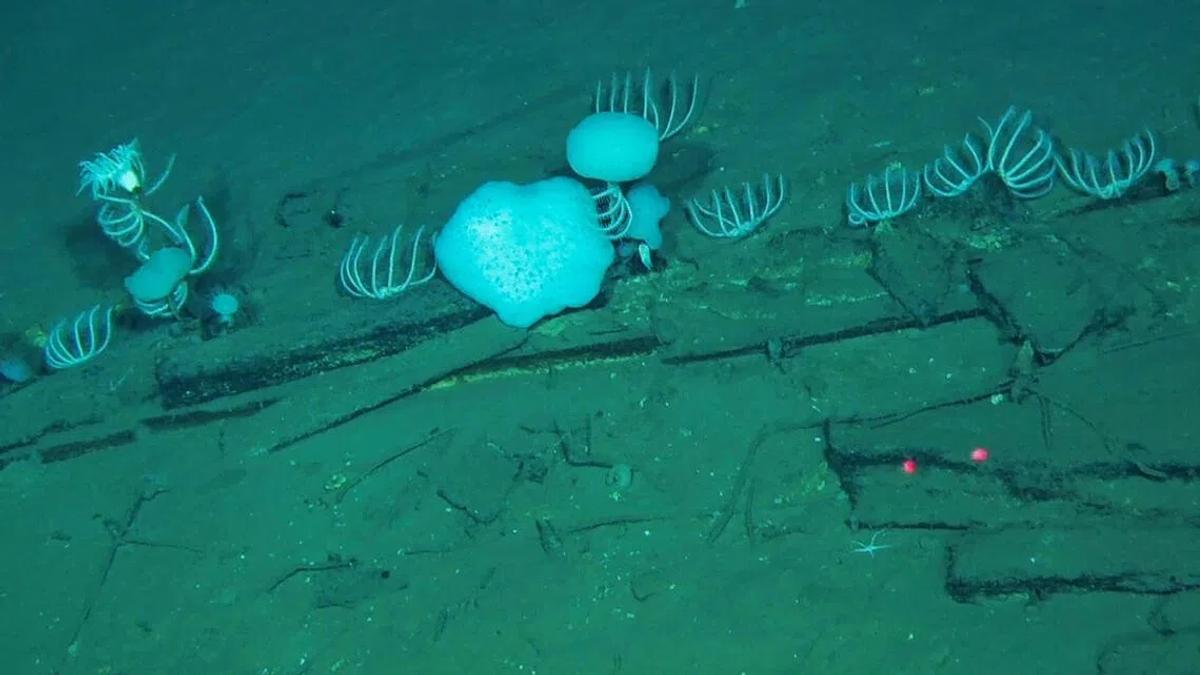
The recent discovery of the world's largest whale graveyard in the Indian Ocean by Chinese scientists has sent shockwaves through the scientific community. Located at the bottom of the Indian Ocean, west of Australia, this vast expanse of whale carcasses stretches over 1,200 kilometers and reaches depths of up to 7,000 meters. The sheer scale of this discovery is awe-inspiring, with nearly 500 skeletons found, including a new, extinct species of whale.
Whale falls, the process by which whales sink to the ocean floor after death, have long been recognized as a vital source of food for deep-sea creatures. However, the discovery of this massive graveyard reveals the extent to which whale falls can support entire ecosystems. The researchers estimate that the soft tissue and lipids within the carcasses could sequester up to 6.7 million tonnes of carbon, providing a significant source of sustenance for animals.
The Indian Ocean's whale graveyard is not only a remarkable discovery but also holds significant implications for our understanding of marine ecosystems. The presence of a V-shaped trench in the area, which funnels carcasses to the ocean floor, suggests that this region may be a hotspot for whale falls. This, in turn, could have far-reaching consequences for the conservation of marine life and the impact of climate change on deep-sea ecosystems.
The discovery of this whale graveyard also raises questions about the historical context of whale falls in the Indian Ocean. The researchers suggest that the area may be a popular foraging ground for whales, which could explain the high concentration of carcasses. However, the exact reasons for the massive number of whale deaths in this region remain unclear.
The discovery of the Indian Ocean's whale graveyard is a testament to the importance of continued marine research and exploration. As scientists continue to uncover the secrets of this remarkable ecosystem, we may gain a deeper understanding of the complex relationships between whales, deep-sea creatures, and the ocean's ecosystem as a whole. The potential for future discoveries is vast, and the international scientific community is eagerly awaiting further research into this phenomenon.
The discovery of the world's largest whale graveyard in the Indian Ocean is a groundbreaking find that has significant implications for our understanding of marine ecosystems. As we continue to explore and learn more about this remarkable ecosystem, we may uncover new insights into the complex relationships between whales, deep-sea creatures, and the ocean's ecosystem. This discovery serves as a reminder of the importance of continued marine research and exploration, and we can only imagine the secrets that lie beneath the surface of our oceans.
Editor's Note: While the discovery of the Indian Ocean's whale graveyard is a significant find, the exact reasons for the massive number of whale deaths in this region remain unclear.
Source referenced: STRAITSTIMES
This brief was synthesized by our Editorial Engine and reviewed by The Ground Narrative team.