TRENDING

Sunday, 25 October 2026
----------------------
14 Jumada Al-Awwal 1448 AH
The UN nuclear watchdog has passed a US-backed resolution demanding Iran provide complete information on its enriched uranium stocks and grant access to inspectors. This move escalates pressure on Tehran amidst concurrent US-Iran military exchanges and fragile ceasefire negotiations.
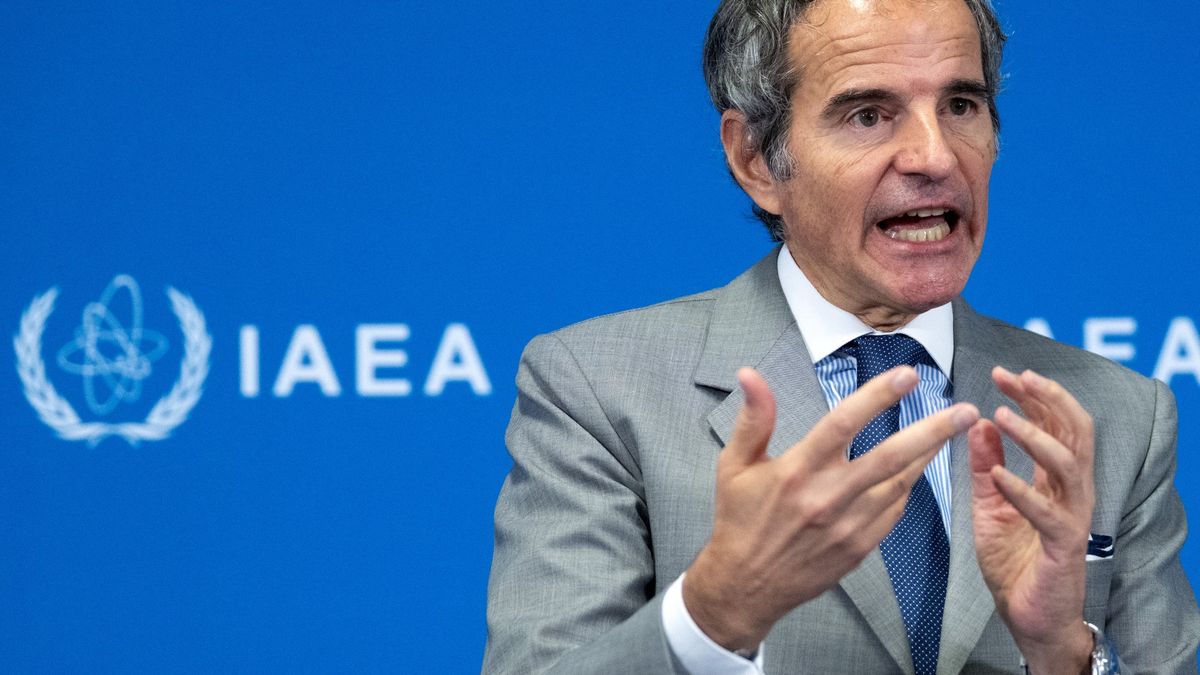
The governing board of the International Atomic Energy Agency (IAEA) passed a United States-backed resolution on Wednesday, June 11, 2026, demanding that Iran provide "complete information" regarding its enriched uranium stockpiles and grant immediate access to international inspectors for verification. The resolution, supported by the US, United Kingdom, France, and Germany, passed with 21 votes in favor, three against (Russia, China, Niger), and ten abstentions at a closed-door meeting in Vienna.
This development unfolds against a backdrop of heightened regional instability, notably coinciding with an exchange of strikes between the US and Iran. Washington attributed the downing of an Apache helicopter in the Strait of Hormuz to Tehran, prompting retaliatory actions. This military escalation marks the most significant since a fragile ceasefire in April ended weeks of intense US and Israeli attacks on Iran and subsequent Iranian retaliatory assaults across the Gulf region.
The IAEA's demand stems from significant concerns regarding Iran's nuclear activities. The agency estimates that Iran possessed 440kg of uranium enriched to 60 percent—a level alarmingly close to weapons-grade—prior to the initial US and Israeli attacks on its nuclear facilities in June of the previous year. These attacks targeted key sites, including Fordow, Natanz, and Isfahan. Following these strikes, Iran suspended its cooperation with the IAEA, effectively denying inspectors access to verify the material. The resolution explicitly states the IAEA's inability to confirm that the uranium has not been diverted for undeclared purposes.
From the perspective of the United States and its Western allies, the resolution is a critical step in upholding the global nuclear non-proliferation regime and preventing Iran from developing nuclear weapons. Western nations have long accused Tehran of pursuing such capabilities, a charge Iran consistently denies. The timing of the resolution, alongside military exchanges, suggests a concerted effort to exert maximum diplomatic and strategic pressure on Iran, particularly as the US and Iran engage in delicate negotiations aimed at extending their current ceasefire and paving the way for broader discussions, including Iran's nuclear program.
Iran, through its ambassador to the UN in Vienna, Reza Najafi, vehemently rejected the resolution as "counterproductive," "politically motivated," and "legally flawed." Tehran views the resolution as a "reversal of responsibility," arguing that it unfairly shifts blame onto Iran after its nuclear facilities, which are under safeguards, were targeted by US-Israeli aggression. Iran's Deputy Foreign Minister Kazem Gharibabadi articulated this sentiment, stating that such actions disrupt nuclear safety and verification possibilities, and that the IAEA Board of Governors should not be used to "whitewash military aggression." Iran has warned that the resolution could severely hinder ongoing efforts to end the broader conflict and further complicate the already volatile ceasefire and negotiations.
The IAEA resolution and the concurrent military skirmishes underscore the precarious state of regional security. The Strait of Hormuz, a critical global chokepoint for oil shipments, remains a flashpoint, and any escalation there carries significant economic and strategic consequences. The ongoing US-Iran negotiations, which aim to address not only the ceasefire but also the contentious nuclear program, face immense challenges. The resolution, rather than facilitating dialogue, appears to have deepened the mistrust and hardened positions, potentially jeopardizing the fragile diplomatic path.
The strategic motivations of Russia and China, who voted against the resolution, likely involve maintaining their influence with Iran, countering US and Western dominance in international forums, and leveraging Iran as a strategic partner in a multipolar world order. Their opposition highlights the persistent geopolitical divisions within the UN system regarding Iran's nuclear file.
Looking ahead, the situation presents a high-stakes dilemma. Should Iran continue to defy the IAEA's demands for information and access, it risks further international isolation and potentially more stringent sanctions. Conversely, increased pressure from the West, particularly if coupled with military actions, could prompt Iran to further restrict cooperation or even withdraw from international nuclear agreements, accelerating its enrichment activities. The path forward demands careful diplomatic navigation to prevent a full-blown regional conflict and to ensure the integrity of the global non-proliferation framework, while acknowledging Iran's security concerns and its sovereign right to peaceful nuclear energy under international safeguards. The resolution, therefore, is not merely an administrative demand but a significant geopolitical maneuver with profound implications for global security and regional stability.
Source referenced: ALJAZEERA
This brief was synthesized by our Editorial Engine and reviewed by The Ground Narrative team.