TRENDING

Monday, 5 October 2026
----------------------
24 Rabi' Al-Thani 1448 AH
Hamas's decision to dissolve its government in Gaza marks a significant shift in the region's politics, but its implications remain uncertain. Will this move pave the way for a peaceful transition, or is it a tactical maneuver to maintain control?
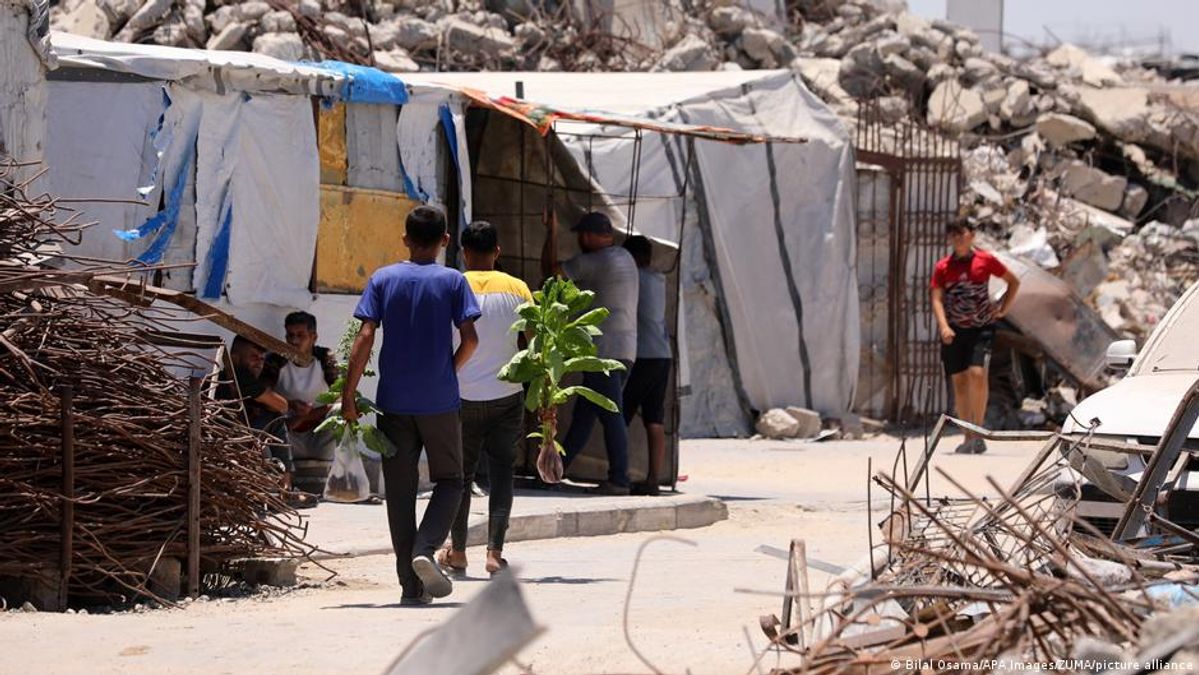
Hamas's announcement to dissolve its government in Gaza and hand over administrative authority to the National Committee for the Administration of Gaza (NCAG) marks a significant shift in the region's politics. The move is seen as a strategic gamble by Hamas to revive the stalled political process, but its implications remain uncertain.
The US-brokered peace plan, which was supposed to have begun its work in October 2025, has been stalled for months. The plan outlined a new administration consisting of independent technocrats, but the transition process has been hindered by the lack of progress on security, disarmament, and reconstruction. The Israeli government has been skeptical of Hamas's intentions, and the group has not committed to disarmament.
Hamas's decision to dissolve its government is seen as an attempt to break out of the deadlock and get the political process moving again. The group wants to deprive Israel of the argument that reconstruction is failing because of its rule while increasing political pressure on Israel and the US. However, significant doubts remain about Hamas's willingness to relinquish its weapons and commit to disarmament.
The Board of Peace's report calls for a 15-point roadmap under which Hamas would relinquish all military, police, and administrative functions, and a transitional administration would be assumed solely by a body of technocrats. The disarmament of Hamas and the gradual Israeli withdrawal are to proceed in parallel. However, these interlinked steps have so far stalled, blocking the transition process.
Israeli Foreign Minister Gideon Saar has expressed skepticism about Hamas's intentions, stating that as long as Hamas retains its weapons, any civilian government will ultimately act according to Hamas's directives. Saar reiterated that the complete disarmament of Hamas and the demilitarization of the Gaza Strip remain prerequisites for political reorganization.
The announced transfer of power has had virtually no practical consequences so far. The members of the transitional government remain outside the Gaza Strip, and there is a lack of funds, personnel, and security forces. The international stabilization force exists only on paper, and the ministries continue to work as before. For now, everything remains the same.
Hamas's decision to dissolve its government in Gaza marks a significant shift in the region's politics, but its implications remain uncertain. Will this move pave the way for a peaceful transition, or is it a tactical maneuver to maintain control? The answer lies in Hamas's willingness to commit to disarmament and relinquish its weapons. If the group is genuinely committed to peace, it must take concrete steps to demonstrate its intentions. Otherwise, the move will remain a symbolic gesture with an uncertain outcome.
Editor's Note: The outcome of Hamas's decision remains uncertain, and its implications will depend on the group's willingness to commit to disarmament and relinquish its weapons.
Source referenced: DW
This brief was synthesized by our Editorial Engine and reviewed by The Ground Narrative team.


