TRENDING

Thursday, 17 September 2026
----------------------
6 Rabi' Al-Thani 1448 AH
At the 2026 summit in New Delhi, BRICS leaders outlined a roadmap to turn sheer size into sustainable development, but the push for high‑quality growth hides trade-offs that will shape everyday lives across the Global South.
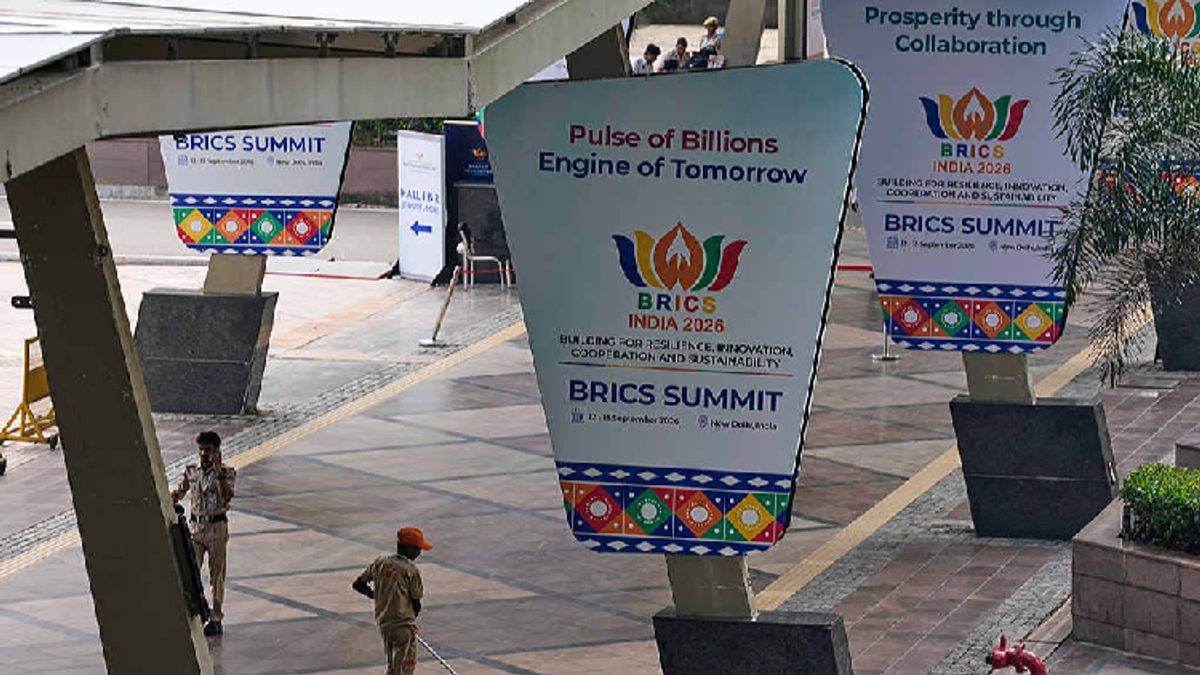
The 18th BRICS summit opened in New Delhi on September 12, 2026, marking the first meeting of the bloc after its expansion to include six new members. Chinese President Xi Jinping used the platform to launch a suite of proposals – from a special‑economic‑zone partnership to coordinated customs and payment systems – aimed at converting the enlarged group’s market weight into what officials call “high‑quality development.”
The drive to make the “greater BRICS” a growth engine rests on three intersecting incentives. First, political survival: leaders in Brazil, South Africa, and the new entrants face domestic pressure to deliver jobs and infrastructure, and a coordinated bloc offers a narrative of collective strength against Western‑led institutions. Second, economic trade‑offs: by lowering tariffs, harmonising standards, and using local currencies, member states hope to reduce transaction costs that have long eroded the profitability of intra‑BRICS trade. This also cushions them from volatile dollar‑denominated financing, a strategic buffer as global debt levels climb. Third, military‑economic calculus: a tighter supply‑chain web in critical minerals, renewable energy components, and digital infrastructure reduces reliance on Western‑controlled chokepoints, subtly shifting strategic leverage without overt security commitments.
The proposals hinge on institutional innovation – an “intelligent portal” for policy coordination, joint emergency reserve funds, and a shared development‑finance toolkit. If operationalised, these mechanisms could re‑route capital flows toward infrastructure, green projects, and SMEs, reshaping the investment landscape that has traditionally been dominated by private‑sector lenders from the Global North.
While leaders discuss portals and trade corridors, the immediate impact lands on workers, small‑scale farmers, and informal entrepreneurs. In India’s Delhi region, construction crews are already clearing space for new logistics hubs, a task that brings temporary wages but also displaces informal market stalls that feed thousands of nearby families. In Brazil’s Amazon basin, proposals for mineral‑extraction partnerships risk intensifying land‑use conflicts, threatening Indigenous communities that rely on forest ecosystems for subsistence. African member states such as South Africa and Nigeria anticipate job creation in renewable‑energy parks, yet the promised “high‑quality” jobs often require technical training that current education systems struggle to provide, leaving a gap between policy rhetoric and lived reality.
Moreover, the push for local‑currency settlements could tighten credit for firms that lack access to foreign‑exchange markets, potentially squeezing micro‑enterprises that depend on dollar‑linked imports. The human cost, therefore, is not a distant macro‑trend but a set of concrete adjustments – wage volatility, land dispossession, and skill mismatches – that will be felt in neighborhoods far from the summit hall.
Official statements stress openness and inclusivity, yet the downplayed element is the geopolitical balancing act with the United States and the European Union. By presenting a unified front on WTO reform and development financing, the bloc signals its willingness to challenge existing rules, but it simultaneously seeks to avoid direct confrontation that could trigger sanctions or capital flight. This tightrope is evident in the muted language around debt‑relief mechanisms; while emergency reserves are touted, the specifics of who will fund them and under what conditions remain vague, leaving room for China’s state‑linked banks to become the de‑facto lenders.
Another omitted dimension is the environmental trade‑off inherent in scaling up mineral extraction for green technologies. The narrative of “green transition” masks the fact that many new projects will intensify mining in ecologically sensitive regions, potentially undermining the very climate goals the bloc claims to champion. By framing these activities as “shared risks,” the leadership skirts a deeper debate about who bears the ecological burden.
Watch for three concrete developments. First, the implementation timeline of the intelligent portal – pilot projects in customs digitisation in India and Brazil will reveal whether coordination can move beyond rhetoric. Second, the structure of the emergency reserve fund: any agreement that places Chinese financial institutions at the helm will reshape debt dynamics for the poorer members. Third, grass‑roots feedback: labor unions, farmer coalitions, and civil‑society groups in the host countries are beginning to organise around the summit’s promises; their ability to influence policy will test the bloc’s claim of inclusive development.
If these threads converge, the “greater BRICS” could indeed become a resilient engine of growth. If they fray, the expansion may remain a symbolic counterweight to Western institutions, leaving ordinary citizens to shoulder the hidden costs of a high‑profile diplomatic project.
Editor's Note: Analysis based on publicly available summit statements and known economic trends.
Source referenced: CGTN
This brief was synthesized by our Editorial Engine and reviewed by The Ground Narrative team.


