TRENDING

Thursday, 17 September 2026
----------------------
6 Rabi' Al-Thani 1448 AH
A recent acquittal in the murder of anti-corruption journalist Daphne Caruana Galizia has ignited widespread protests in Malta, exposing deep fault lines between public demand for justice and the nation's powerful elite. This case reveals the enduring struggle to hold moneyed interests accountable in a small, interconnected state.
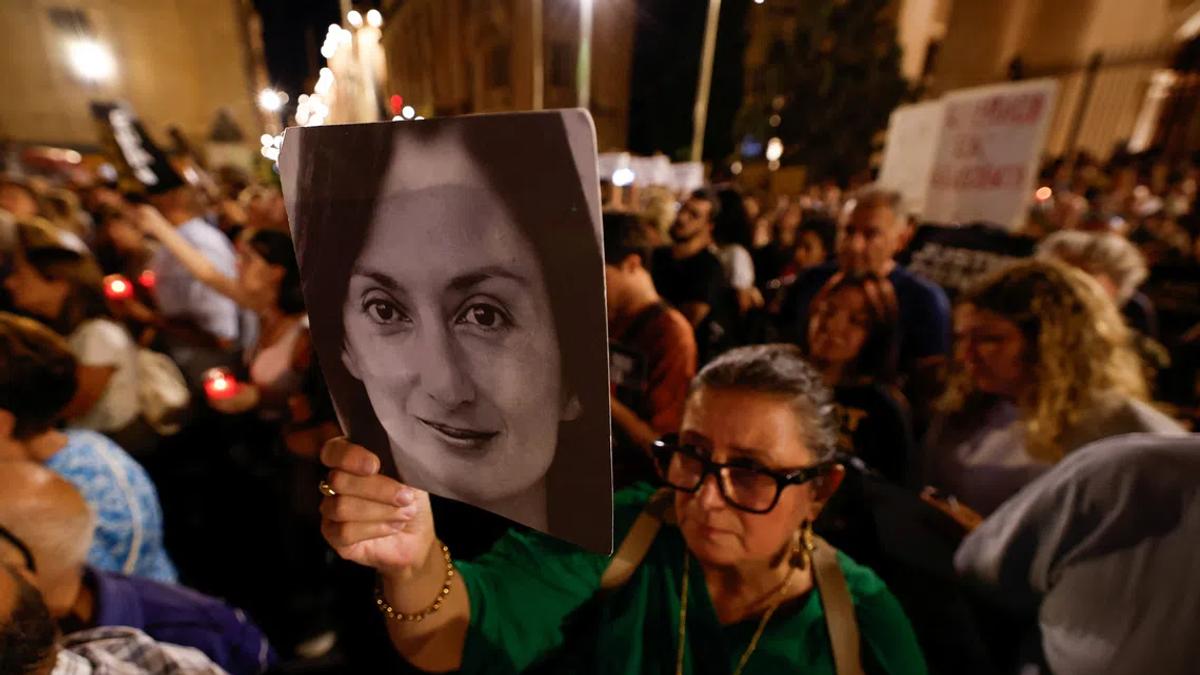
On September 16, Malta's capital, Valletta, witnessed a large demonstration as civil society groups and ordinary citizens marched, demanding justice for Daphne Caruana Galizia, an anti-corruption journalist assassinated by a car bomb in 2017. The protest erupted two weeks after Yorgen Fenech, a prominent business mogul accused of masterminding her murder, was acquitted of complicity and criminal association by a jury. This verdict, which shocked many across the European Union's smallest nation, has reignited the painful struggle for accountability in a case that has come to symbolize the fight against impunity and corruption.
The acquittal of a figure as powerful as Yorgen Fenech, despite three men serving lengthy sentences for planting the bomb, lays bare the intricate power mechanics at play within Malta. In a small, interconnected island nation, the lines between wealth, political influence, and the justice system can become dangerously blurred. Powerful business interests, often deeply entwined with the political establishment, can exert immense pressure, creating an environment where accountability for the elite becomes elusive. The government's cautious silence on the verdict, citing ongoing legal processes, can be interpreted not just as adherence to procedure, but as a strategic move to avoid direct confrontation with entrenched power structures or to shield itself from public backlash that could expose deeper systemic issues.
Malta's status as an EU member state adds another layer of complexity. While the European Union champions rule of law and press freedom, its mechanisms for intervention in the domestic legal affairs of sovereign members are often slow, bureaucratic, and politically sensitive. This creates a vacuum where powerful local actors can operate with a degree of insulation, leveraging national sovereignty against external scrutiny. The economic incentives are also clear: a system perceived to be lenient towards powerful figures might, paradoxically, be seen by some as maintaining "stability" for certain business sectors, even if it corrodes public trust and democratic institutions. The struggle, therefore, is not merely about a single verdict but about the resilience of a state's institutions against the concentrated force of money and influence.
The human cost of this ongoing saga is borne by multiple layers of Maltese society, extending far beyond the immediate tragedy of Caruana Galizia's murder. At the forefront is her family, who have endured years of legal battles, public scrutiny, and the profound grief of losing a loved one to violence, only to face the disbelief and anger of an acquittal for the alleged mastermind. Their struggle is a deeply personal one, yet it resonates with countless citizens who feel that justice is not equally applied.
For the ordinary people of Malta, the verdict and the subsequent protests represent a severe blow to their faith in the rule of law and the impartiality of their institutions. When powerful individuals appear to operate above the law, it fosters a pervasive sense of injustice and powerlessness, eroding the social contract and fueling cynicism. This erosion of trust has tangible consequences: it discourages civic engagement, makes citizens wary of challenging authority, and ultimately weakens the fabric of democracy. Moreover, the chilling effect on other journalists and whistleblowers is profound. The message sent by such an acquittal is that exposing corruption, especially involving the powerful, can come at an unbearable personal cost, with little guarantee of ultimate justice. Malta's international reputation also suffers, risking its standing within the EU and potentially impacting its economic attractiveness for legitimate foreign investment.
What remains largely unsaid by official channels, and often downplayed in public discourse, is the systemic nature of the challenges facing Malta's rule of law. The government's carefully worded statements, urging caution while an appeal is considered, sidestep the fundamental questions about institutional integrity that the protests raise. The chants of "mafia, mafia" and placards demanding an "End to impunity" are not merely reactions to one verdict; they reflect a deep-seated public suspicion that corruption is not an isolated incident but an entrenched network, potentially reaching into the highest echelons of power and the justice system itself.
Official narratives tend to frame such events as isolated legal cases, rather than symptoms of broader governance failures. This framing conveniently omits the historical context of Malta's struggles with corruption and the perceived closeness between political and business elites. Furthermore, the limited scope of an appeal, restricted to "points of law," inherently downplays the public's demand for substantive justice and accountability for alleged masterminds. It highlights a procedural bottleneck that can often shield powerful individuals from a full reckoning, leaving the public feeling that the legal system is designed to protect itself, rather than to serve justice. The true extent of the financial and political interests that Caruana Galizia was investigating, and the potential implications of their exposure, are also often obscured, allowing the focus to remain on the legal technicalities rather than the profound societal impact of her work.
The immediate focus will be on the Attorney General's expected appeal. Its success, or lack thereof, will be a critical indicator of the legal system's capacity to challenge powerful interests. However, the appeal's limited scope means that even if successful on technical grounds, it may not fully address the public's demand for broader accountability. Beyond the courtroom, the persistence and scale of civil society protests will be crucial. Sustained public pressure could force the government to move beyond cautious statements and implement more robust anti-corruption measures, including effective anti-mafia legislation and stronger protections for journalists.
The European Union's response also warrants close observation. While the EU has expressed concerns about rule of law in Malta previously, the intensity of this current crisis might push Brussels to consider more direct interventions or intensify its monitoring mechanisms. Finally, the long-term impact on Malta's political landscape cannot be underestimated. The ongoing struggle for justice could galvanize opposition movements, reshape public opinion ahead of future elections, and potentially lead to a fundamental re-evaluation of how power operates within the small island nation. The ghost of Daphne Caruana Galizia will continue to haunt Malta's halls of power until a more definitive form of justice, and institutional reform, is achieved.
Source referenced: STRAITSTIMES
This brief was synthesized by our Editorial Engine and reviewed by The Ground Narrative team.