TRENDING

Tuesday, 13 October 2026
----------------------
2 Jumada Al-Awwal 1448 AH
France's rejection of asylum for a whistleblower exposing Russia's disinformation network in Africa raises questions about the country's willingness to protect those who expose covert authoritarian influence operations.
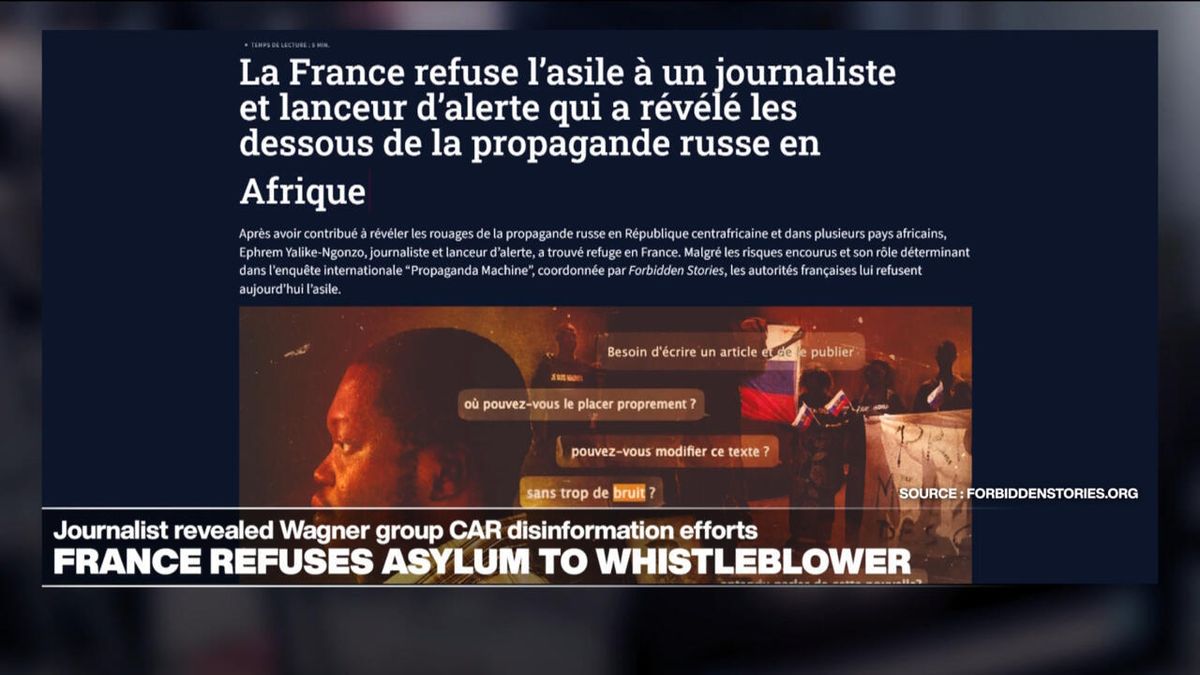
The Wagner Group, a Russian private military company, has been accused of spreading disinformation across Africa. Ephrem Yalike-Ngonzo, a former participant in this campaign, turned whistleblower and offered crucial testimony that helped uncover the operations of the Wagner-linked disinformation network. His testimony corroborated subsequent international sanctions and contributed to investigations of significant public interest.
Following an intervention reportedly supported by the French presidency to evacuate Yalike-Ngonzo and his family from imminent danger, French authorities changed course and abruptly rejected his asylum application. This decision has raised fundamental questions about how liberal democracies reconcile security concerns, legal consistency, investigative journalism, and the strategic importance of encouraging and protecting future whistleblowers.
The case of Yalike-Ngonzo highlights an unresolved contradiction: the same testimony that contributed to investigations of significant public interest now appears to have become entangled in an asylum process whose reasoning remains opaque. This raises concerns about the willingness of democratic states to protect those who expose covert authoritarian influence operations.
The rejection of Yalike-Ngonzo's asylum application has significant implications for the region. It sends a message that France may not be willing to protect those who expose Russian disinformation operations, potentially emboldening further authoritarian influence in Africa. This could have far-reaching consequences for regional stability and the ability of democratic states to counter Russian influence.
The French government's decision to reject Yalike-Ngonzo's asylum application may be motivated by a desire to maintain good relations with Russia, a key player in the region. However, this decision also raises questions about the country's commitment to democratic values and its willingness to protect those who expose authoritarian influence operations.
The case of Yalike-Ngonzo highlights the complexities of liberal democracies' asylum policies and the need for a more nuanced approach to reconciling security concerns, legal consistency, investigative journalism, and the strategic importance of encouraging and protecting future whistleblowers. The rejection of his asylum application has significant implications for regional stability and the ability of democratic states to counter Russian influence in Africa.
Editor's Note: The motivations behind the French government's decision to reject Yalike-Ngonzo's asylum application are unclear, and further investigation is needed to fully understand the implications of this decision.
Source referenced: FRANCE24
This brief was synthesized by our Editorial Engine and reviewed by The Ground Narrative team.