TRENDING

Sunday, 25 October 2026
----------------------
14 Jumada Al-Awwal 1448 AH
Palestinian farmers in the occupied West Bank are racing against time to harvest their crops amidst a significant surge in violence and arson attacks by Israeli settlers. This escalating aggression, particularly since late 2023, is driving a humanitarian crisis and exacerbating geopolitical tensions in the region.
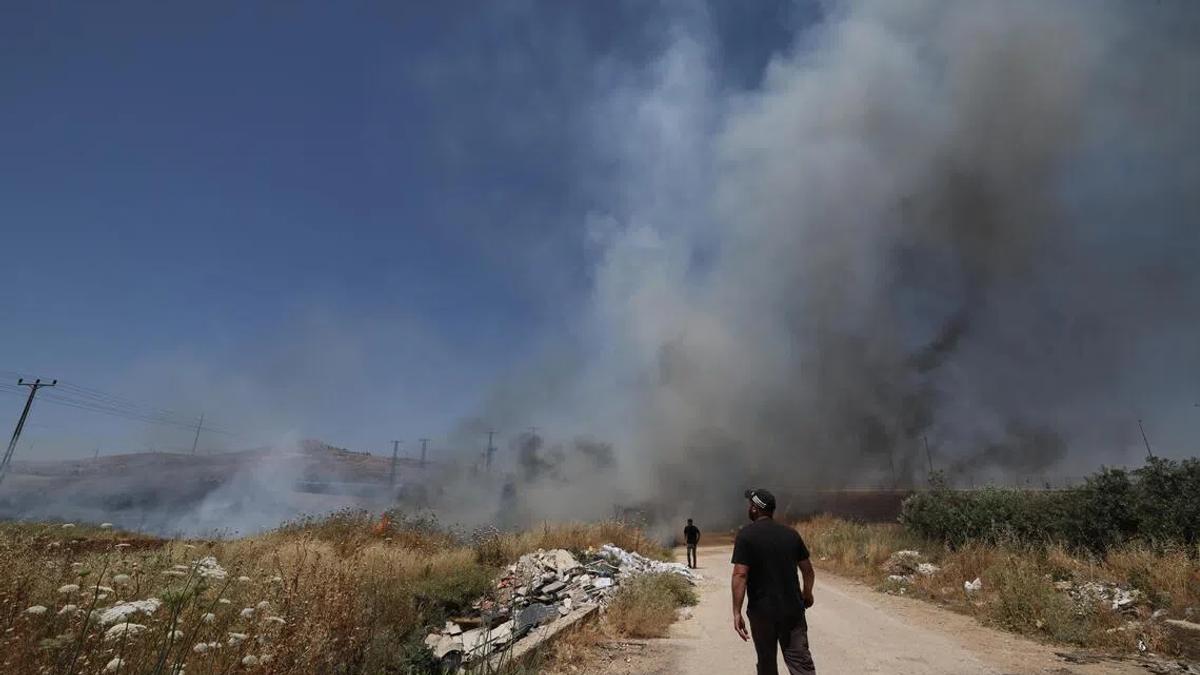
In the heart of the occupied West Bank, Palestinian farmers, such as Hamad Jazi and his family in As-Sawiyah, are engaged in a desperate race against time to harvest their wheat and olive crops. This urgency is not driven solely by agricultural cycles but by the pervasive threat of violence and destruction from Israeli settlers. Recent reports indicate a significant escalation in settler-initiated arson, vandalism, and theft, directly targeting Palestinian agricultural lands and livelihoods.
The village of As-Sawiyah, nestled in a valley overlooked by three Israeli settlements, exemplifies the precarious situation. Farmers like Jazi recount multiple instances of crops being set ablaze, forcing them to expedite harvests that once symbolized abundance into hurried, fear-laden operations. This sentiment is echoed across the West Bank, where the traditional joy of harvest has been replaced by a sense of urgency and vulnerability, with farmers feeling compelled to "steal" their own produce under duress.
The West Bank, occupied by Israel since 1967, is home to over 500,000 Israeli settlers living in communities widely considered illegal under international law. These settlements continue to expand, a policy that is a major point of contention in the Israeli-Palestinian conflict and a significant obstacle to a two-state solution. The proliferation of these settlements is directly linked to the surge in violence, as parts of the Israeli political class openly advocate for the annexation of the West Bank, further fueling tensions and creating an environment where settler actions often go unchecked.
Data from the UN humanitarian agency OCHA reveals a stark reality: 2026 has been one of the most violent years on record, with an average of six settler attacks per day. This surge has been particularly pronounced since the onset of the conflict in Gaza in October 2023, with village councils reporting near-daily assaults. These attacks are not random acts but appear to be part of a broader strategy to dispossess Palestinians of their land, restrict their movement, and ultimately drive them away from their ancestral territories. Hikmat Abu Ras, head of As-Sawiyah's village council, explicitly states the objective: "They constantly carry out these practices in order to drive us off our land and prevent us from entering it."
The economic ramifications of this violence are severe. Agriculture is a cornerstone of the Palestinian economy in the West Bank, with olive trees, in particular, holding deep cultural and economic significance. The Palestinian Authority's Agriculture Ministry reports devastating losses in 2026, including the killing or theft of 8,000 goats or sheep and the damage of 41,000 olive trees by settlers or the Israeli military. Such destruction not only impacts immediate income but also undermines long-term food security and the economic viability of Palestinian communities.
Beyond the economic toll, the violence inflicts profound psychological and social damage. Farmers are forced to coordinate with the Israeli military to access their own fields, and increasing movement restrictions, including blocked village entrances, further isolate communities. This constant state of insecurity and the erosion of basic rights contribute to a deepening humanitarian crisis, forcing communities to live under immense pressure and fear.
The international community largely views Israeli settlements in the West Bank as a violation of international law, specifically the Fourth Geneva Convention. The impunity with which many settler actions are carried out, as described by human rights groups, further complicates the situation and draws international condemnation. Within Israel itself, the escalating settler violence has sparked criticism, with the opposition accusing Prime Minister Benjamin Netanyahu's government and its far-right allies of deliberately ignoring or tacitly condoning these acts.
This internal political division highlights the complex dynamics at play. The government's perceived inaction or support for settler expansion not only exacerbates the conflict on the ground but also strains Israel's international relations and undermines prospects for a peaceful resolution. The ongoing violence in the West Bank, therefore, is not merely a localized issue but a critical component of the broader Israeli-Palestinian conflict, with significant implications for regional stability, human rights, and the future of international law.
Source referenced: STRAITSTIMES
This brief was synthesized by our Editorial Engine and reviewed by The Ground Narrative team.