TRENDING

Friday, 23 October 2026
----------------------
12 Jumada Al-Awwal 1448 AH
The World Health Organization (WHO) has reported that three laboratories in the Democratic Republic of Congo have run out of supplies to test for Ebola, highlighting the ongoing challenges in containing the outbreak. The shortage has exposed trust issues between health authorities and affected communities, hindering the response efforts.
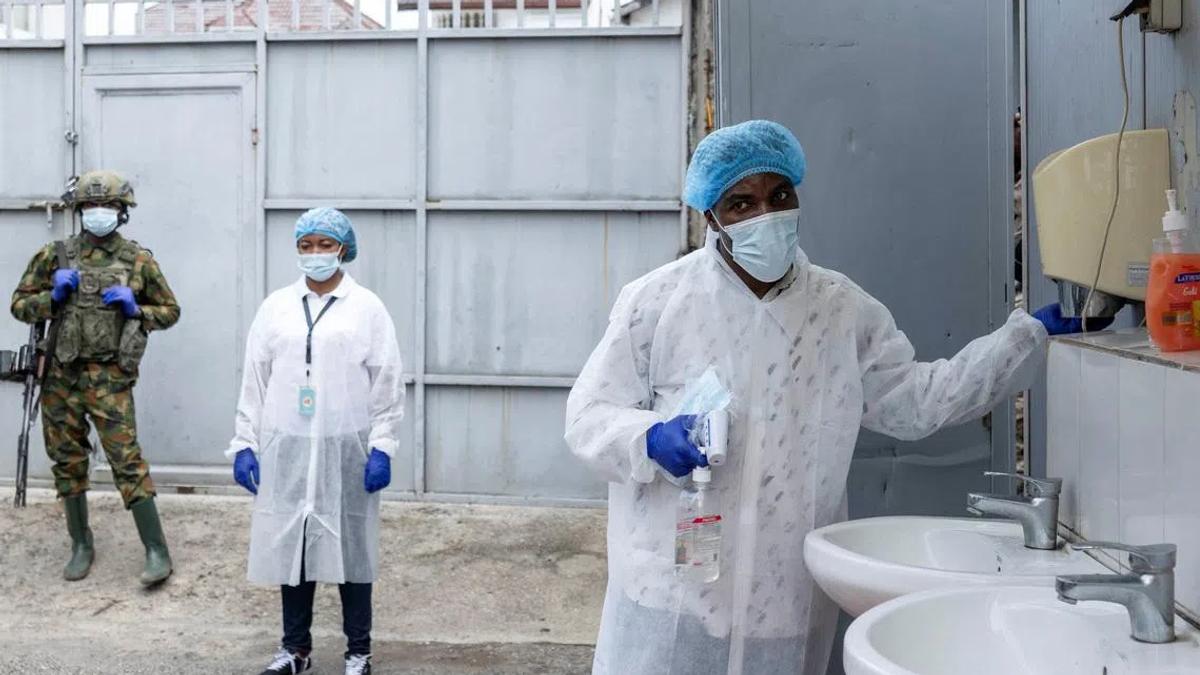
The World Health Organization (WHO) has reported that three laboratories in the Democratic Republic of Congo have run out of supplies to test for Ebola, highlighting the ongoing challenges in containing the outbreak. The shortage has exposed trust issues between health authorities and affected communities, hindering the response efforts.
The Ebola outbreak in the Democratic Republic of Congo has been ongoing since 2026, with almost 600 confirmed cases and over 115 deaths reported. The WHO has declared an international public health emergency, and neighboring Uganda has also reported cases linked to the epidemic.
The initial testing for Ebola was slow due to the lack of detection capabilities for the Bundibugyo virus. However, with the improvement in testing capacity, led by experts at the Institut National de Recherche Biomédicale in Kinshasa, the situation has improved. Regional laboratories are now able to report results on the same day, increasing the efficiency of the response.
Despite the progress in testing, the response efforts are being hindered by trust issues between health authorities and affected communities. Professor Jean-Jacques Muyembe, director of INRB, has expressed disappointment in the lack of community involvement in the response efforts. He emphasized the importance of working with and gaining the trust of the affected communities to help them protect themselves.
The ongoing Ebola outbreak in the Democratic Republic of Congo has significant regional implications. The neighboring countries, particularly Uganda, are at risk of being affected by the epidemic. The WHO's declaration of an international public health emergency highlights the need for a coordinated response from the international community.
The stalled testing due to shortages and the trust challenges exposed by the shortage have significant future consequences. If left unaddressed, the outbreak may continue to spread, putting more lives at risk. The international community must come together to provide support to the affected countries and address the trust issues hindering the response efforts.
The Ebola outbreak in the Democratic Republic of Congo is a complex issue that requires a multifaceted approach. The stalled testing due to shortages and the trust challenges exposed by the shortage highlight the need for a coordinated response from the international community. The WHO's declaration of an international public health emergency underscores the gravity of the situation and the need for immediate action.
The WHO has reported that the laboratories in Bukavu and Lwiro in South Kivu province, and Goma in North Kivu, have run out of stock of reagents required to run the tests. The WHO has not immediately responded to requests for comment about how many samples are awaiting testing or if supplies have arrived since the data was collected.
The Ebola outbreak in the Democratic Republic of Congo is a complex issue that requires a multifaceted approach. The stalled testing due to shortages and the trust challenges exposed by the shortage highlight the need for a coordinated response from the international community. The WHO's declaration of an international public health emergency underscores the gravity of the situation and the need for immediate action.
Editor's Note: The analysis is based on the available information and may be subject to change as more data becomes available.
Source referenced: STRAITSTIMES
This brief was synthesized by our Editorial Engine and reviewed by The Ground Narrative team.