TRENDING

Friday, 23 October 2026
----------------------
12 Jumada Al-Awwal 1448 AH
The Iran conflict has exposed the fragility of global maritime trade and the United States' inability to produce and repair ships needed for a long-term conflict. A revival of the U.S. shipbuilding industry requires public investment and support.
The recent war in Iran has put a spotlight on the declining U.S. maritime power and the industry's inability to produce and repair ships needed for a long-term conflict. The conflict has exposed the fragility of global maritime trade and the United States' inability to sustain its global maritime ambitions.
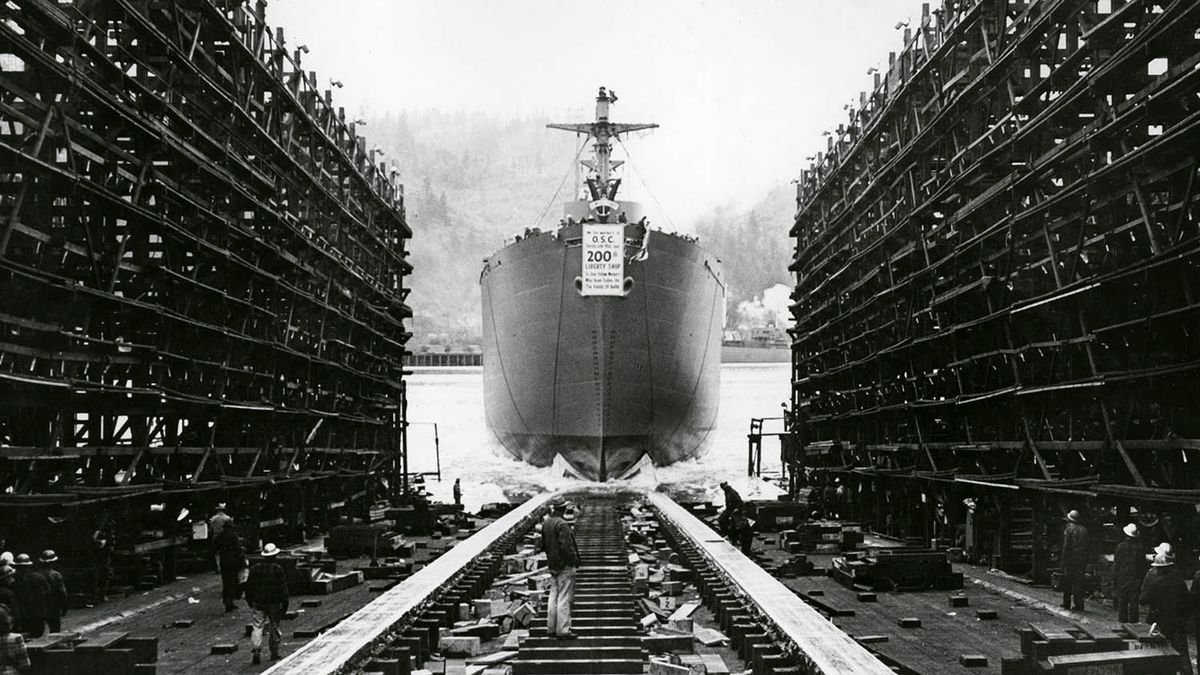
The United States had created one of the world's largest merchant marines by the end of World War I and grew an industry that, at its World War II peak, could build the nation's entire prewar commercial tonnage in three years. However, decades of underinvestment and industrial decline have left the country without shipyards to build and maintain a fleet.
The U.S. shipbuilding industry faces significant challenges, including a 45 percent shortfall in tankers and less than a quarter of the commercial vessels needed to sustain a wartime economy in the Pacific. A U.S.-built refueling tanker costs five times more than Japanese- or South Korean-built counterparts. More than 80 percent of U.S. Navy ships under construction are behind schedule, and delays in both commercial and naval yards stem from obsolete equipment, employee turnover as high as 100 percent, and supply chain unreliability.
A turnaround of the U.S. shipbuilding industry will require more than piecemeal grants, scattered foreign investments, or the commissioning of a prestige battleship class. A revival will only happen by using tools that have worked in the past: public investment and public support. A bipartisan consensus has emerged in Washington to reverse the recent maritime decline, but neither the Maritime Action Plan nor the proposed SHIPS for America Act addresses the full scope of the industry's challenges.
The decline of U.S. maritime power has significant strategic implications. The global economy can no longer take access to open oceans for granted, and the United States' ability to sustain its global maritime ambitions has eroded. The country's shipyards can no longer reliably build or repair the vessels required to sustain a wartime economy in the Pacific.
The Iran conflict has exposed the fragility of global maritime trade and the United States' inability to produce and repair ships needed for a long-term conflict. A revival of the U.S. shipbuilding industry requires public investment and support. The United States must take a comprehensive approach to address the industry's challenges and restore its maritime power.
Editor's Note: The analysis is based on available data and information, but the future consequences of the decline of U.S. maritime power are uncertain.
Source referenced: FOREIGNPOLICY
This brief was synthesized by our Editorial Engine and reviewed by The Ground Narrative team.