TRENDING

Saturday, 24 October 2026
----------------------
13 Jumada Al-Awwal 1448 AH
The death of Bernadette Chirac, widow of former French President Jacques Chirac, at 93, signifies the passing of a figure deeply embedded in a pivotal period of French and international politics. Her life, intertwined with her husband's influential presidency, recalls a time when France asserted a distinct foreign policy on the global stage.
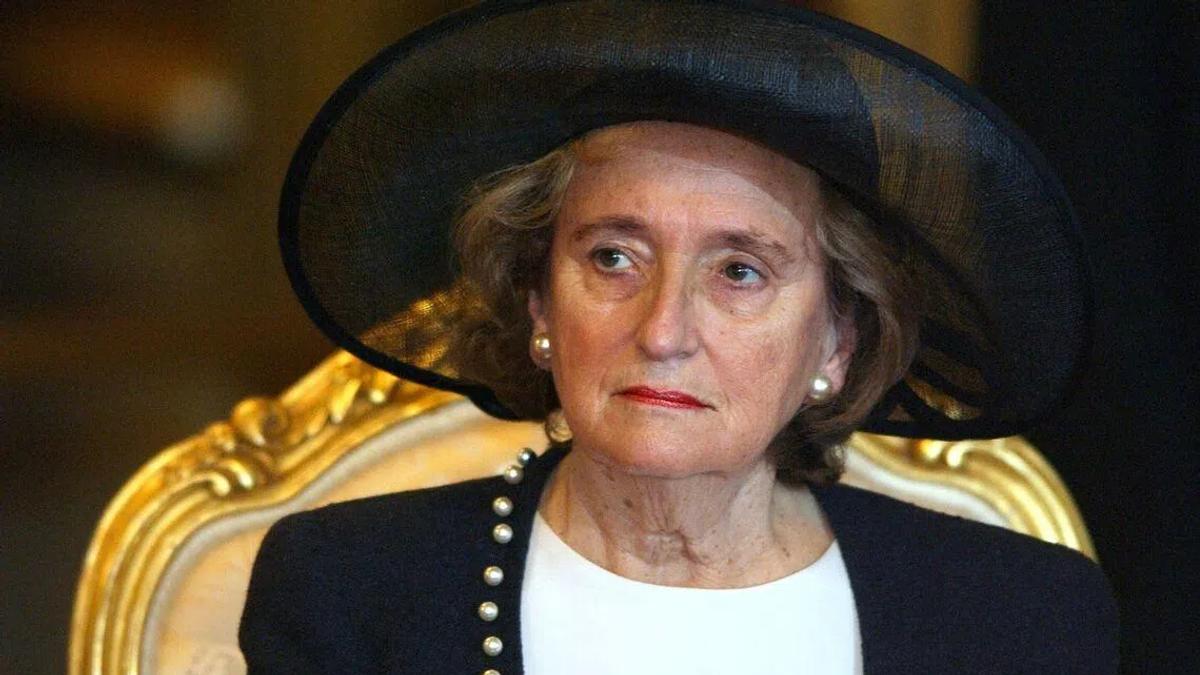
The passing of Bernadette Chirac, widow of former French President Jacques Chirac, on June 5, 2026, at the age of 93, marks not only the end of a remarkable personal journey but also serves as a poignant reminder of a significant era in French and international politics. Her death, announced by her daughter Claude Chirac, closes a chapter on a generation of political figures who shaped modern France and its role in the global order.
Bernadette Chirac was a prominent figure in her own right, distinguishing herself as the only French first lady to have held continuous political office. From 1979 to 2015, she served as a general councillor in the central Correze department, demonstrating a sustained commitment to local governance and public service. Beyond her elected role, she was deeply involved in philanthropic endeavors, notably as the head of a hospitals foundation, impacting countless lives through her dedication to healthcare. French President Emmanuel Macron paid tribute to her as a "great woman of heart" who "left her mark on our history," acknowledging her discreet yet determined influence on both regional and national life. Her public image, characterized by discretion and immaculate presentation, even inspired a 2023 film, "Bernadette," starring Catherine Deneuve, underscoring her unique cultural footprint.
However, her most enduring public association was as the loyal companion to Jacques Chirac, who served as President of France from 1995 to 2007. This period was marked by significant domestic reforms and, crucially, a distinctive and often assertive French foreign policy that resonated globally. Bernadette Chirac's presence by her husband's side, through both his political triumphs and personal controversies, symbolized a steadfastness that became part of the Chirac political brand.
While Bernadette Chirac's direct geopolitical influence was limited to her supportive role and local political engagement, her passing inevitably draws attention to the broader strategic implications of the era she represented. Jacques Chirac's presidency was a defining period for France's international standing, particularly his staunch opposition to the 2003 US-led invasion of Iraq. This stance, explicitly mentioned in the news report, was not merely a diplomatic disagreement but a profound assertion of French sovereignty and a commitment to multilateralism.
Why it mattered:
* Multilateralism vs. Unilateralism: Chirac's government, alongside Germany and Russia, spearheaded a diplomatic front at the United Nations Security Council, arguing for a UN-mandated approach to disarm Iraq and questioning the legality and wisdom of a pre-emptive military intervention without broad international consensus. This positioned France as a leading advocate for a rules-based international order, challenging the emerging unipolar moment dominated by the United States.
* Transatlantic Relations: The Iraq War opposition strained relations between Paris and Washington, creating a significant rift within NATO and the broader Western alliance. It highlighted differing strategic visions for global security and the role of international institutions, demonstrating France's willingness to diverge from its traditional allies when national interests and principles dictated.
* European Integration: France's firm position also influenced the dynamics within the European Union, where member states were divided on the Iraq War. While not all EU members supported France's stance, it underscored the complexities of forging a common European foreign and security policy and France's continued ambition to lead within the bloc.
* Gaullist Tradition: Chirac's actions were deeply rooted in the Gaullist tradition of an independent French foreign policy, emphasizing national grandeur and a distinct voice on the world stage, irrespective of superpower pressures. His presidency reaffirmed France's commitment to strategic autonomy and its role as a permanent member of the UN Security Council.
Bernadette Chirac's death, following her husband's in 2019, marks the definitive close of an era in French politics. It serves as a moment for reflection on the political and diplomatic landscape of the late 20th and early 21st centuries, a period characterized by significant global shifts, including the post-Cold War reordering, the rise of new powers, and evolving debates on international intervention and sovereignty. Her life, though often lived in the shadow of a charismatic leader, was nonetheless a testament to the enduring influence of political families and the profound impact of their public service on national identity and international relations. Her passing reminds the world of a time when France, under Jacques Chirac, played a pivotal role in shaping global debates, particularly on issues of war and peace, and the future of multilateralism.
Source referenced: STRAITSTIMES
This brief was synthesized by our Editorial Engine and reviewed by The Ground Narrative team.