TRENDING

Monday, 5 October 2026
----------------------
24 Rabi' Al-Thani 1448 AH
US Secretary of State Marco Rubio criticized the WHO's Ebola response in DRC and Uganda, even as the US continues sweeping public health cuts and remains withdrawn from the organization. Experts warn these policies weaken global pandemic preparedness and pose a national security vulnerability.
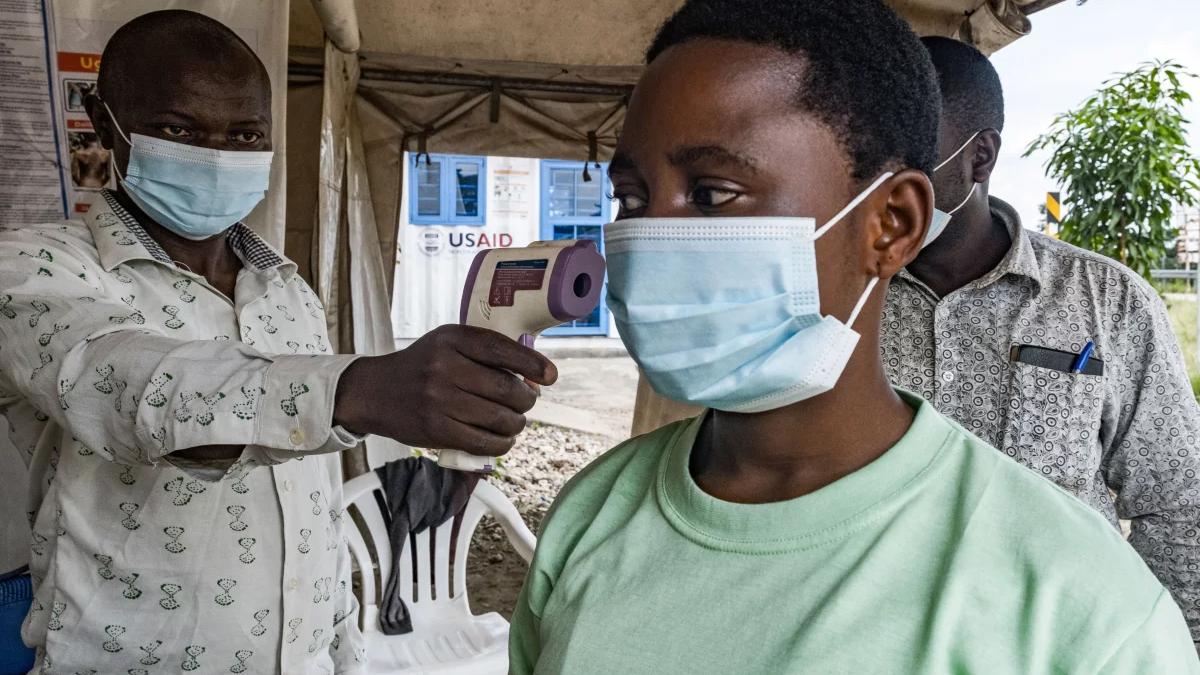
The recent criticism by US Secretary of State Marco Rubio regarding the World Health Organization's (WHO) response to the Ebola outbreak in the Democratic Republic of Congo (DRC) and Uganda highlights a complex interplay of international health crises, diplomatic tensions, and shifting global power dynamics. On May 19, 2026, Secretary Rubio stated that the WHO was “a little late” in identifying the deadly outbreak, a comment that comes amidst significant and ongoing cuts to US public health funding and the nation's withdrawal from the WHO. This confluence of events raises critical questions about global pandemic preparedness, the efficacy of international health bodies, and the strategic implications of US foreign policy decisions.
The Ebola outbreak, which has claimed an estimated 131 lives in the DRC, was declared a “public health emergency of international concern” by the WHO on May 17, 2026. The organization expressed deep concern over the “scale and speed” of the disease's spread, particularly in a region characterized by rural, hard-to-access areas and ongoing conflict. The WHO emphasized the high risk of further regional dissemination due to population mobility, trade, and travel linkages with neighboring countries, necessitating robust international coordination and cooperation. Despite these challenges, the WHO also cautioned against travel bans or trade restrictions, arguing that such measures are often fear-driven, can damage local economies, and may inadvertently increase disease spread by forcing movement through unmonitored channels.
Secretary Rubio's critique, delivered from the US embassy in Rome, positions the US Centers for Disease Control (CDC) and the WHO as primary leads in such health emergencies. However, the context of his remarks is crucial. The US, under former President Donald Trump, withdrew from the WHO last year, a move that experts widely condemned as undermining global health security. This withdrawal led to a substantial loss of nearly a quarter of the WHO's workforce, approximately 2,000 jobs out of 9,400, severely impacting the organization's operational capacity and financial stability. While the US has committed about $13 million in assistance to combat the current Ebola outbreak, including plans to establish 50 clinics in the DRC, this aid follows “sweeping aid cuts” implemented last year, suggesting a broader reduction in US global health engagement.
Experts have swiftly rejected Rubio's criticism, pointing to the inherent difficulties faced by the WHO. Gigi Gronvall, an immunologist at Johns Hopkins, argued that “blaming the WHO is misplaced, because they are operating with limited resources in a difficult setting with many security challenges.” Her assessment underscores the operational realities on the ground, where conflict and lack of infrastructure impede rapid response. More broadly, Gronvall and other public health professionals have characterized the US withdrawal from the WHO and the subsequent domestic public health cuts as a “strategic mistake” and a “national security vulnerability.” They contend that the US is now “worse off... to handle infectious disease threats than at the start of Covid-19.”
The erosion of US public health infrastructure is not limited to international engagement. Domestically, US health agencies, including the CDC and National Institutes of Health, are facing significant layoffs, with the Department of Health and Human Services planning to eliminate 10,000 jobs from its 82,000-person workforce. This reduction in capacity has raised mounting concerns about the US's preparedness for future pandemics. Jennifer Nuzzo, an epidemiology professor at Brown University, noted a “notable change” in the US government's approach, observing that the CDC learned of the current Ebola outbreak only after public confirmation, a departure from its historical role in proactively investigating rumored outbreaks. This suggests a diminished US presence on the front lines of global disease surveillance and response.
The geopolitical implications of these developments are profound. The US, historically a leading force in global health initiatives, appears to be retreating from this role. This vacuum could be filled by other global powers or lead to a more fragmented and less coordinated international response to health crises. The weakening of the WHO, a critical multilateral institution, undermines the collective ability to detect, prevent, and respond to pandemics, which by their nature transcend national borders. For the affected regions in Africa, particularly the DRC, the combination of ongoing conflict, limited resources, and a less robust international response framework exacerbates humanitarian challenges and risks further destabilization. The long-term consequences of these policy shifts could manifest in increased frequency and severity of global health emergencies, posing significant risks to international security and economic stability. The current Ebola outbreak serves as a stark reminder of the interconnectedness of global health and the critical importance of sustained international cooperation and investment in public health infrastructure.
Source referenced: GUARDIAN
This brief was synthesized by our Editorial Engine and reviewed by The Ground Narrative team.


