TRENDING

Saturday, 7 November 2026
----------------------
27 Jumada Al-Awwal 1448 AH
President Donald Trump confirmed limited US strikes on Qeshm Island, a flashpoint in the Strait of Hormuz. The episode reveals how electoral politics, regional rivalries and hidden economic stakes intersect, while ordinary islanders bear the brunt.
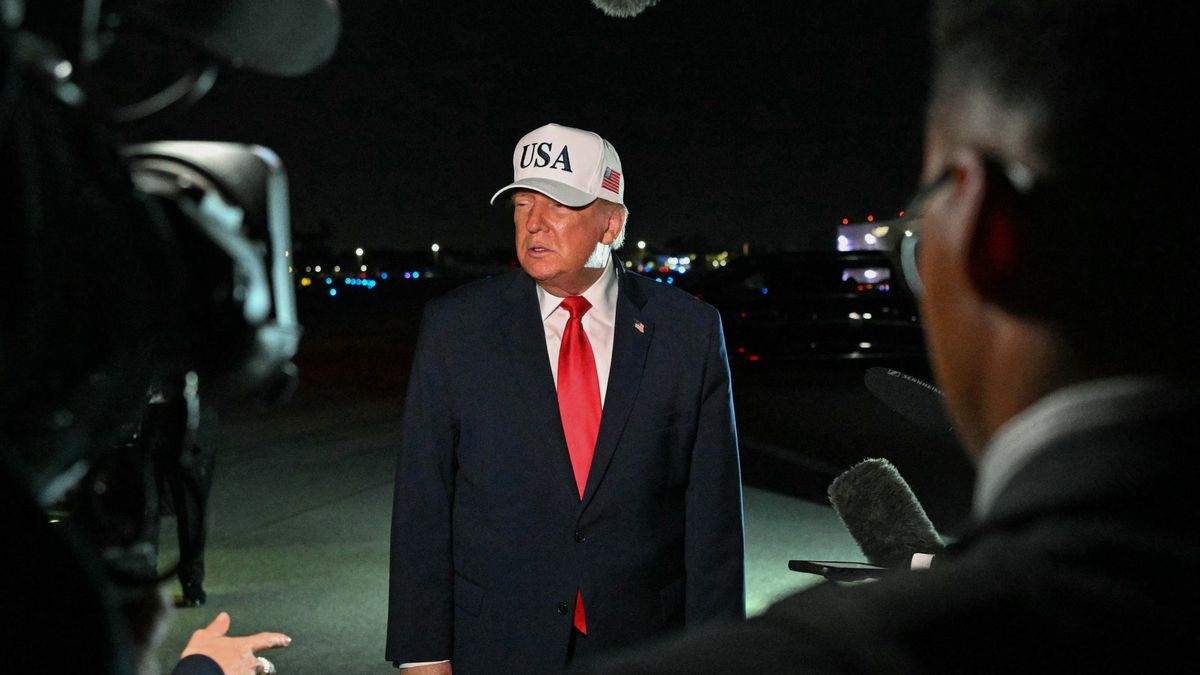
President Donald Trump announced on November 6 that US forces had carried out "minor" strikes against Iranian air‑defence installations on Qeshm Island, part of the strategic Strait of Hormuz. The operation, described by the White House as a quick knock‑out of a newly‑installed anti‑aircraft system, followed Iranian state media reports of two missile impacts in the Suza area and the downing of an American MQ‑9 drone. CENTCOM later described the situation as "relatively calm" and offered a $20 million bounty for intelligence on Iran’s nuclear programme. The strikes came just after the US midterm elections, which dealt a blow to the Republican Party and prompted Trump to link the results to the ongoing Iran conflict.
Trump’s public framing of the Qeshm attacks as a decisive, low‑cost victory serves a dual political purpose. First, it allows the president to claim progress in negotiations with Tehran while maintaining a hard‑line image that resonates with his base. Second, by attributing the midterm losses to the "Iran war," he redirects domestic frustration toward an external adversary, a classic rally‑around‑the‑flag tactic.
The Strait of Hormuz handles roughly a fifth of global oil shipments. Control—or at least the perception of control—over its security translates into leverage over oil prices and, by extension, the revenues of oil‑dependent states. By striking a target on Qeshm Island, the United States signals its willingness to enforce freedom of navigation, a message aimed at China, India and Gulf oil exporters that rely on uninterrupted flow. The timing also coincides with heightened diplomatic activity by Qatar, Iraq and Saudi Arabia, all of whom have vested interests in keeping the waterway open.
Unidentified Pentagon officials have confirmed that thousands of US air and naval assets are positioned across the Middle East, ready to scale up to full‑blown combat. The limited strike on Qeshm functions as a calibrated test of Iranian air‑defence response, gathering real‑time data for future operations while keeping the escalation ladder low enough to avoid immediate retaliation. This mirrors a broader US doctrine of "controlled pressure" that seeks to wear down adversary resolve without crossing a threshold that would trigger a wider war.
The $20 million reward for information on Iran’s nuclear programme reflects a dual strategy: it crowdsources intelligence while signaling to Tehran that the US will continue to pursue covert avenues alongside overt military pressure. The bounty also appeals to regional actors—such as Israel and Gulf states—who may have access to insider networks, thereby weaving a broader coalition of pressure without formal alliance commitments.
Qeshm Island, home to roughly 150,000 residents, has historically been a quiet fishing and tourism hub. The recent explosions have disrupted daily life: schools closed, fishing fleets halted, and local markets faced shortages as supply routes were temporarily rerouted. Residents report anxiety over potential retaliation, with many families preparing to flee to the mainland or neighboring UAE.
Any perceived instability in the Strait of Hormuz triggers spikes in global oil prices. While major oil companies can absorb short‑term shocks, smaller Gulf exporters—particularly Kuwait and Bahrain—face reduced revenue streams, affecting public sector wages and social welfare programs. The ripple effect reaches ordinary citizens who depend on subsidised fuel and public services.
A sizable portion of the workforce in the Persian Gulf consists of migrant laborers from South Asia and East Africa. Heightened tensions raise the risk of travel bans, visa suspensions, and abrupt contract terminations, leaving families in home countries vulnerable to sudden income loss. The uncertainty also fuels a shadow economy of smuggling and illicit trade as formal channels become riskier.
While Trump publicly claims "progress" in talks with Tehran, diplomatic sources indicate that back‑channel negotiations are being mediated by Qatar and Oman, both of which have historically served as neutral grounds for US‑Iran dialogue. These efforts are deliberately downplayed to preserve a narrative of military dominance at home, even as the real leverage lies in quiet concessions on sanctions relief and regional proxy conflicts.
Major defence contractors—Lockheed Martin, Raytheon, and Boeing—stand to profit from renewed US military deployments in the Gulf. Their lobbying arms have intensified outreach to congressional committees, framing the Qeshm strikes as a necessary step to protect "critical infrastructure". This corporate pressure is largely omitted from mainstream coverage, which instead focuses on the president’s statements.
US officials label the operation as "minor" and "defensive", yet the language masks the strategic intent to test Iranian response times and radar coverage. Iranian state media, meanwhile, emphasizes the downing of the MQ‑9 drone to project resilience. Both sides curate narratives that serve domestic audiences, leaving the international community with an incomplete picture of the actual risk calculus.
- Escalation signals: Monitor any further US sorties over the Strait and Iranian missile launches from Qeshm or nearby bases. A pattern of reciprocal strikes would indicate a slide up the escalation ladder.
- Negotiation breakthroughs: Watch for statements from Qatar, Oman, or the European Union that hint at a formal diplomatic track. A sudden de‑escalation could be tied to concessions on Iran’s nuclear enrichment levels.
- Oil market reactions: Spot price movements and futures contracts will reveal how investors interpret the risk of broader conflict. Sharp spikes often precede policy shifts.
- Domestic political fallout: US midterm outcomes have already been weaponised by the president. Upcoming congressional hearings on the Qeshm strikes will expose how partisan dynamics shape future authorisation of force.
- Humanitarian access: NGOs and UN agencies may request corridors for aid to Qeshm’s civilian population. Their ability—or inability—to secure safe passage will indicate the level of operational freedom granted to military actors.
By tracking these threads, readers can see beyond the headline‑grabbing strike and understand how power, profit and politics converge on a small island that suddenly sits at the centre of a global energy artery.
The island hosts air‑defence installations that could threaten US aircraft operating in the Strait of Hormuz. Striking them tests Iran’s response while signalling US resolve to keep the shipping lane open.
Any perceived threat to the Strait of Hormuz can push oil prices higher, affecting economies that depend on cheap energy. Traders watch for escalation cues to adjust futures contracts, which can ripple through global supply chains.
Source referenced: ALJAZEERA
This brief was synthesized by our Editorial Engine and reviewed by The Ground Narrative team.