TRENDING

Saturday, 7 November 2026
----------------------
27 Jumada Al-Awwal 1448 AH
Paraguay's president was impeached and arrested following a major banking scandal that saw millions lose access to their savings. The swift political maneuver highlights the entrenched power dynamics within the nation's dominant political party.
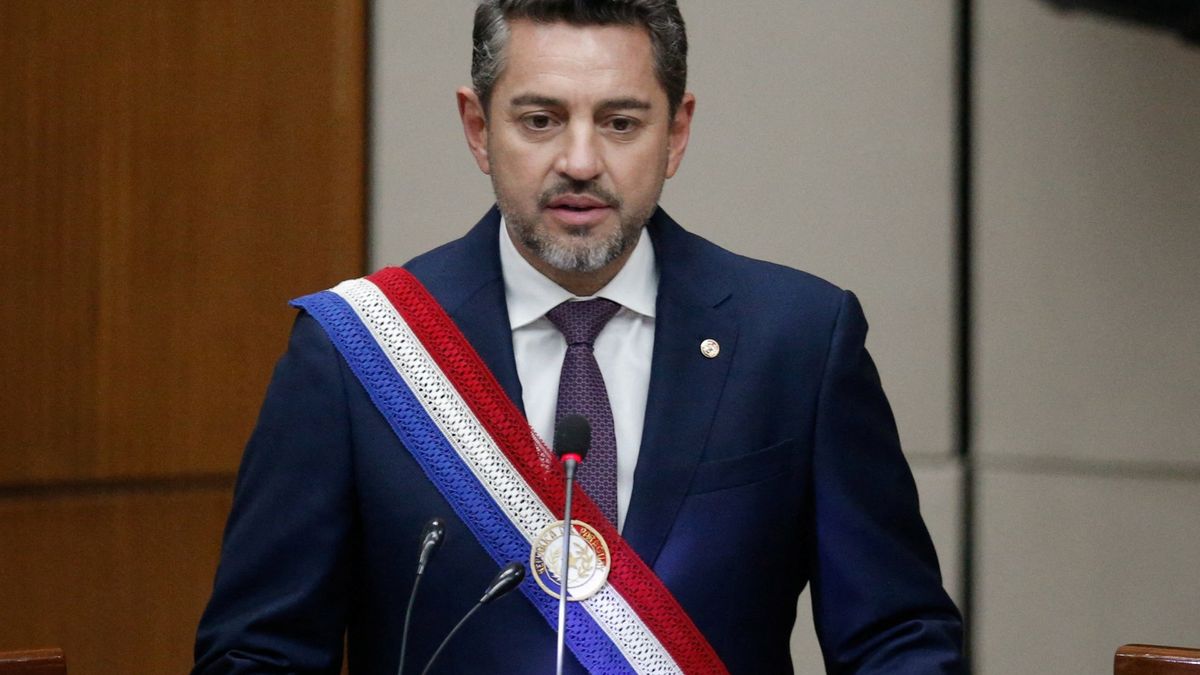
Paraguay's President Santiago Pena was impeached and subsequently placed under house arrest following the sudden collapse of Ueno Bank, a prominent lending institution. The scandal erupted when the central bank announced Ueno had fallen below solvency standards, leading to the seizure of its assets and millions of clients losing access to their accounts and pension payments. Former Vice President Pedro Alliana was swiftly sworn in as the new president, inheriting a nation grappling with a profound financial and political crisis.
This rapid political upheaval in Paraguay is less about a sudden crisis and more about the visible mechanics of deeply entrenched power. The Colorado Party, which has dominated Paraguayan politics since 1948, orchestrated the impeachment of its own president, Santiago Pena. This move was not a sign of democratic accountability spontaneously emerging but rather a calculated internal purge, designed to consolidate control and manage the fallout of a scandal that threatened the party's broader interests.
Pena's alleged shareholding in Ueno's parent company and the investment of $355 million in state pension funds into the bank exposed a classic case of crony capitalism, where political connections seemingly shielded a financial institution from proper oversight. The former head of Paraguay's central bank, Carlos Carvallo, also resigned and faces an arrest warrant, underscoring the systemic failure of regulatory bodies that were either complicit or deliberately incapacitated.
The decision by Paraguay's Congress to reject Pena's offer to resign and instead proceed with impeachment was a critical power play. Had he resigned, Pena would have retained the right of former presidents to become a senator, granting him legal protections from prosecution. By forcing impeachment, the Colorado Party leadership ensured he would face criminal charges, effectively neutralizing him and sending a clear message to any future dissenters within their ranks. This maneuver suggests that Pena had either become a liability too great to protect or had fallen out of favor with a powerful faction within the party, notably that led by former president Horacio Cartes, who publicly supported the impeachment to "restore the republic's institutions." This statement, while framed as a commitment to good governance, is more accurately interpreted as a declaration of the Colorado Party's intent to restore *its* control over the state apparatus and its associated economic benefits. The swift swearing-in of Pedro Alliana, who served as Pena's vice president and has a long history within the Colorado Party, further reinforces the impression of a controlled transition rather than a genuine rupture in the established power structure. The party's ability to maintain continuity while sacrificing a president demonstrates its resilience and deep-seated influence over the nation's political landscape.
While the political drama unfolds in Asuncion's corridors of power, the real and immediate cost of the Ueno Bank collapse is borne by millions of ordinary Paraguayans. With approximately three million clients, Ueno Bank served nearly two-thirds of the country's adult population. These individuals, many of whom had opened their first bank accounts with Ueno, abruptly lost access to their life savings, daily wages, and critical pension payments. For a nation where economic stability is often precarious, this financial shock has devastating consequences.
Families who relied on their Ueno accounts for daily transactions, bill payments, and emergency funds are now in limbo. Small business owners cannot access their capital, disrupting supply chains and threatening livelihoods. The sudden disappearance of funds means immediate hardship, forcing many to cut back on essential expenses like food, healthcare, and education. The psychological toll of losing one's hard-earned money, often accumulated over years, cannot be overstated, leading to widespread anxiety and a profound sense of betrayal.
The scandal has severely eroded public trust in Paraguay's financial institutions and government oversight. When a bank, especially one that grew rapidly with state pension funds, collapses due to alleged mismanagement and political connections, citizens lose faith in the system designed to protect their assets. This erosion of trust can have long-term economic consequences, potentially driving people away from formal banking, increasing reliance on informal economies, and hindering future investment and economic growth. The perception that powerful individuals are above the law, and that their actions directly harm the most vulnerable, deepens societal cynicism and resentment.
The investment of $355 million in state pension funds into Ueno Bank means that the financial stability of retirees and future pensioners is directly jeopardized. These funds represent the collective security of a nation's elderly and vulnerable populations. Their potential loss or delayed recovery places an immense burden on the state and, by extension, on taxpayers, who may ultimately bear the cost of bailing out or recapitalizing these crucial social safety nets. The human cost here is not just immediate financial loss but the shattering of long-term security for an entire generation.
The official narrative surrounding Santiago Pena's impeachment is one of accountability and the restoration of institutional integrity. However, this framing downplays several critical aspects of Paraguay's power dynamics, revealing a deeper, more cynical truth about how power operates in the nation.
While Pena's arrest and the charges against him appear to signal a crackdown on corruption, the swiftness and internal nature of the impeachment within the Colorado Party suggest a carefully managed process rather than a genuine, independent pursuit of justice. The party's decision to impeach Pena instead of allowing his resignation, thereby stripping him of senatorial immunity, was a strategic move to eliminate a political rival or a leader who had become too compromised. The “restoration of institutions” cited by Horacio Cartes likely refers to restoring the party's unchallenged dominance and control over the levers of power, including the financial sector, rather than establishing true transparency and rule of law for all.
Ueno Bank's collapse is not an isolated incident; the raw intelligence notes that it is only Paraguay's “latest banking crisis.” This points to a pervasive issue of systemic corruption and regulatory capture, where financial institutions with political connections are shielded from rigorous oversight. The central bank's alleged failure in its oversight duties, culminating in the arrest warrant for its former head, Carlos Carvallo, indicates a deeper problem than just one rogue bank or one corrupt president. It suggests that the regulatory bodies themselves are either weak, underfunded, or deliberately compromised by powerful political and economic interests. The question isn't just *if* Ueno was properly regulated, but *why* it wasn't, and who benefited from that lack of scrutiny.
While millions of ordinary citizens lost their savings, the full story of who truly profited from Ueno's rapid growth and subsequent collapse remains largely untold. The transfer of Ueno's remaining assets to other banking institutions, while framed as a safeguard, raises questions about which institutions benefited from these asset transfers and whether connected parties were able to salvage or acquire valuable assets at favorable terms. The investigation into 27 individuals, including lead shareholder Miguel Vazquez, for crimes like attempted fraud and influence peddling, hints at a network of beneficiaries, but the extent of political involvement and the ultimate destination of the misappropriated funds are often obscured in such crises. The powerful actors involved are adept at shifting blame and ensuring that the most significant losses are absorbed by the public, while their own gains remain largely intact or are laundered through complex financial structures.
As Paraguay navigates the aftermath of this dramatic political and financial upheaval, several key developments will indicate the true direction of the nation:
- The Scope of the Investigation: Observe whether the ongoing criminal investigation extends beyond Santiago Pena and Carlos Carvallo to genuinely target other high-level political figures and powerful business interests within the Colorado Party's orbit. A truly independent and far-reaching inquiry would signal a departure from past patterns of selective justice.
- Pedro Alliana's Presidency: Monitor the actions and rhetoric of the new president, Pedro Alliana. Will he initiate genuine reforms to strengthen financial regulations and combat corruption, or will his administration merely serve to consolidate the Colorado Party's traditional power base and maintain the status quo? His appointments to key ministerial and regulatory positions will be particularly telling.
- Public Response and Social Unrest: Pay attention to how Paraguayan citizens react to the ongoing crisis. Will the widespread loss of savings translate into sustained public protests and demands for deeper systemic change, or will the political transition be accepted, allowing the Colorado Party to weather the storm with minimal long-term impact on its dominance?
- Economic Stability and Banking Sector Reforms: Watch for any concrete measures to restore confidence in Paraguay's banking sector. This includes efforts to compensate affected Ueno clients and implement robust regulatory reforms to prevent future collapses. The speed and effectiveness of these measures will determine the long-term economic health of the nation and the trust of its citizens in its financial system.
President Santiago Pena was impeached following the collapse of Ueno Bank, which suffered from alleged mismanagement and political connections. Millions of clients lost access to their accounts, leading to a swift congressional vote to remove Pena from office amidst accusations of breach of trust and conflicts of interest.
Pedro Alliana, 52, previously served as Vice President under Santiago Pena. A conservative politician and long-standing member of the dominant Colorado Party, he has held various political roles, including governor and president of the Chamber of Deputies, before being sworn in as Paraguay's 53rd president.
The collapse of Ueno Bank, which served nearly two-thirds of Paraguay's adult population, resulted in millions of clients losing immediate access to their savings and pension payments. This caused significant financial hardship, eroded public trust in the banking system, and highlighted the vulnerability of ordinary citizens to political and financial malfeasance.
Source referenced: ALJAZEERA
This brief was synthesized by our Editorial Engine and reviewed by The Ground Narrative team.


