TRENDING

Tuesday, 6 October 2026
----------------------
25 Rabi' Al-Thani 1448 AH
The fragile cease-fire and Memorandum of Understanding between the United States and Iran have collapsed following renewed military and economic escalations in the Persian Gulf. This breakdown, driven by fundamental disagreements over the Strait of Hormuz, threatens global energy markets and signals a return to heightened regional instability.
The The brief period of de-escalation between the United States and Iran, marked by a cease-fire and a Memorandum of Understanding (MOU), has abruptly ended, plunging the Persian Gulf back into military and economic confrontation. This rapid deterioration, occurring just three weeks after the MOU was signed, underscores the deep-seated strategic disagreements that continue to define U.S.-Iran relations, particularly concerning the vital Strait of Hormuz. The immediate consequences include a significant surge in global oil prices and renewed uncertainty for international shipping and regional stability.
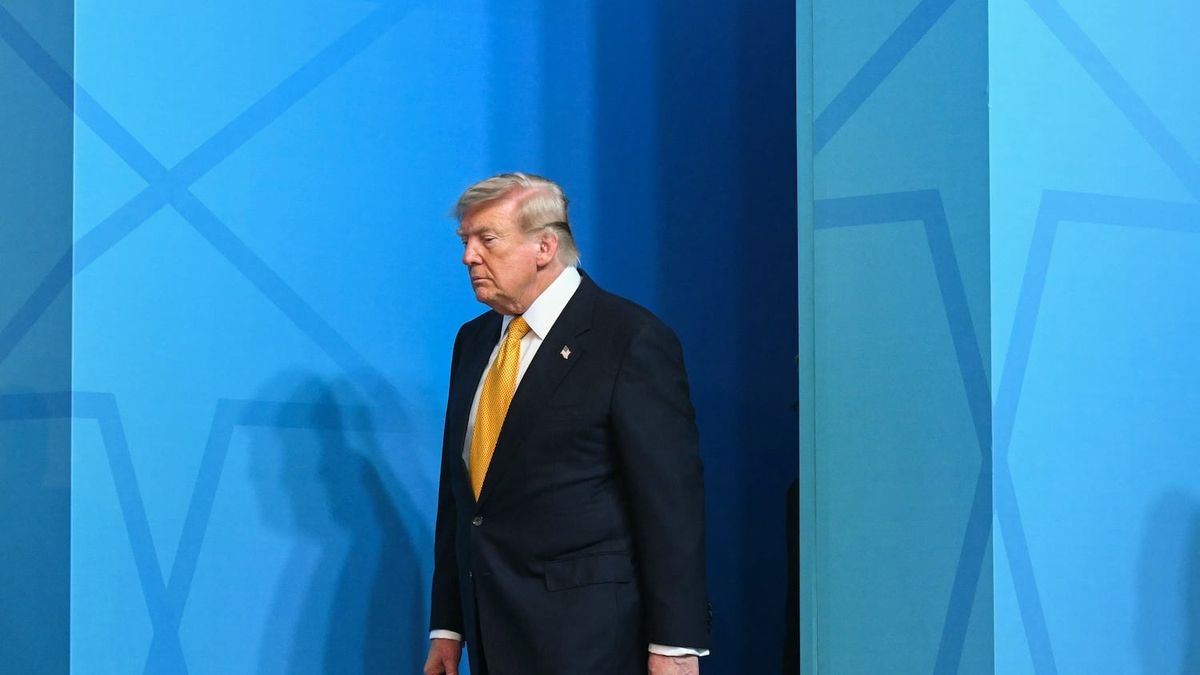
The latest escalation was triggered by Iran's actions earlier this week, when it attacked several commercial ships transiting the Strait of Hormuz. These vessels were reportedly using a route skirting the Omani coast, which Iran claims falls outside its purview and control, despite the MOU's provisions for Iranian management of shipping in the strait. The United States responded swiftly on Tuesday, with President Donald Trump authorizing a wave of airstrikes targeting Iranian radar installations, air defense sites, and other strategic assets. Speaking at the NATO summit in Ankara, Turkey, on Wednesday, July 8, 2026, President Trump declared the cease-fire "over," stating, "I don't want to deal with them any more. … They're sick people." He also hinted at the possibility of further strikes.
Concurrently with the military response, Washington unleashed an economic salvo. The Trump administration rescinded the temporary waivers on sanctions that had been granted to Iranian oil exports as part of the MOU. While some analysts suggest this may have limited immediate real-world impact, given that major buyers like China continued to purchase Iranian oil regardless of waivers, the move signals a return to maximum economic pressure. The market reaction was immediate and pronounced: Brent crude jumped to nearly $80 a barrel on Wednesday, after weeks of hovering in the high $60s, reflecting heightened supply concerns.
At the heart of this renewed conflict lies a fundamental and unresolved dispute over the control and interpretation of the Strait of Hormuz. The MOU, which President Trump personally signed, stipulated that Iran would be in charge of organizing shipping in the strait during bilateral talks, with a future role in establishing a new shipping regime that could include tolls or fees. This provision was intended to open the vital conduit, which had been severely disrupted during the previous "war on Iran" from late February to June.
However, the interpretations of this agreement converged sharply. Iran views its control over the Strait of Hormuz as a critical piece of strategic leverage, with Iranian Parliamentary Speaker Mohammad Ghalibaf asserting that the U.S. violated the MOU by not adhering to Tehran's "rules of the road" for shipping. As Ellie Geranmayeh of the European Council on Foreign Relations noted, "Seen from the Iranian side, Hormuz is now as important as the right to enrich." This perspective underscores Iran's belief that while U.S. policy can shift, its geographical advantage over the strait is immutable.
Conversely, the United States, despite signing the MOU, has continued to shepherd vessels through alternative routes, sometimes under the protection of the U.S. Navy, indicating a reluctance to fully cede control or legitimacy to Iran's management claims. This inherent contradiction in the MOU's implementation created an unstable foundation, leading to the current breakdown. The U.S. efforts to maintain alternative routes had allowed Hormuz shipping traffic to recover to over one-third of pre-war levels in recent weeks, a recovery now jeopardized.
The collapse of the cease-fire represents a significant setback for regional stability and global energy security. The "false dawn" of peace has given way to a return to a state of heightened tension, reminiscent of the earlier conflict. For oil producers, the renewed fighting is a "cold shower," disrupting plans to unload stored oil and restart production. The prospect of the U.S. reimposing a full blockade on Iran, a notion floated by President Trump, would further destabilize the fragile peace and likely send oil prices even higher.
The situation also raises questions about the broader U.S. strategy towards Iran, encompassing its nuclear program, support for proxy groups, and now, its asserted leverage over Hormuz. Promises by U.S. Secretary of Defense Pete Hegseth and Vice President J.D. Vance that the conflict would not be a "forever war" now appear challenged. Richard Nephew, a sanctions expert, aptly described the current state as "a story where we are still in the first act," suggesting a prolonged and complex struggle where neither side perceives itself as having lost.
The immediate future points to continued volatility in the Persian Gulf. The fundamental disagreement over the Strait of Hormuz, coupled with the U.S. commitment to freedom of navigation and Iran's determination to assert its regional influence, ensures that this critical waterway will remain a flashpoint. The international community faces the challenge of managing escalating tensions that threaten not only regional peace but also the stability of global energy markets and the broader world economy.
Source referenced: FOREIGNPOLICY
This brief was synthesized by our Editorial Engine and reviewed by The Ground Narrative team.