TRENDING

Monday, 5 October 2026
----------------------
24 Rabi' Al-Thani 1448 AH
A Russian drone attack struck a Chinese-owned cargo vessel in the Black Sea, near Ukraine's Odesa region, just one day before Russian President Vladimir Putin's scheduled meeting with Chinese Presiden
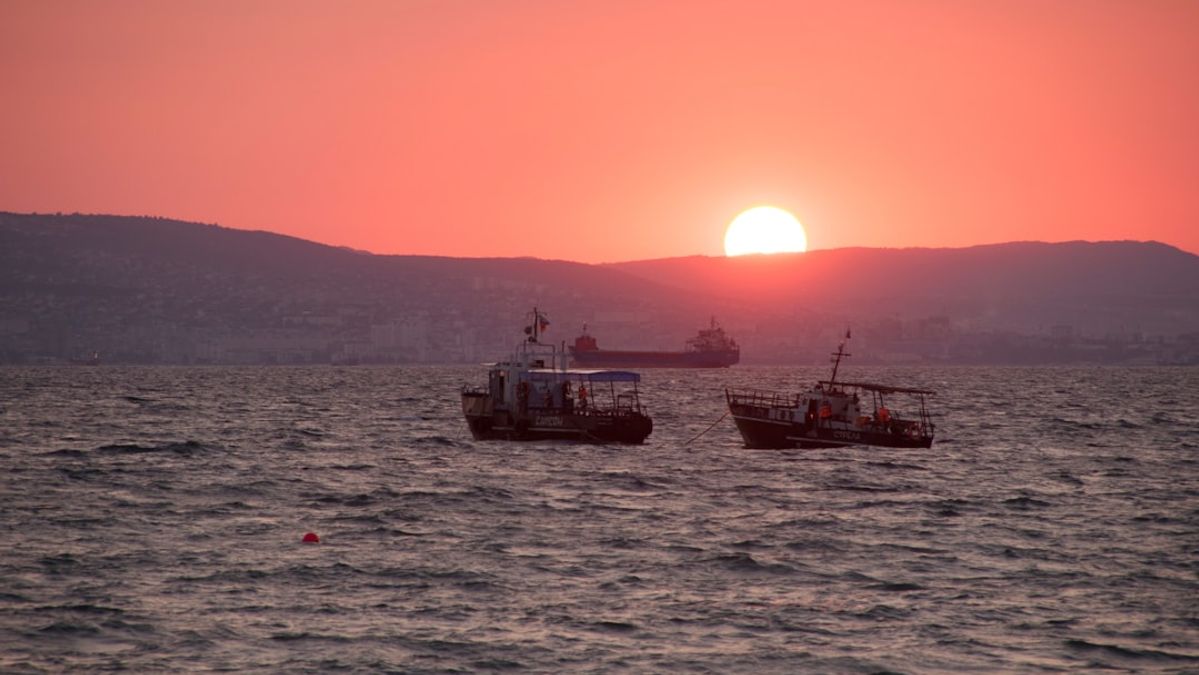
On Monday, May 18, 2026, a Russian drone attack in the Black Sea, targeting vessels approaching Ukraine's Odesa region, struck a Chinese-owned cargo ship, the KSL Deyang. This incident occurred just one day before Russian President Vladimir Putin was scheduled to meet Chinese President Xi Jinping in Beijing, adding a layer of geopolitical complexity to an already volatile maritime conflict zone. While no crew members, all Chinese citizens, were reported injured and the vessel continued its journey, the timing and nature of the strike raise significant questions about maritime security, international relations, and the intricate dynamics of the Sino-Russian partnership amidst the ongoing conflict in Ukraine.
The attack involved Russian unmanned aerial vehicles (UAVs), including Shahed drones, which targeted two civilian vessels in the Black Sea. The KSL Deyang, flying under a Marshall Islands flag, was reportedly en route to Ukraine's Pivdennyi port in the Odesa region to load iron ore concentrate. Another vessel, flagged under Guinea-Bissau, was also hit. Ukrainian President Volodymyr Zelenskyy explicitly stated that “The Russians could not have been unaware of what vessel was at sea,” suggesting a potential deliberate targeting or, at minimum, a disregard for the nationality of commercial shipping in the area. Russia has consistently targeted Odesa, a critical maritime and economic hub for Ukrainian agricultural exports, since its full-scale invasion of Ukraine in February 2022. These attacks are part of a broader strategy to cripple Ukraine's economy and disrupt its access to global markets, particularly after Russia's withdrawal from the Black Sea Grain Initiative.
The timing of the strike is arguably its most salient feature. Occurring on the eve of a high-stakes summit between Putin and Xi, the incident places China in a delicate diplomatic position. Beijing has consistently maintained a stance of “neutrality” regarding the conflict in Ukraine, refraining from condemning Russia's actions while simultaneously calling for peace talks. However, this “neutrality” has often been viewed by Western nations as tacit support for Moscow, given the deepening economic and strategic ties between the two powers.
From Russia's perspective, the strike could be interpreted in several ways. It might have been an unintended consequence of its regular, indiscriminate targeting of maritime traffic and infrastructure in the Odesa region, where the focus is on disrupting Ukrainian supply lines and export capabilities rather than identifying specific vessel ownership. Alternatively, though less likely given the diplomatic context, it could be seen as a subtle, albeit risky, signal to Beijing about the inherent dangers of commercial engagement with Ukraine's Black Sea ports, even for its strategic partners. Such a signal, however, would risk creating an unnecessary irritant ahead of a crucial bilateral meeting aimed at solidifying their anti-Western alignment.
For China, the incident underscores the tangible risks its commercial interests face in conflict zones. While China benefits from discounted Russian energy and a strategic partnership that challenges Western hegemony, its global economic footprint also necessitates stable international trade routes. An attack on a Chinese-owned vessel, regardless of intent, highlights the vulnerability of its vast merchant fleet and could prompt internal discussions within Beijing about the costs and benefits of its current foreign policy approach to the Ukraine war. It tests the limits of China's “no-limits” partnership with Russia, potentially forcing Beijing to privately address the issue with Moscow, even if public condemnation remains unlikely.
The attack further exacerbates concerns over the safety of maritime navigation in the Black Sea. Russia's actions continue to challenge the principle of freedom of navigation and the protection of civilian shipping in international waters. The repeated targeting of commercial vessels, irrespective of their flag or ownership, creates an environment of extreme risk for global trade, impacting not only Ukraine's economy but also the broader international supply chain. This pattern of behavior by Russia raises questions about its adherence to international maritime law and norms, further isolating it on the global stage, even as it seeks to strengthen alliances with nations like China.
As Putin and Xi meet, the drone strike on the KSL Deyang will undoubtedly cast a shadow over their discussions. While it is unlikely to fundamentally alter the strategic alignment between Russia and China, it serves as a stark reminder of the complexities and unintended consequences of the Ukraine conflict. China's response, or lack thereof, will be closely watched by the international community as an indicator of the true depth of its commitment to its “neutral” stance and its willingness to tolerate actions that directly impact its own commercial interests. The incident reinforces the urgent need for de-escalation and a diplomatic resolution to the conflict, not only for regional stability but also for the safety and predictability of global maritime trade. The Black Sea remains a critical geopolitical flashpoint, where the interplay of military strategy, economic interests, and diplomatic maneuvering continues to shape the future of international relations.
Source referenced: ALJAZEERA
This brief was synthesized by our Editorial Engine and reviewed by The Ground Narrative team.


